Programming Tutorials — C, C++, C#, Java, JavaScript, Python, PHP, and Game Development
Programming powers modern technology — from desktop software and websites to mobile apps, games and enterprise systems. Strong programming skills remain essential for developers, students and technology professionals building modern digital solutions.
MYCPLUS has been publishing programming tutorials, source code examples and practical development guides since 2004. This programming hub brings together tutorials for C, C++, C#, Java, JavaScript, PHP and Python, along with game development and real-world coding examples designed for hands-on learning.
You will find beginner-friendly programming tutorials, practical source code examples and advanced development guides covering object-oriented programming, debugging, modern programming techniques and professional software development practices. Whether you are learning your first language, improving coding skills or exploring modern development technologies, this section provides structured resources for real-world programming and software engineering.
What You’ll Learn:
- C programming fundamentals — variables, functions, pointers, memory management, file handling and procedural programming concepts
- Modern C++ development — object-oriented programming, STL, templates, smart pointers, lambda expressions and advanced C++ features
- Python programming — scripting, automation, data processing, application development and beginner-friendly programming concepts
- Java and C# development — object-oriented design, application architecture and enterprise programming fundamentals
- JavaScript and PHP programming — web development, frontend and backend programming, dynamic applications and interactive user experiences
- Game development programming — graphics programming, game engines, real-time systems and practical game development concepts using C and C++
Why MYCPLUS: One of the web’s longest-running programming resources — trusted since 2004 with hundreds of tutorials, practical coding guides, source code examples and developer learning resources designed for real-world programming skills.
C++ is a basic programming language that is used ubiquitously to create the back end of various products. Despite lagging behind in the TIOBE rankings, his status has not changed. Most companies cannot do without it, so they always hire C++ developers on their staff. There are plenty of purposes for using the language:
C++ Programming Modern C++
Explore how C++ developers can optimize applications for 3D NAND SSDs to achieve faster performance, higher storage efficiency, and improved durability compared to traditional 2D NAND-based drives.
Learn practical strategies for improving data access, memory management, and I/O operations for modern SSD architectures.
C++ Programming Programming Technology
Although there are good tools that one can use to process and convert large and complex XML data like a converter from Sonra, there are quite a few libraries that can help in processing some simple XML over C++.
C++ Programming
Discover the enduring relevance of C++ in modern programming. From its origins in C to advanced features like smart pointers and lambda expressions, C++ continues to power high-performance software, game development, and system programming worldwide.
C++ Programming Modern C++
Explore how C++ powers modern machine learning applications with high performance and efficient memory management. This case study highlights the role of C++ in frameworks like TensorFlow and PyTorch, along with real-world AI, data processing, and performance-critical machine learning use cases.
Artificial Intelligence (AI)
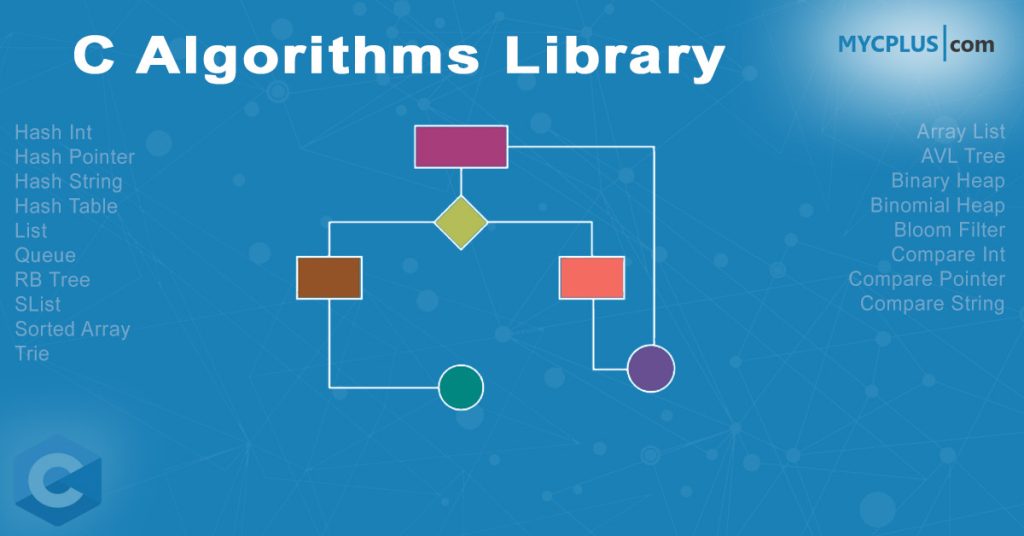
This article is about a collection of common Computer Science algorithms which may be used in C projects. The C Programming Language has a much smaller Standard Library as compared to other more modern programming languages such as Java or Python. The library provides a basic set of mathematical functions, string manipulation, type conversions, and file and console-based I/O.
Algorithms Data Structures Source Code
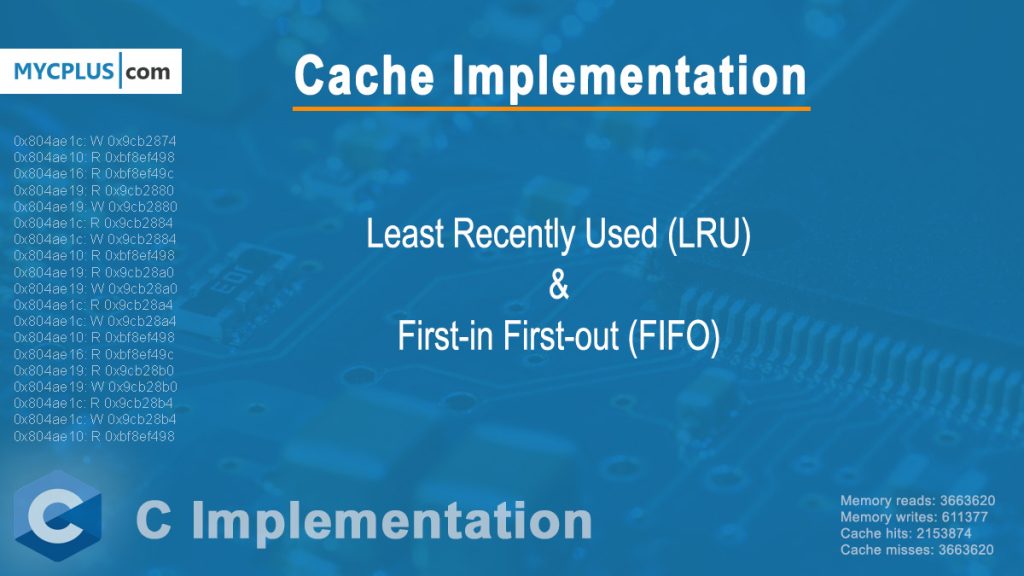
This is a C program to demonstrate cache mechanism by simulating a cache in C. The source code can run in any C Compiler with minor modifications if required. It can run on real memory traces as input to your cache simulator. We have implemented two cache replacement policies i.e. least recently used (LRU) and First-in first-out (FIFO) replacement policies.
Data Structures Memory Allocation
In C Programming, ternary operator allows executing different code depending on the value of a condition. The returned value is the result of the expression when the code is executed. The main advantage of using ternary operator is to reduce the number of lines of code and improve the performance of application. In C, the real utility of ternary operator is that it is an expression instead of a statement i.e. you can have it on the right-hand side (RHS) of a statement. So you can write certain code statements more concisely.
C Programming Source Code
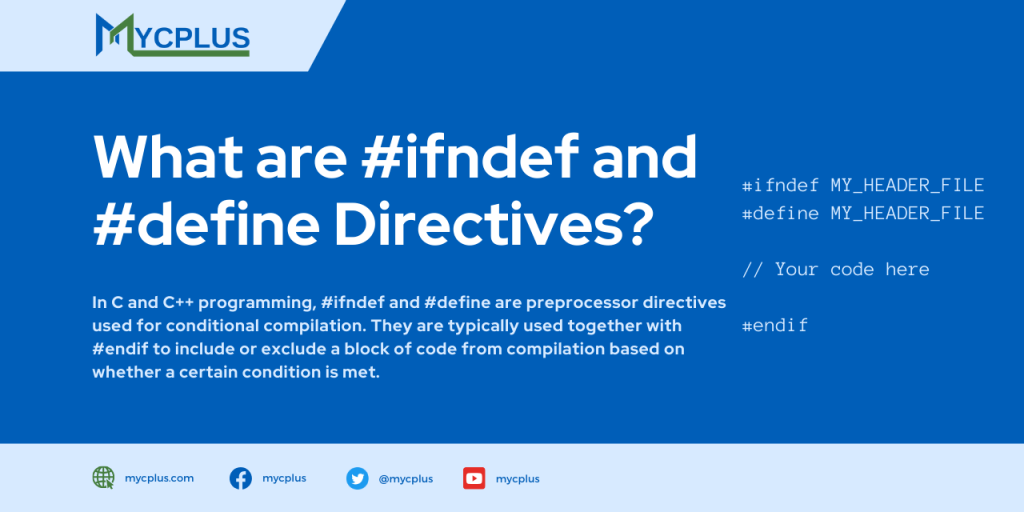
In the C Programming Language, the #ifndef directive checks if the given token has been #defined earlier in the C code. If the token has not been defined earlier then it includes the code between #ifndef and #else. If no #else is present then code between ##ifndef and #endif is included.
C Programming Programming Tips
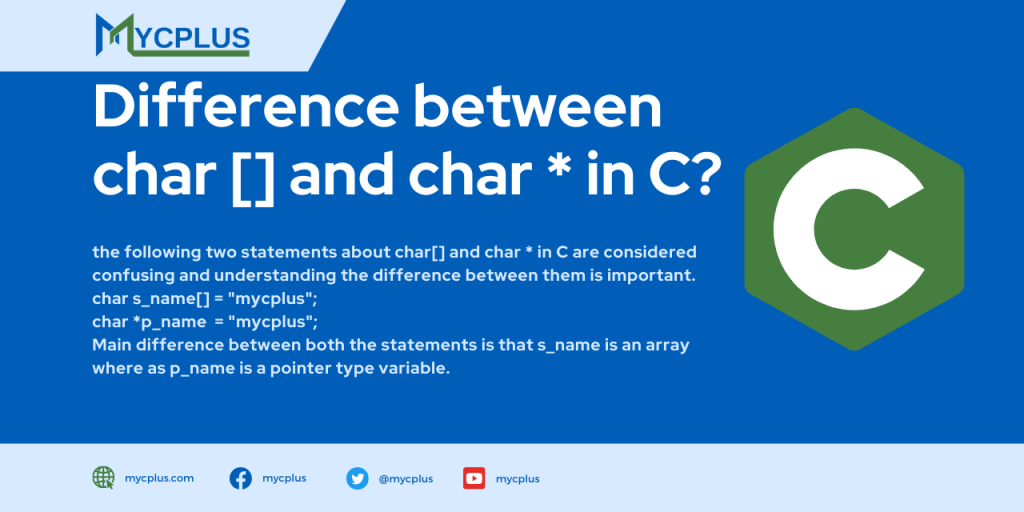
Generally, the following two statements about char[] and char * in C are considered confusing and understanding the difference between them is important. The first statement puts the literal string “mycplus” in read-only memory and copies the string to newly allocated memory on the stack. The second statement is known as static string allocation and definition.
Arrays C Programming Pointers Strings
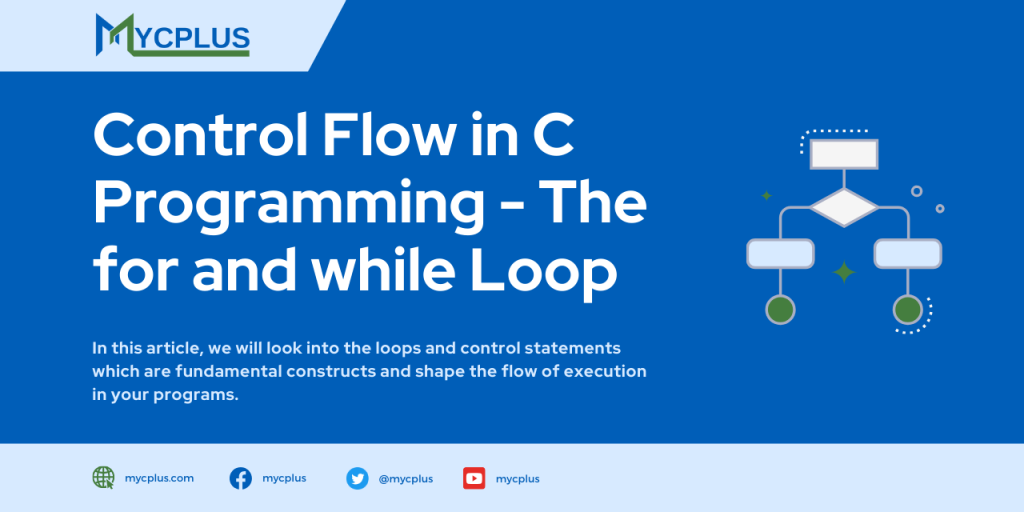
In C programming, controlling the flow of the program is the key to unleashing the true potential of your code. In this article, we will look into the loops and control statements which are fundamental constructs and shape the flow of execution in your programs.
C Programming Loops Programming
In C programming, dynamic memory allocation allows us to allocate memory at runtime. Two commonly used functions for this purpose are malloc and calloc. While they may seem similar, there are important differences between the two. This article explores these differences with examples.
C Programming Memory Allocation Programming