

C++17 Features Explained — What Changed and What to Use Today
C++17 was ratified in 2017, not proposed. The features that changed everyday C++, each compiled and run, plus the one that can make code slower.
C++17 was ratified in 2017, not proposed. The features that changed everyday C++, each compiled and run, plus the one that can make code slower.
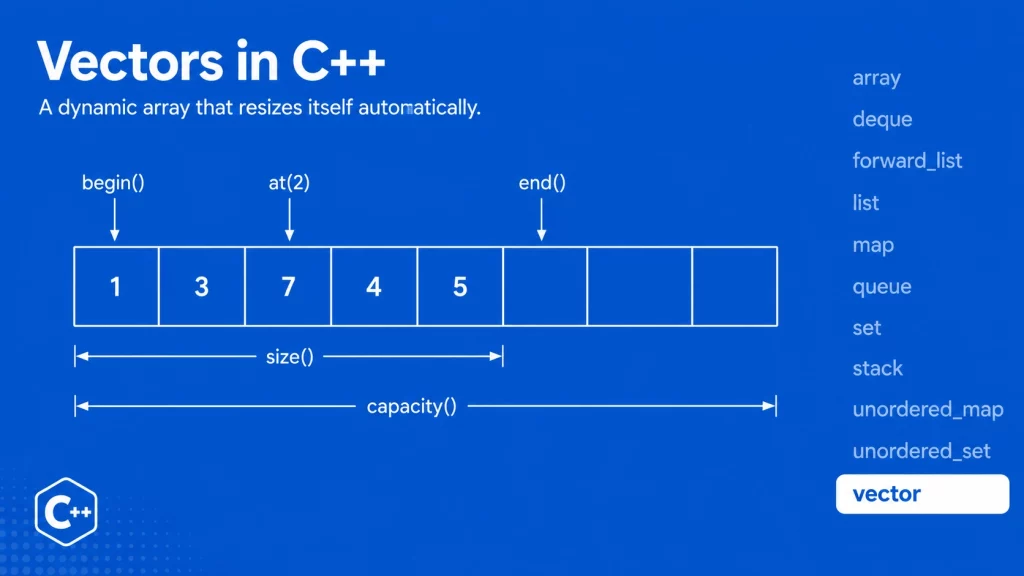
std::vector is the workhorse container of modern C++. This guide covers every core operation, performance tips like reserve(), 2D vectors, and when to use it over arrays and lists.

There are always few little known or hidden features in each programming language. At StackOverflow.com someone started a series of posts “Hidden features of” programming languages. The Hidden Features series is great for people who are new to a certain language.

I have compiled a list of repeatedly asking C++ interview questions here. Some of them are very important C++ questions

Common Text Transformation Library, CTTL for short, is a set of C++ classes and functions to understand and modify text
Looking for a compact yet comprehensive guide to C++? Kyle Loudon’s C++ Pocket Reference is a must-have for programmers seeking quick access to C++ syntax and core concepts.

The C++ Standard Template Library explained with tested code: choosing containers, iterator categories, invalidation, std::remove and C++20 ranges.

The complexity table says list wins. Measured, vector was 30 times faster with the same search. A selection guide for the C++ container library.

Fifteen characters cost nothing; sixteen cost a heap allocation. A measured guide to std::string, string_view, and where the copies come from.

Bubble sort explained with a pass table, clean C and C++ code, measured comparison counts, and when qsort or std::sort is the better choice.