Object-Oriented Programming Tutorials — OOP Techniques, Polymorphism and Design Principles
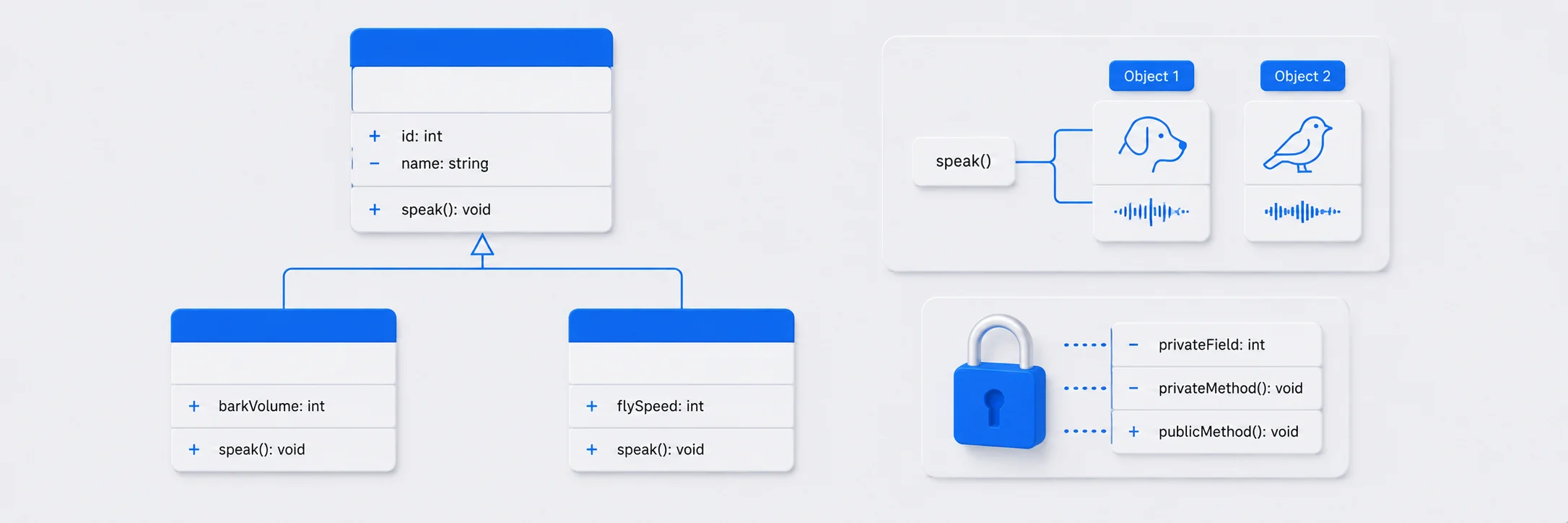
Object-oriented programming is the dominant paradigm in modern software development — and for good reason. By organising code around objects that combine data and behaviour, OOP makes large software systems easier to design, build, test and maintain. Understanding OOP principles deeply is not just an academic requirement — it is a practical skill that makes you a better programmer in every language you use.
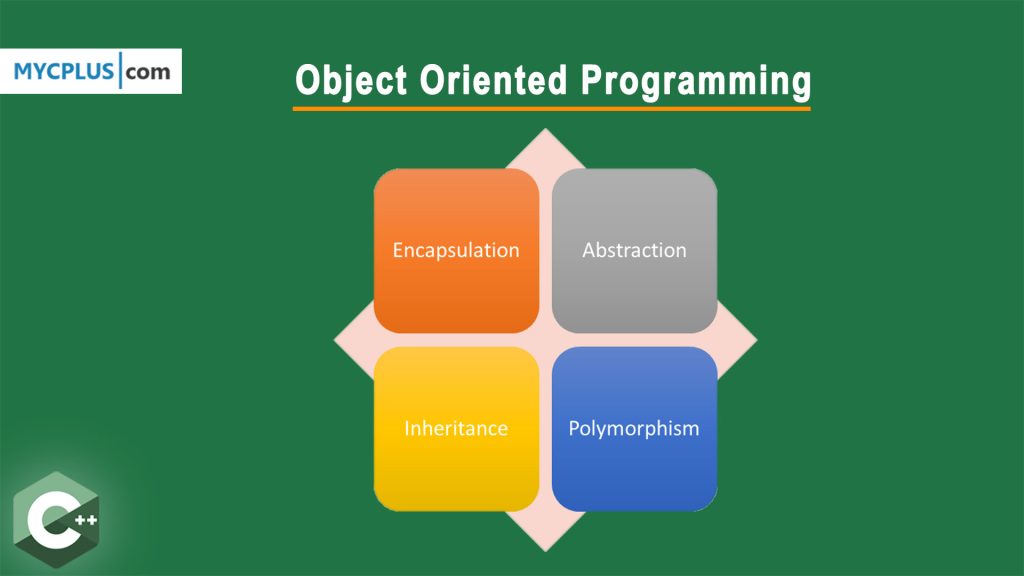
MYCPLUS has been publishing object-oriented programming tutorials and practical guides since 2004, with a particular focus on OOP techniques applied through C++, Java and C#. This section covers the complete OOP model — from the four core principles of encapsulation, inheritance, polymorphism and abstraction through to practical design techniques used by professional software engineers in real-world systems.
With over 20 articles covering beginner through advanced OOP concepts, you will find clear explanations of how object-oriented design works in practice, working source code examples demonstrating each concept, and practical guides to OOP techniques including polymorphism, method overriding, virtual functions, abstract classes and interface design. Whether you are learning OOP for the first time, reinforcing your understanding of class design, or studying advanced techniques like runtime polymorphism and design patterns — this section builds the conceptual and practical foundation you need.
What You’ll Learn:
- OOP fundamentals — classes, objects, constructors, destructors, access modifiers and the core object-oriented model explained with practical C++, Java and C# source code examples
- Encapsulation and data hiding — using private and protected members, getter and setter methods, access control and the principles of well-encapsulated class design in object-oriented programming
- Inheritance and class hierarchies — base and derived classes, single and multiple inheritance, constructor chaining, method overriding and building clean class hierarchies in C++ and Java
- Polymorphism in depth — compile-time and runtime polymorphism, virtual functions, function overloading, operator overloading and practical polymorphism techniques with working source code examples
- Abstraction and interfaces — abstract classes, pure virtual functions, interface design, separating implementation from interface and applying abstraction principles in real-world OOP design
- Advanced OOP techniques — design patterns, SOLID principles, object composition versus inheritance, template method patterns and professional OOP design strategies used in enterprise software development
Why MYCPLUS: Trusted by programmers and computer science students since 2004 — every OOP tutorial includes practical source code examples in C++, Java and C# with clear explanations of object-oriented techniques designed for real-world software development.
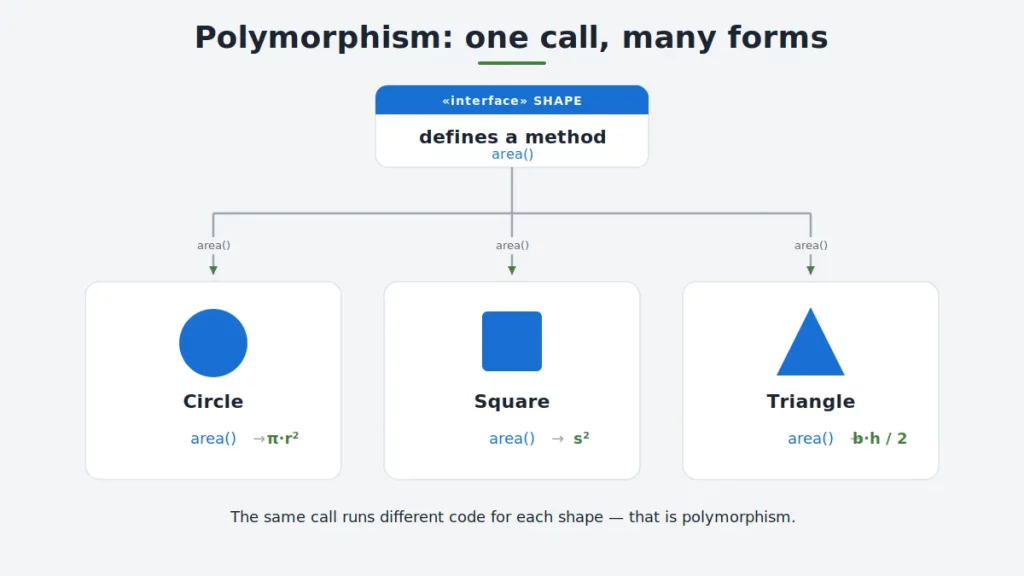
Polymorphism lets a single method call take many forms. This practical guide explains compile-time vs runtime polymorphism and walks through runnable C++, Java, and Python examples you can try right away.
C Programming Classes Inheritance Polymorphism
Any program which uses these five methodologies or any of it, we can call that program object oriented. They are Encapsulation, Data Hiding, Overloading, Polymorphism, Inheritance. Any programming language which supports all of these features and facilitate the programmer in developing the program in these methodologies is called Object Oriented Programming Language i.e. C++, Java, C#.
C Programming Encapsulation Inheritance OOP Overloading Polymorphism
In real life inheritance is what we acquire from our parents. For example our lifestyle, way of talking etc… In
C Programming Inheritance OOP
The basic idea behind the Object Oriented Programming is that it deals with the objects. In real life everything is an object and every object has properties and functionality.
C Programming OOP
The STL (Standard Template Library) was originally a third-party library from HP and later SGI, before its incorporation into the C++ standard. The standard does not refer to it as “STL”, as it is merely a part of the standard library, but many people still use that term to distinguish it from the rest of the library (input/output streams [known as IOstreams], internationalization, diagnostics, the C library subset, etc.).
C++ Libraries STL