C Programming

Personal Organizer
Utility Programs and Applications

Personal Organizer

NeoMem allows you to store and organize all kinds of information in a cross between a word processor and database. The interface is similar to Windows Explorer, except that instead of dealing with files on a hard disk you deal with objects in a file. It can be used to store to do lists, books, website passwords, addresses, account information, and collections of all kinds. You can define your own classes for items that you want to store information about, and define properties for those objects. Each object can also store formatted text in a simple word processor view.

,
Functions in C++
C++ Programming: Different Articles on C++ Programming

Functions in C++ Programming

Functions are the building blocks of any programming language. In C++, a function is a block of code that performs a specific task. Think of it as a mini-program within your main program, designed to execute a particular operation. Functions are like building blocks that help break down complex problems into manageable chunks, making your code more readable and modular.

, , ,
file handling in C
C Programming: Different Articles on C Programming

Learn File Handling Concepts in C Programming

This article is about file handling using C programming language. File stores information for many purposes and retrieve whenever required by our C programs. A file represents a sequence of bytes on the disk where a group of related data is stored. File is created for permanent storage of data. C programming language can handle files as Stream-oriented data (Text) files and System oriented data (Binary) files.

, ,
advanced exception handling in C++
C++ Programming: Different Articles on C++ Programming

A Guide to Advanced Exception Handling in C++ Programming

An exception usually signals an error. One of the major features in C++ is exception handling, which is a better way of thinking about and handling errors. Thought it doesn’t always indicate an error, it can also signal some particularly unusual even in your program that deserves special attention. This article also covers try, throw, and catch, the C++ keywords that support exception handling.

, , , , , , , ,
Understanding C++ Templates
C++ Programming: Different Articles on C++ Programming

Understanding C++ Templates: A Simplified Guide

Learn the basics of C++ templates and how they are used in programming. This article breaks down the concept of templates, their types, and common challenges. From function templates to member function templates, discover their practical applications and potential pitfalls. Whether you’re a beginner or looking to deepen your understanding, this guide provides a straightforward explanation of C++ templates.

, , , ,
graphics.h Reference
C Programming: Different Articles on C Programming

Graphics in C Language

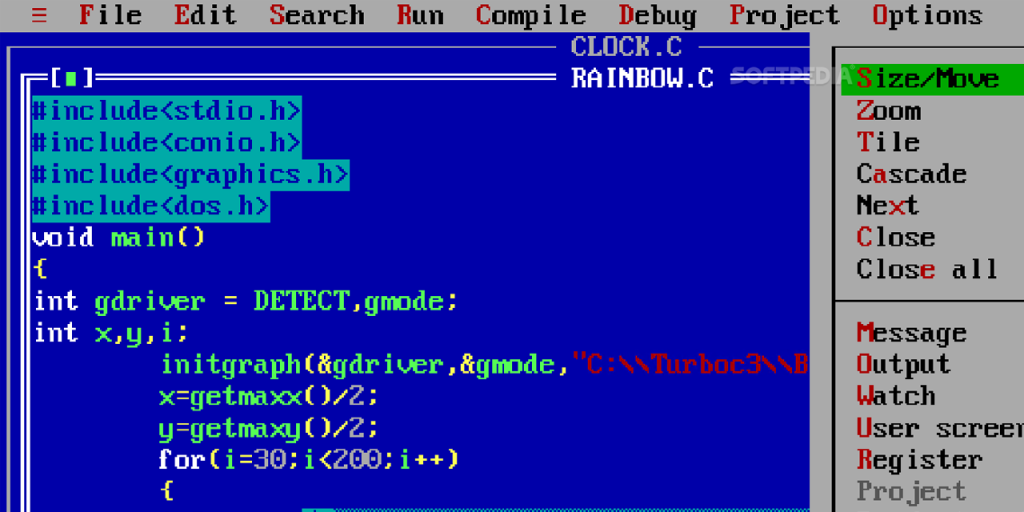
In a C program, first step is to initialize the graphics drivers on the computer. This is done using the initgraph() method provided in graphics.h  library. In the next few pages we will discuss graphics.h library in more details. Important functions in graphic.h  library will be discussed in details and samples programs will be provided to show the power of C programming language especially for graphic programming developing graphical user interfaces.

,
Working with Pointers
C Programming: Different Articles on C Programming

Working with Pointers in C

A pointer is a variable that represents the location of a data item, such as a variable or an array element. Pointers are used frequently in C, as they have a number of useful applications. For example, pointers can be used to pass information back and forth between a function and its reference point. Pointers provide a way to return multiple data items from a function via function arguments to
be specified as arguments to a given function.

, , , ,
Functions-in-C
C Programming: Different Articles on C Programming

Functions in C Programming

Function groups a number of program statements into a unit and gives it a name. This unit can be invoked from other parts of a program. A computer program cannot handle all the tasks by it self. Instead its requests other program like entities – called functions in C – to get its tasks done. A function is a self contained, named block of statements that perform a coherent task of same kind.

,
Scroll to Top