
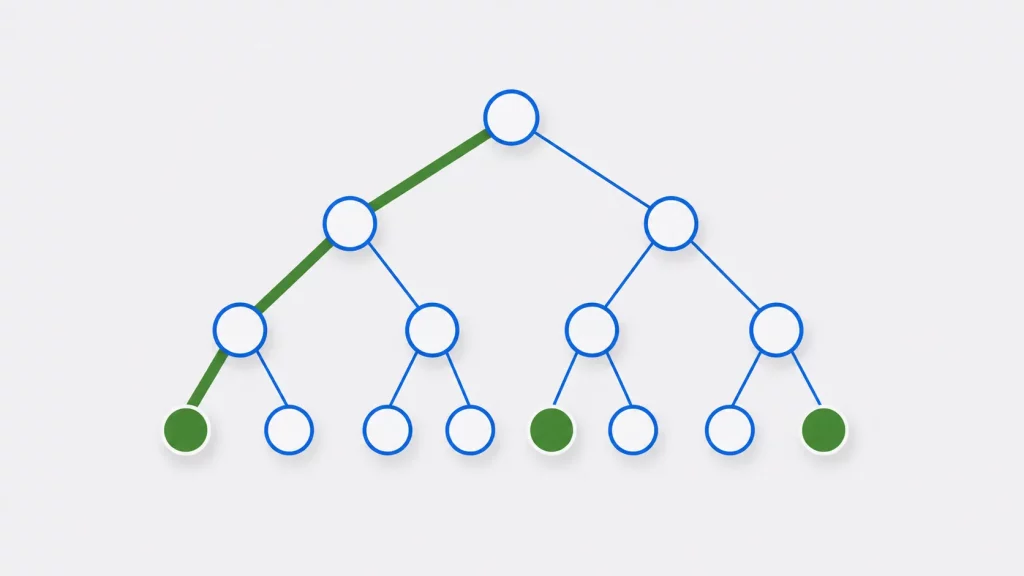
Trie Data Structure Explained — Implementation in C++ with Applications
Prefix lookups that scale with the prefix, not the dictionary — and the memory bill that pays for them, measured on 76,226 words.
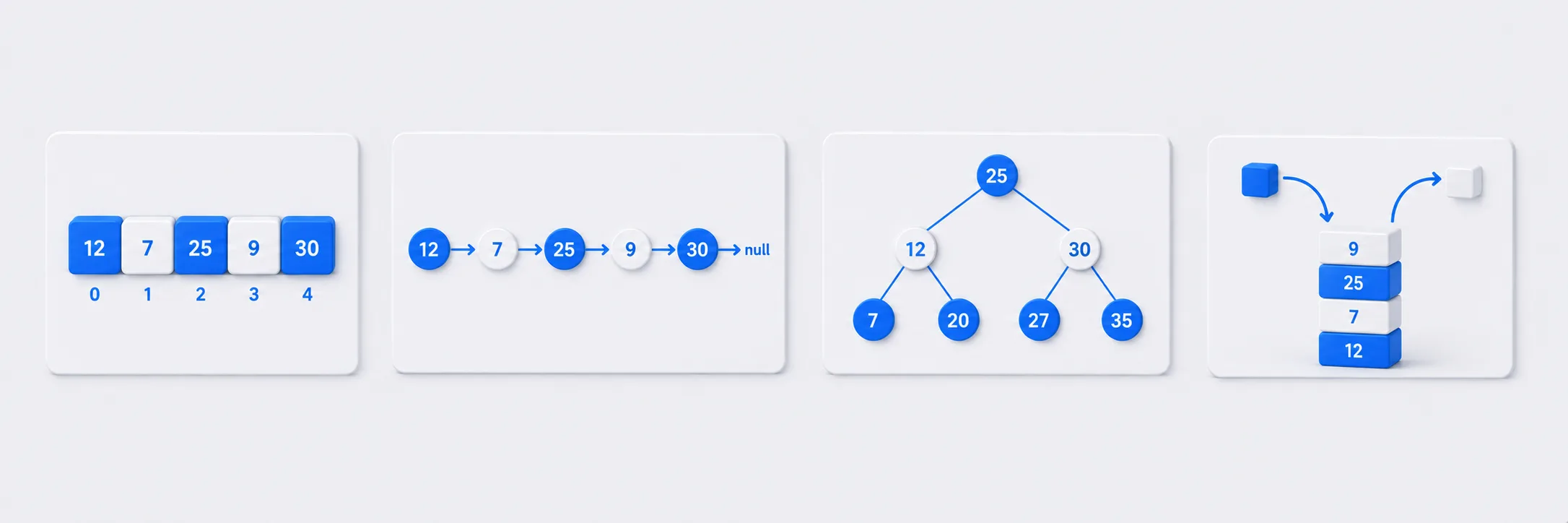
Data structures are the building blocks of every program you write. Every time you store a list of items, look up a value by key, or navigate a hierarchy of information, you are using a data structure. Choosing the right data structure for a problem is one of the most important decisions a programmer makes — it determines how fast your code runs, how much memory it uses, and how easy it is to maintain as your software grows.
MYCPLUS has been publishing data structures tutorials and practical programming guides since 2004, with a strong focus on beginner-friendly explanations and working implementations in C and C++. This section covers the essential data structures every programmer needs to understand — from the everyday arrays and strings you use in daily programming through to linked lists, stacks, queues, trees and graphs that power more complex software systems.
With practical source code examples you can compile and study immediately, clear explanations of how each structure works internally, and real-world context showing where each data structure is used in professional software development, this section gives you the foundation to write better, faster and more efficient code from day one.
Why MYCPLUS: Trusted by programmers and computer science students since 2004 — every data structures tutorial includes working C and C++ source code, beginner-friendly explanations and practical examples designed for real daily programming challenges.
Prefix lookups that scale with the prefix, not the dictionary — and the memory bill that pays for them, measured on 76,226 words.
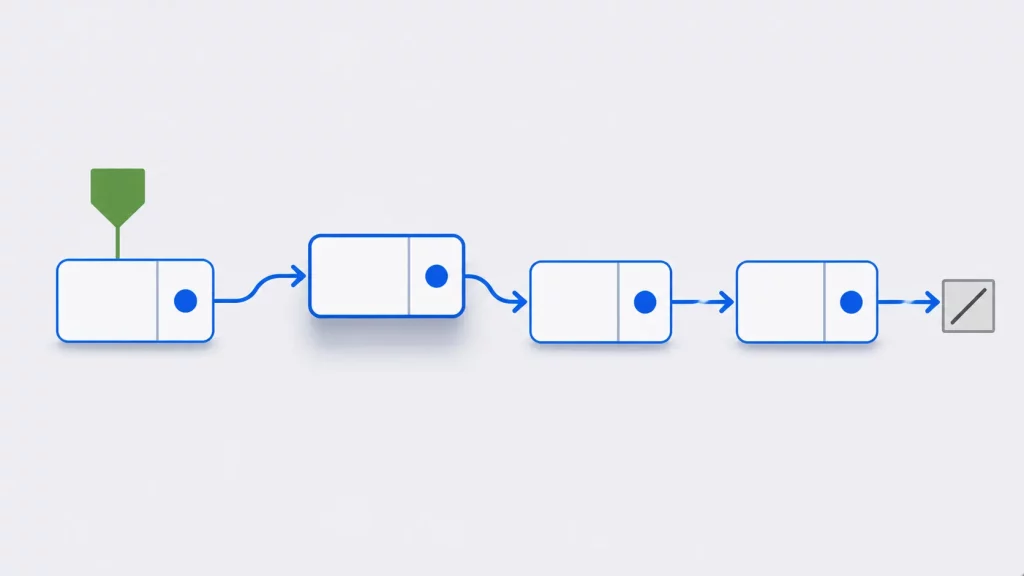
A linked list in C chains heap-allocated nodes through pointers. Build one completely: all operations, complexity analysis and a tested full program.
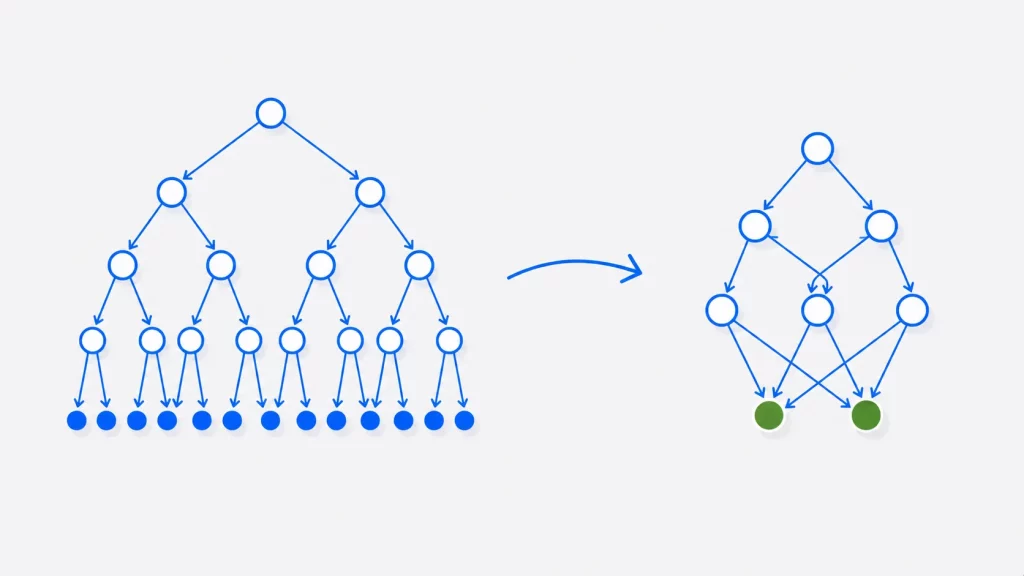
Binary Decision Diagrams compress Boolean functions into compact graphs used in verification and circuit design. This guide covers reduction rules, ROBDDs, a C example, and applications.
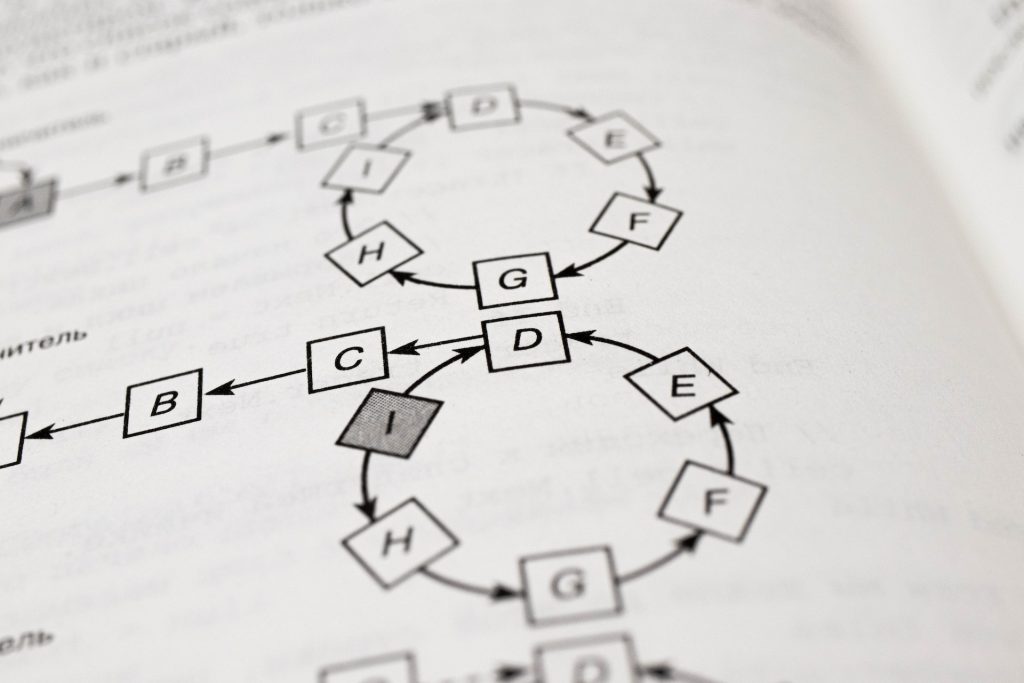
Algorithmic logic is crucial for computer science. It might sound complex for a beginner, but it is manageable upon further inspection. It is based on the daily logic people use whether they look for the best assignment help website or the best flight ticket aggregator. Hopefully, this guide will help you start with mastering algorithms.

Data structures are fundamental concepts for any software application and programming in general. It is an incredibly valuable skill set to serve you in your career. That’s why it is a great idea to start learning it in college to have time for practice and in-depth research.
The basic aim of mycplus.com website was to develop a website for students of C/C++ and data structures. There are lots of tutorials and source code covering different aspects of C/C++ programming language. Today I have decided to write few articles about data structures and their implementation in C/C++.

As discussed in our previous post, C and C++ programmers have access to two main types of data structures: built-in
A binary tree is made of nodes, where each node contains a “left” pointer, a “right” pointer, and a data

Data structures are essential for efficient programming, enabling optimal data storage, retrieval, and management. This article explores key data structures in C++, including arrays, linked lists, stacks, queues, hash tables, trees, and graphs. Each structure is explained with practical examples, highlighting its use cases and efficiency considerations. Choosing the right data structure improves performance, reduces memory usage, and enhances scalability. Understanding their strengths and limitations helps programmers write optimized and effective code.