Muhammad Saqib – Senior Software Engineer & Founder of MyCPlus

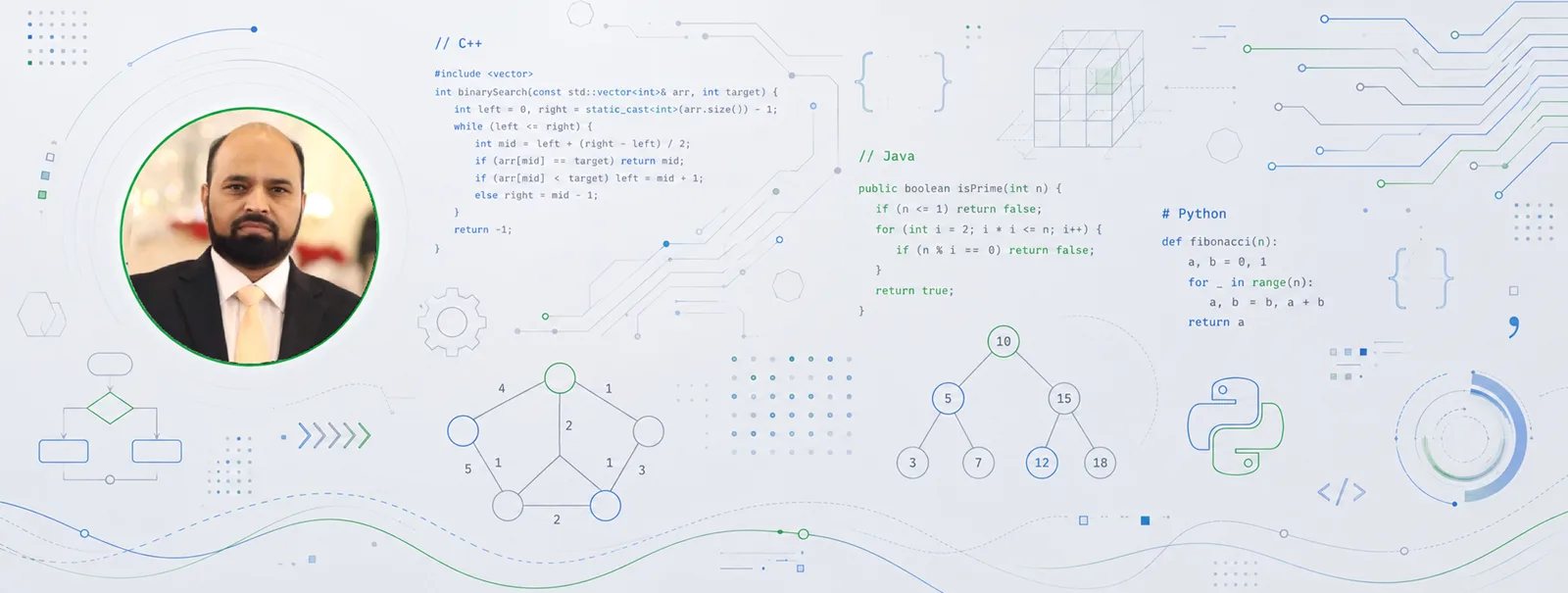
Muhammad Saqib author banner — MyCPlus

Muhammad Saqib is the founder and lead author of MyCPlus, the programming-education site he launched in 2004. The idea grew out of his own struggle learning to program at university — C was the first language he picked up — and the help he wished he’d had became the site he built for others. What began as a C and C++ resource has since grown into a broad hub of tutorials, working code examples, and computer science guides across many languages and skill levels.

He holds an MSc in Computer Applications from the University of Plymouth, UK (2008) and has spent over 15 years building large-scale software across automotive, healthcare, retail, mobility, and education. Along the way he has worked with Ford, Hyundai, Trilogy/DevFactory, OT EMR, Al Othaim Markets, and NUST–SEECS, and today leads backend engineering as Technical Team Lead at a public transportation authority.

A hands-on, polyglot engineer, he works across C/C++, Java, C#, PHP, Python, and JavaScript, and writes here about programming, software engineering, DevOps, Agile, and computer science.

More than twenty years on, MyCPlus keeps the goal it started with: clear tutorials, real source code, and a place for learners to get unstuck — written by someone who has been on both sides of the problem.

Algorithms in C

Algorithms in C

These algorithms are represented in terms of compact implementations in C so that readers can both understand their fundamental properties and implement them in real applications. The method of the analysis of algorithms is quite carefully designed. When appropriate, analytic results are described to explain why certain algorithms are preferred. In some cases, the practical algorithms’ relationship being discussed to purely theoretical results is also described.

Effective C++

Effective C++: 55 Specific Ways to Improve Your Programs and Designs

The book opens with some hints for porting code from C to C++ and then moves on to the proper use of the new and delete operators in C++ for more robust memory management. The text then proceeds to class design, including the proper use of constructors, destructors, and overloaded operator functions for assignment within classes. (These guidelines ensure that you will create custom C++ classes that are fully functional data types, which can be copied and assigned just like built-in C++ classes.)

graphics.h Reference

256-Color VGA Programming in C

This tutorial covers many topics in VGA programming in the C programming language. Tutorial assumes that the programmers have a comprehensive understanding of C and should also have a familiarity with DOS and BIOS function calls and interrupts. Knowledge of trigonometry and geometry would also be helpful.

Scroll to Top