C++ Programming Tutorials — Fundamentals to Advanced Techniques

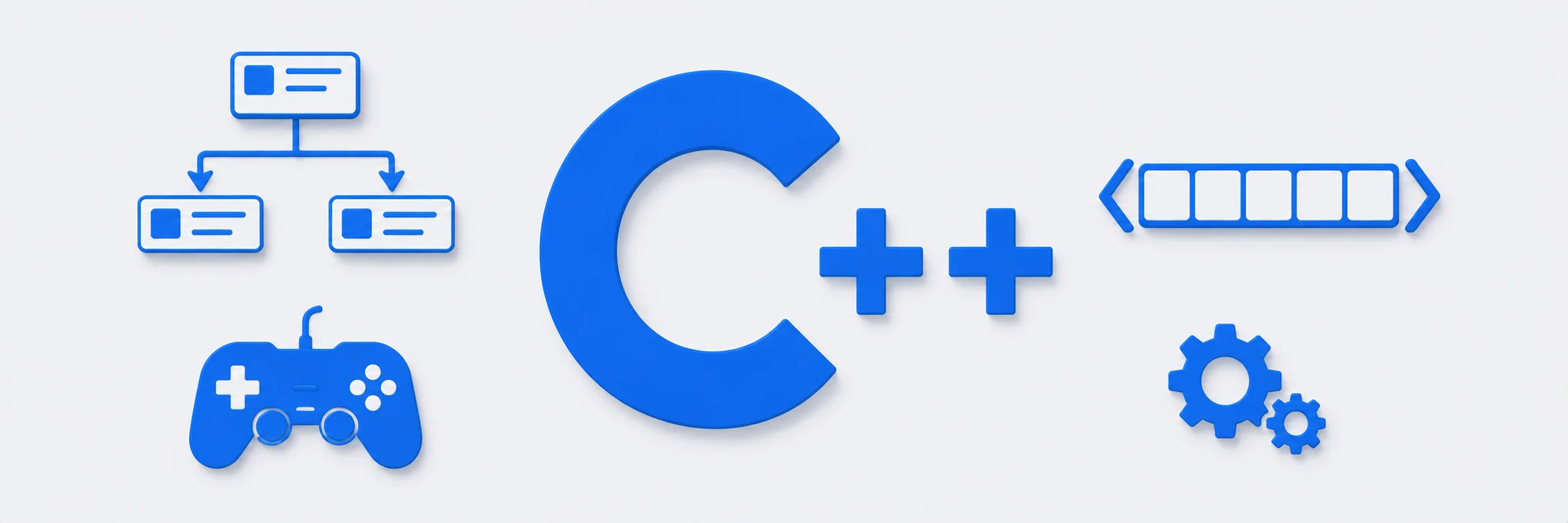
Flat illustration of a bold C++ symbol with class hierarchy inheritance arrows STL vector container and game controller icons representing C++ programming tutorials

C++ is one of the most powerful and widely used programming languages in the world. Built on the foundation of C, it adds object-oriented programming, generic programming through templates, and the rich Standard Template Library — making it the language of choice for game development, systems programming, high-frequency trading, real-time applications, and performance-critical software.

MYCPLUS has been one of the web’s longest-running C++ programming resources, publishing tutorials, source code examples and practical guides since 2004. This section covers everything from the absolute basics of C++ syntax through to modern C++ features introduced in C++11, C++14, C++17 and beyond. You will find clear explanations of classes, inheritance, polymorphism and encapsulation, practical STL container and algorithm examples, and real-world source code that demonstrates how C++ is used in professional software development.

Whether you are a student learning C++ for the first time, a C programmer making the transition to object-oriented development, or an experienced developer exploring modern C++ features like smart pointers, move semantics and lambda expressions — this section has the resources you need to level up your C++ skills.

What You’ll Learn:

  • C++ fundamentals — classes, objects, constructors, destructors, access modifiers and the core OOP model
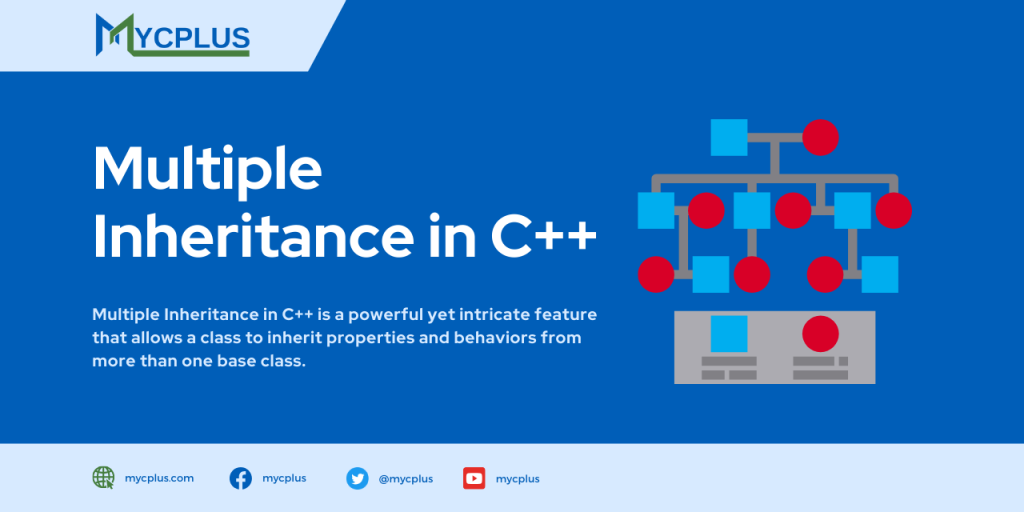
  • Inheritance and polymorphism — class hierarchies, virtual functions, abstract classes and runtime polymorphism
  • STL mastery — vectors, maps, sets, iterators and the standard algorithms library with practical examples
  • Modern C++ features — smart pointers, move semantics, lambda expressions, auto typing and range-based loops
  • Templates and generic programming — function templates, class templates and template specialisation
  • Game development with C++ — how C++ powers game engines, graphics programming and real-time systems

Why MYCPLUS: One of the web’s longest-running C++ resources — trusted since 2004 with hundreds of tutorials, examples and source code projects built for real learning.

Applications Written in cpp

Discover the Best and Most Popular Applications Written in C/C++

Discover the top 10 applications developed with C/C++ in this informative article. From operating systems to video games, C/C++ has been used to create some of the most popular and high-performance applications in the world. Explore this list and learn about the benefits of using C/C++ for developing software that requires speed, efficiency, and robustness. Read now to find out why C/C++ continues to be a top choice for developers worldwide.

C++ Inheritance

C++ program to demonstrate Inheritance

This is a simple C++ Program to demonstrate Inheritance. Simpler methods in the classes have been changed to inline code to shorten the file considerably. In a practical programming situation, methods that are this short should be programmed inline since the actual code to return a simple value is shorter than the code required to send a message to a non-inline method.

Advanced C++ Inheritance Techniques

Advanced C++ Inheritance Techniques for Effective Object-Oriented Programming

In Object Oriented Programming Inheritance is the process by which objects of one class acquire the properties and functionality of objects of another class. In the last tutorial on inheritance in C++ we developed a model using modes of transportation to illustrate the concept of inheritance. In this article we will use that model to illustrate some of the finer points of inheritance and what it can be used for.

Object Oriented Programming

Inheritance in C++

The principle of inheritance is available with several modern programming languages and is handled slightly differently with each. C++ allows you to inherit all or part of the members and methods of a class, modify some, and add new ones not available in the parent class. You have complete flexibility, and as usual, the method used with C++ has been selected to result in the most efficient code execution.

Memory Management

C++ Memory Management

Everyone knows that memory management is a difficult and dangerous chore in C++. This series of three articles will show you that the conventional wisdom is not true. When approached correctly, C++’s seemingly archaic memory-management scheme actually provides an opportunity to create spectacular programs – programs that would not be possible with more modern languages that handle memory automatically.

Transitioning from C to C++

Transitioning from C to C++: A Quick Guide for Novice Programmers

As we begin the study of C++ and object oriented programming, a few comments are in order to help you get started. Since the field of object oriented programming is probably new to you, you will find that there is a significant amount of new terminology for you to grasp. This is true of any new endeavor and you should be warned not to be intimidated by all of the new concepts.

Basics of Encapsulation in C++

Understanding the Basics of Encapsulation in C++

Encapsulation is a fundamental concept in Object Oriented Programming (OOP) that involves bundling data (attributes) and methods (functions) into a single unit known as a class. This encapsulated unit acts as a self-contained module which enhances code organization and promotes a more intuitive and manageable structure for programmers.

Functions in C++

Functions in C++ Programming

Functions are the building blocks of any programming language. In C++, a function is a block of code that performs a specific task. Think of it as a mini-program within your main program, designed to execute a particular operation. Functions are like building blocks that help break down complex problems into manageable chunks, making your code more readable and modular.

Scroll to Top