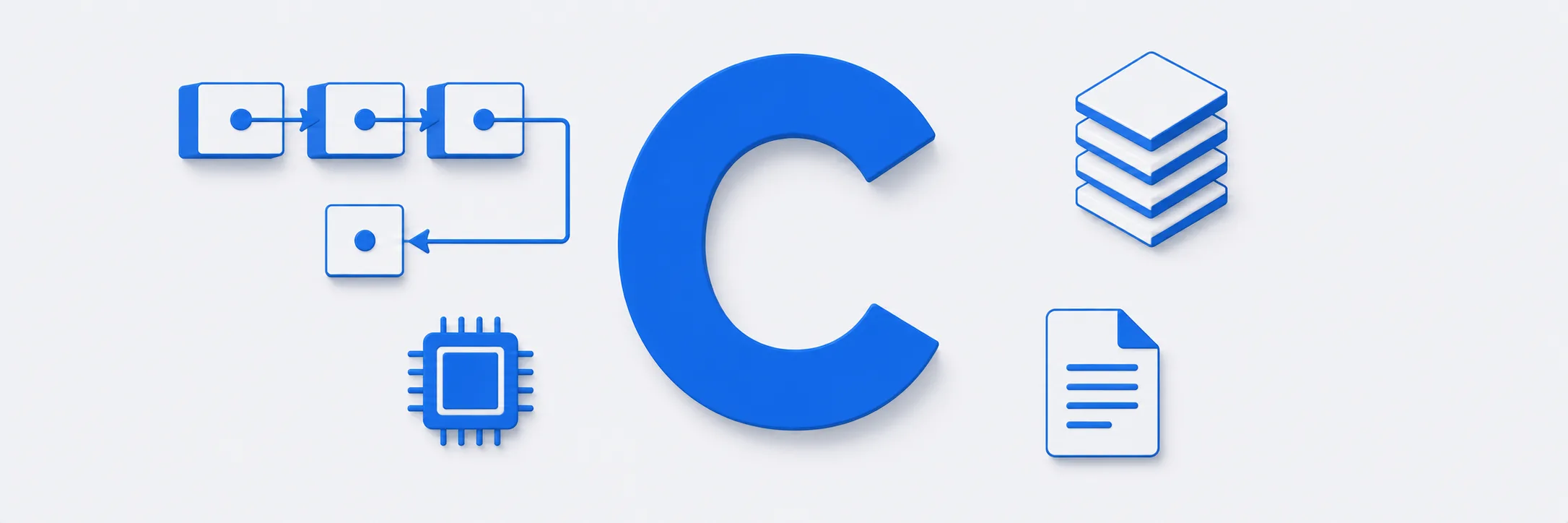
C is one of the most important programming languages ever created. Developed in the early 1970s, it remains the foundation of operating systems, embedded systems, compilers, and high-performance software used across the world today. Learning C gives you a deep understanding of how computers actually work — memory, pointers, data structures, and low-level system operations that higher-level languages hide from you.
At MYCPLUS we have been publishing C programming tutorials, source code examples, and practical guides since 2004. Whether you are writing your first Hello World program or working through complex data structure implementations, this section covers every stage of the C learning journey. You will find step-by-step tutorials, working source code you can compile and run immediately, and clear explanations of concepts that are often poorly explained elsewhere.
C is the language that powers Linux, Windows internals, embedded microcontrollers, game engines, and countless performance-critical applications. If you want to become a serious systems programmer, understand how memory works, or simply build a rock-solid foundation before moving to C++, Java or Python — start here.
What You’ll Learn:
- Core C syntax — variables, data types, operators, control flow and functions explained from first principles
- Pointers and memory management — heap allocation, pointer arithmetic, dynamic arrays and avoiding memory leaks
- Data structures in C — arrays, linked lists, stacks, queues and trees implemented from scratch
- File handling — reading and writing files, binary data and practical I/O operations in C
- Algorithms in C — sorting, searching, recursion and graph traversal with working source code examples
- Systems programming concepts — understanding how C interacts with the operating system, processes and memory
Why MYCPLUS Trusted by C programmers since 2004 — every tutorial includes working source code you can compile, run and learn from immediately.