C Programming Tutorials — From Beginner Basics to Advanced Concepts

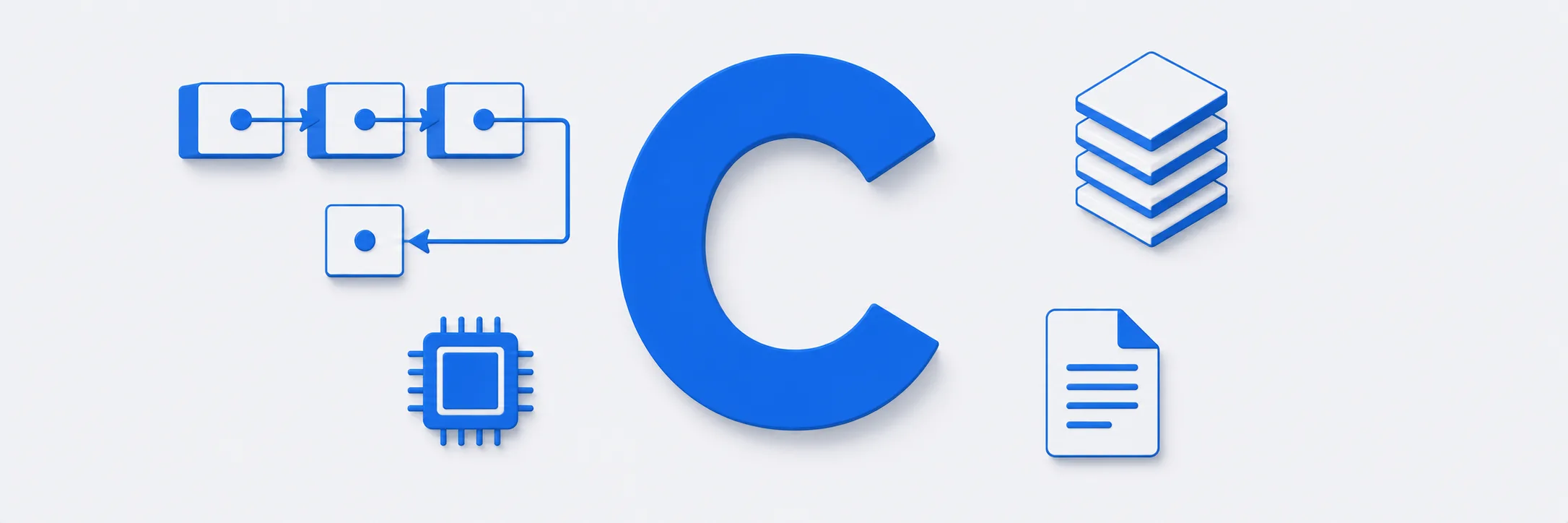
Flat illustration of a bold letter C with pointer arrows memory blocks stack diagram and file handling icons representing C programming tutorials

C is one of the most important programming languages ever created. Developed in the early 1970s, it remains the foundation of operating systems, embedded systems, compilers, and high-performance software used across the world today. Learning C gives you a deep understanding of how computers actually work — memory, pointers, data structures, and low-level system operations that higher-level languages hide from you.

At MYCPLUS we have been publishing C programming tutorials, source code examples, and practical guides since 2004. Whether you are writing your first Hello World program or working through complex data structure implementations, this section covers every stage of the C learning journey. You will find step-by-step tutorials, working source code you can compile and run immediately, and clear explanations of concepts that are often poorly explained elsewhere.

C is the language that powers Linux, Windows internals, embedded microcontrollers, game engines, and countless performance-critical applications. If you want to become a serious systems programmer, understand how memory works, or simply build a rock-solid foundation before moving to C++, Java or Python — start here.

What You’ll Learn:

  • Core C syntax — variables, data types, operators, control flow and functions explained from first principles
  • Pointers and memory management — heap allocation, pointer arithmetic, dynamic arrays and avoiding memory leaks
  • Data structures in C — arrays, linked lists, stacks, queues and trees implemented from scratch
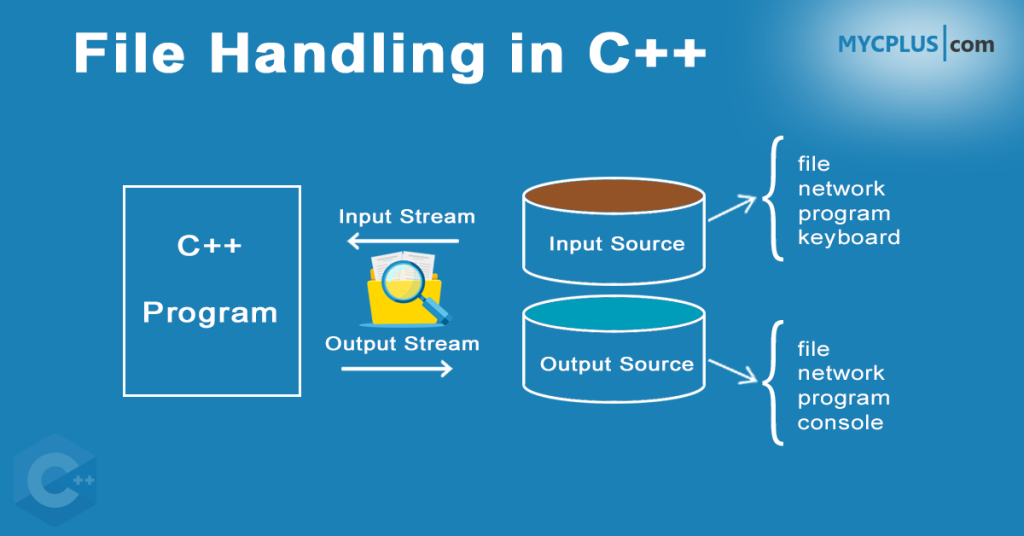
  • File handling — reading and writing files, binary data and practical I/O operations in C
  • Algorithms in C — sorting, searching, recursion and graph traversal with working source code examples
  • Systems programming concepts — understanding how C interacts with the operating system, processes and memory

Why MYCPLUS Trusted by C programmers since 2004 — every tutorial includes working source code you can compile, run and learn from immediately.

ICMP Ping - C Implementation

ICMP Ping Program in C

This sample illustrates how an ICMP ping app can be written using the SOCK_RAW socket type and IPPROTO_ICMP protocol. By creating a raw socket, the underlying layer does not change the protocol header so that when we submit the ICMP header nothing is changed so that the receiving end will see an ICMP packet. Additionally, we use the record route IP option to get a round trip path to the endpoint. Note that the size of the IP option header that records the route is limited to nine IP addresses.

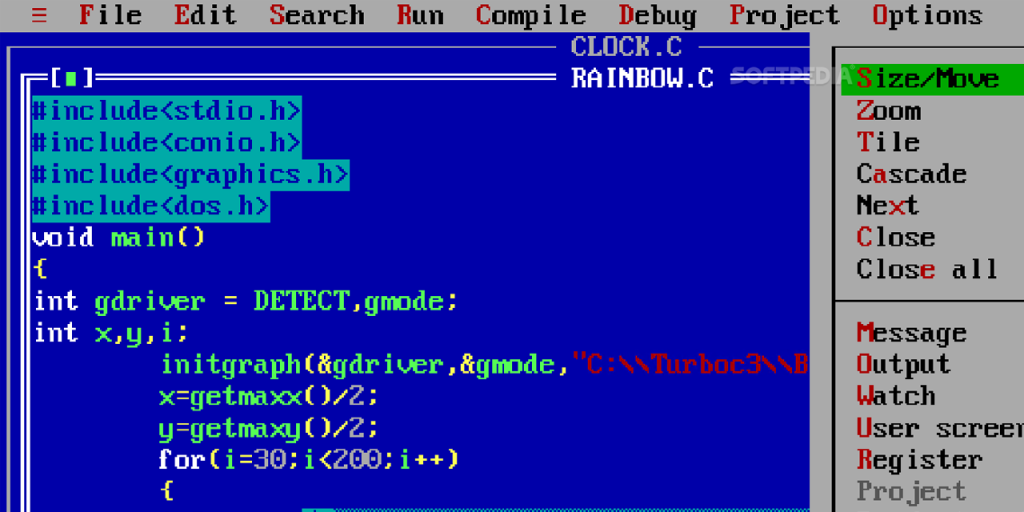
graphics.h Reference

graphics: graphics.h Header File

This is the graphics.h header file which contains all the graphics functions and their implementations. It is quite nice to have a look at header files just to know more about functions and their parameters. Also it tells about different structures, enums defined in the file for specific purpose.

backend frameworks

Print Pyramids and Diamonds Shapes in C Programming

So, here in this article I will demonstrate how you can print pyramids and diamonds using for loop and if condition using C Programming. Building a pyramid in c programming is quite easy, but you must have the understanding of how for loop works. With some slight modifications you can print different shapes as well.

PC to PC Communication in C

PC to PC Communication in C

This is a C program to demonstrate PC to PC Communication via RS232 port. Chat with only 3-wire connection. This program is tested with Turbo C++ editor Version 3.0. How ever, authors are not responsible for any damages that may happen to your computer. Please contact us if any problem exits.

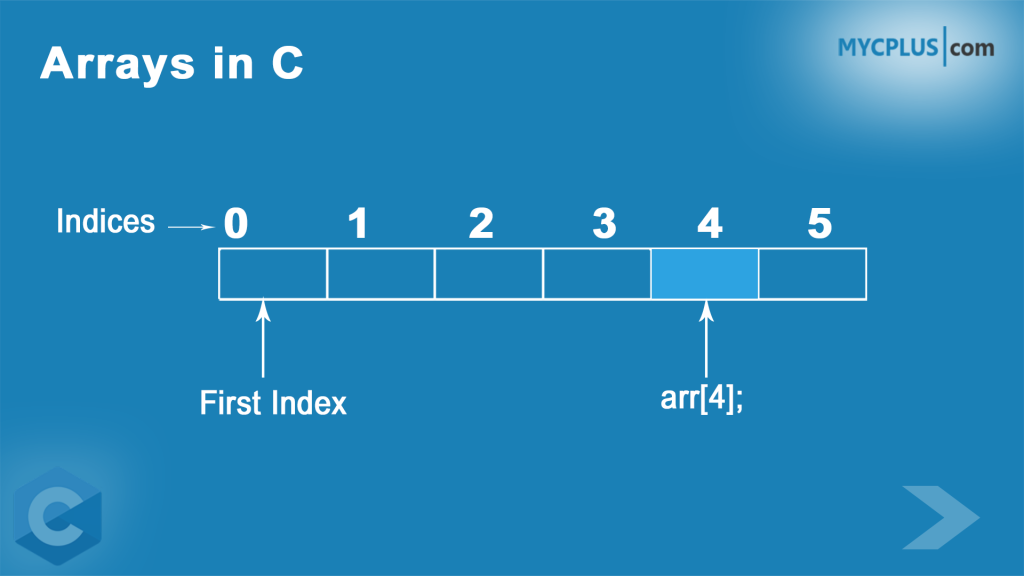
Arrays in C

Different ways to initialize an array in C Programming

In C, an array can be initialized using aggregates, which are a collection of values enclosed in braces ({}) and separated by commas. Another way to initialize array by using a loop which allows you to set the initial values of an array using a more flexible and dynamic approach. The basic idea is to use a loop to assign values to each element of the array based on some condition or calculation.

Multiplication of Two Matrices in C

Multiplication of Two Matrices in C

This C code multiplies two 2×2 matrices. It prompts the user to input values for both matrices, displays the input matrices, performs matrix multiplication using nested loops, and then prints the resulting matrix. The code adheres to modern C standards, using printf and scanf for I/O and avoiding outdated functions for better readability and compatibility.

Scroll to Top