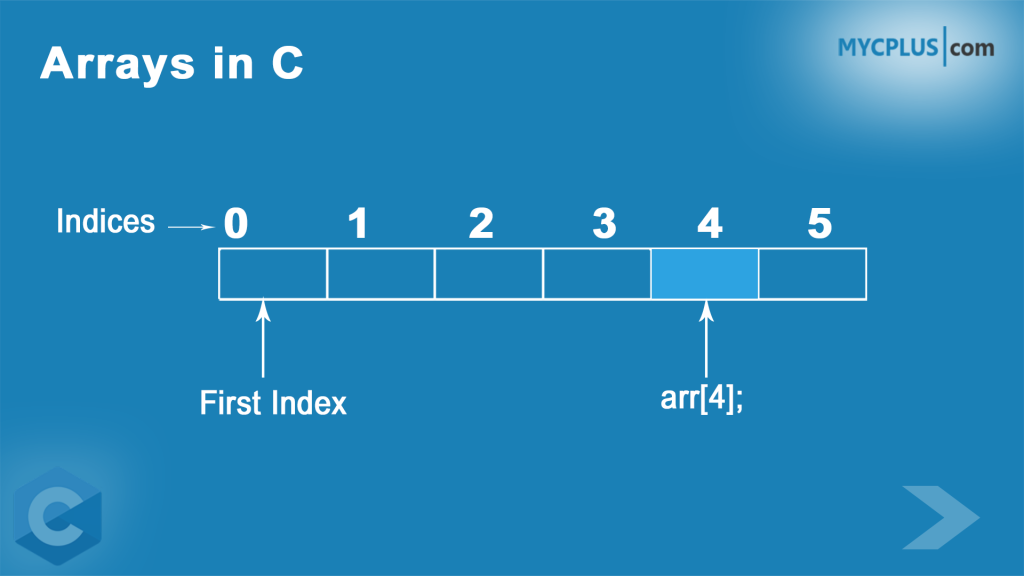
Arrays in C

Different ways to initialize an array in C Programming

In C, an array can be initialized using aggregates, which are a collection of values enclosed in braces ({}) and separated by commas. Another way to initialize array by using a loop which allows you to set the initial values of an array using a more flexible and dynamic approach. The basic idea is to use a loop to assign values to each element of the array based on some condition or calculation.
mycplus

C Program to Add Sequence of Numbers

This C program reads a sequence of positive integers as input by the user and print their sum. The program keeps on taking the input from user until user enters number ( 0 ) and program calculates the sum of all input numbers. Finally this C program prints the sum of all the numbers on screen and terminates.

Functions in C

C Programming: Example C Program to Understand Functions

This C source code demonstrates the implementation of fundamental mathematical operations using functions in the C programming language. It includes functions for calculating the square of a number, reading user input, and determining the area of a rectangle. The main program showcases the usage of these functions with specific values, providing a practical example for beginners to understand basic C programming concepts.

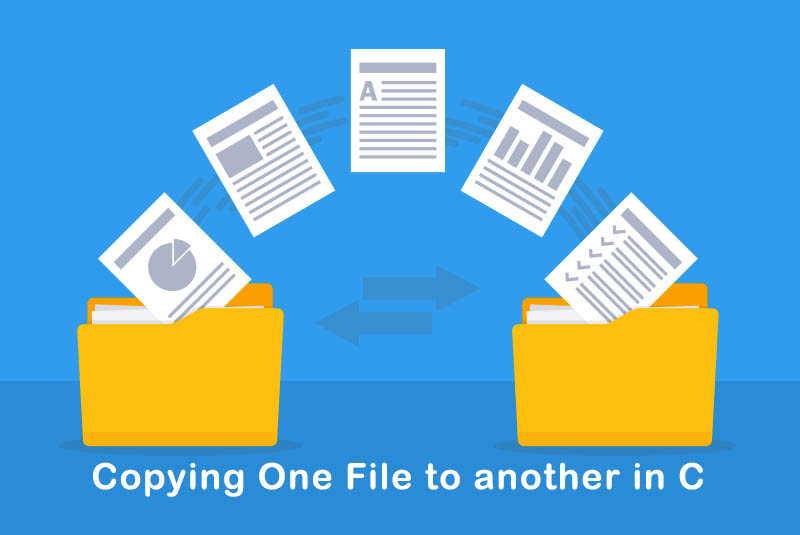
Copying One File to another in C

Copying One File to another in C

This is a simple C program that copies the contents of one file onto another file. It is similar to Unix’s cp  command. This C program is called with two parameters i.e. the names of two files. The contents of the file referenced in second parameter are copied onto the file which is referenced by first parameter. 

Defensive Programming Techniques

Defensive Programming Techniques

This source code is from Thinking in C++, 2nd Edition, Volume 2, by Bruce Eckel & Chuck Allison. You can use Borland, G++ (For version 3 and above only), Microsoft (For C++ with .NET only) to compile and build this source code. Writing perfect software may be a daunting task for developers, but a few defensive techniques which are routinely applied can go a long way toward narrowing the gap between code and ideal. Defensive programming practices are often used where high availability of the application is required, safety if utmost concern, or security is needed for application to work.

Scroll to Top