Source Code

Towers of Hanoi Java Program

Towers of Hanoi Java Program

This Java Program solves the Towers of Hanoi problem for a tower of 10 disks. Ten differently-sized disks are stacked in a pile, in order of decreasing size. There are two other places for piles. The object is to move the pile to the second available place, subject to the rules that only one disk at a time can be moved, and no disk can be piled on top of a smaller disk. The Towers of Hanoi problem is a standard example of recursion.

Java Swing GUI

Java Swing GUI Example Program

This Java source code is an example of a Graphical User Interface (GUI) with different GUI elements such as TextBox, Buttons, TextArea, Text Area and Labels. It is implemented using Java Swing API which provides a set of “lightweight” (all-Java language) components. This code example extends the functionality of JFrame class to show a JFrame window and Implements ActionListener on buttons to catch the click event on those buttons.

Java Calculator Program with GUI

Java Calculator Program with AWT and Swing Based GUI

This Java source code implements a basic calculator with a graphical user interface (GUI) using AWT and Swing. The program is structured in a way that makes it suitable for novice programmers to understand and learn about GUI development in Java. It serves as an excellent starting point for those looking to explore basic GUI applications and understand the principles of event-driven programming.
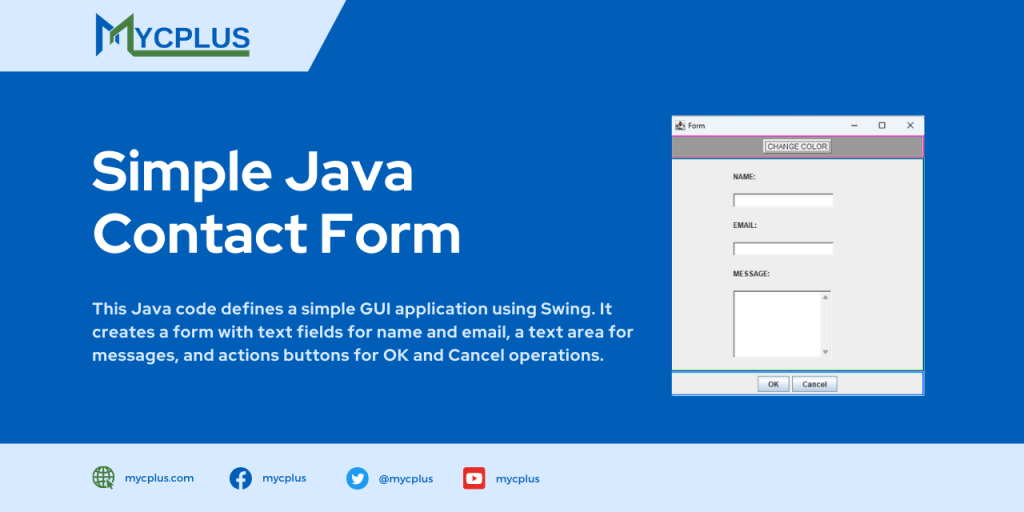
Simple Java Contact Form

Simple Java Contact Form

The following Java code defines a simple GUI application using Swing. It creates a form with text fields for name and email, a text area for messages, and actions buttons for OK and Cancel operations. Additionally, there is a button to change the background color of the form.

String Sorting in Java

String Sorting in Java

In this article, we explore different sorting techniques applied to strings in Java. We will look into the implementation of the direct insertion sorting algorithm and more advanced techniques such as the Merge Sort and Quick Sort algorithms. Each approach offers unique advantages by providing Java developers with flexibility in choosing the most suitable method based on the specific requirements of their applications.

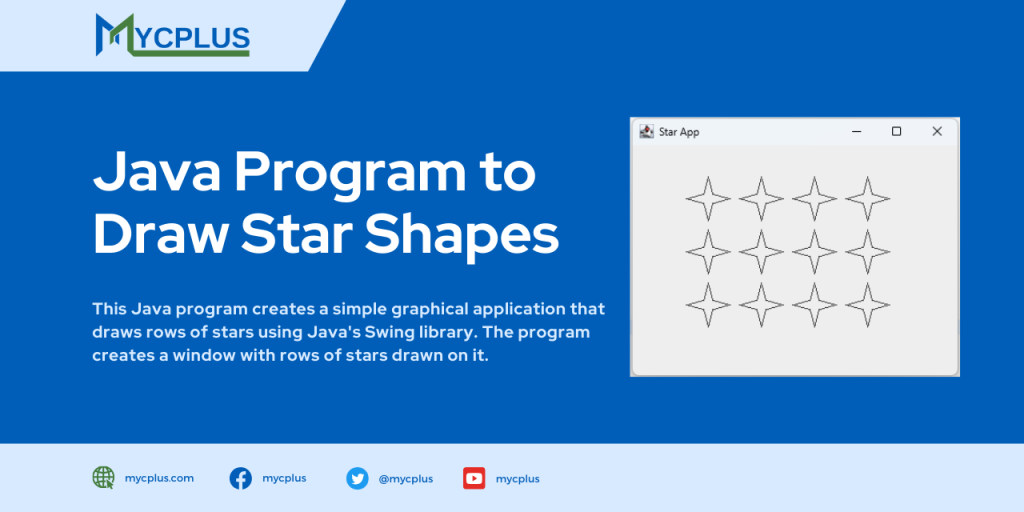
Java Program to Draw Star Shapes

This Java program creates a simple graphical application that draws rows of stars using Java’s Swing library. The program creates a window with rows of stars drawn on it. The Star class defines the shape of a star, the StarPane class handles the drawing logic, and the StarApplet class sets up the main frame for the application. This example showcases basic GUI programming with Swing.

astrological_sign

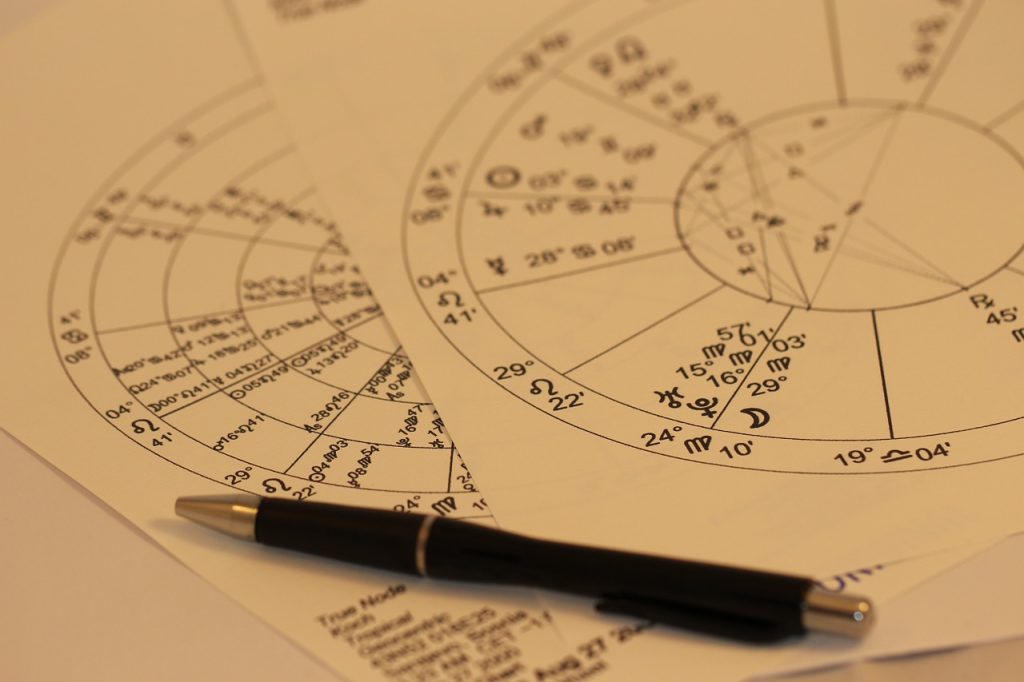
Ouputs the Zodiac signs

The following Java program shows the Zodiac sign corresponding to a given date. This little program can be used to find your Zodiac sign if you input your date of birth.

Blackjack Java Game Challenge

Blackjack Java Game Challenge

The Blackjack game written in Java provides a graphical user interface (GUI) for players to enjoy a simplified version of the classic card game. Upon starting the game, players are dealt an initial set of two cards each, and the goal is to build a hand with a total value as close to 21 as possible without exceeding it. The game features a deck of standard playing cards, including numbered cards, face cards (King, Queen, Jack), and Aces, each contributing their respective values to the hand.

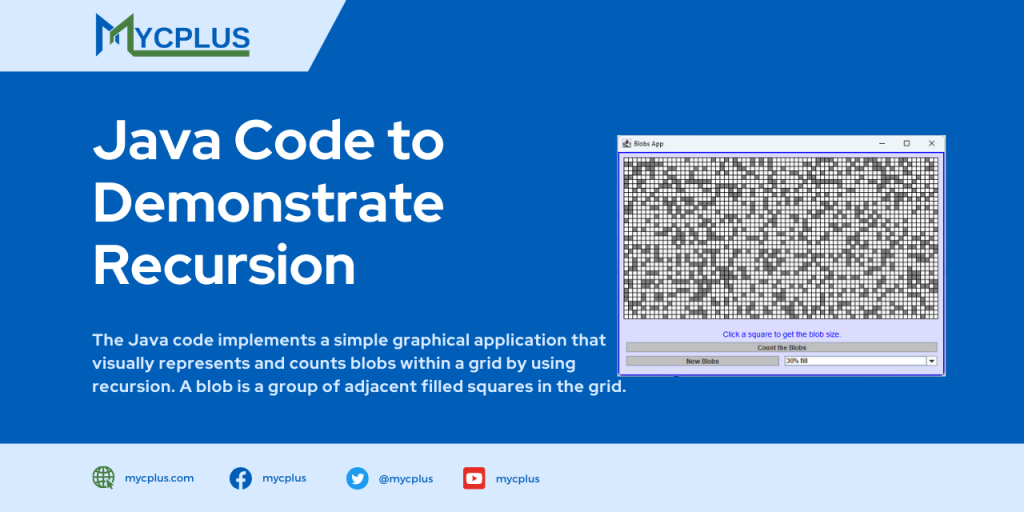
Java Code to Demonstrate Recursion

The Java code implements a simple graphical application that visually represents and counts blobs within a grid by using recursion. A blob is a group of adjacent filled squares in the grid. The application uses Java Swing for creating the graphical user interface (GUI) components. It includes buttons for generating a new set of blobs, counting the number of blobs, and a grid where users can click to get information about the blob size at that specific position. This Java code uses recursion in the getBlobSize method to calculate the size of a blob.

Java - Set Different Borders of a Label

Java Source Code: Create Different Borders of a Label

This is a Java source code for a simple graphical application that demonstrates how to use various types of borders in Swing, a Java GUI toolkit. The program defines a class BorderDemo that extends JApplet, a Swing component used for embedding a Java application in a web page or other container.

mycplus

A Java Application for Two-Way Chatting

This Java Code supports two-way chatting between users. It implements a client for the ConnectionBroker server, which can set up a relayed connection between a pair of such clients. There are really two functions: The user can register with the server as a client who is willing to accept a connection, or the user can make a connection with one of the clients who is waiting on the server. The code retrieves and displays a list of waiting clients when it starts. There is a Refresh button that the user can click to refresh this list (since the list of waiting clients can change from time to time).

Scroll to Top