C++ Programming

Object Oriented Programming
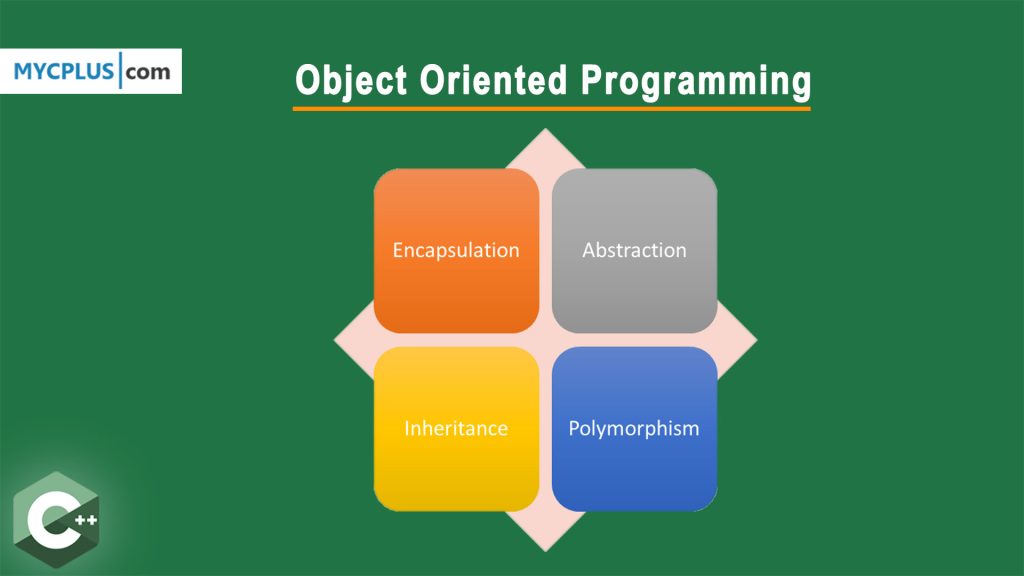
Object Oriented Programming: Inheritance, Polymorphism, Encapsulation

Polymorphism: Object Oriented Programming (OOP)

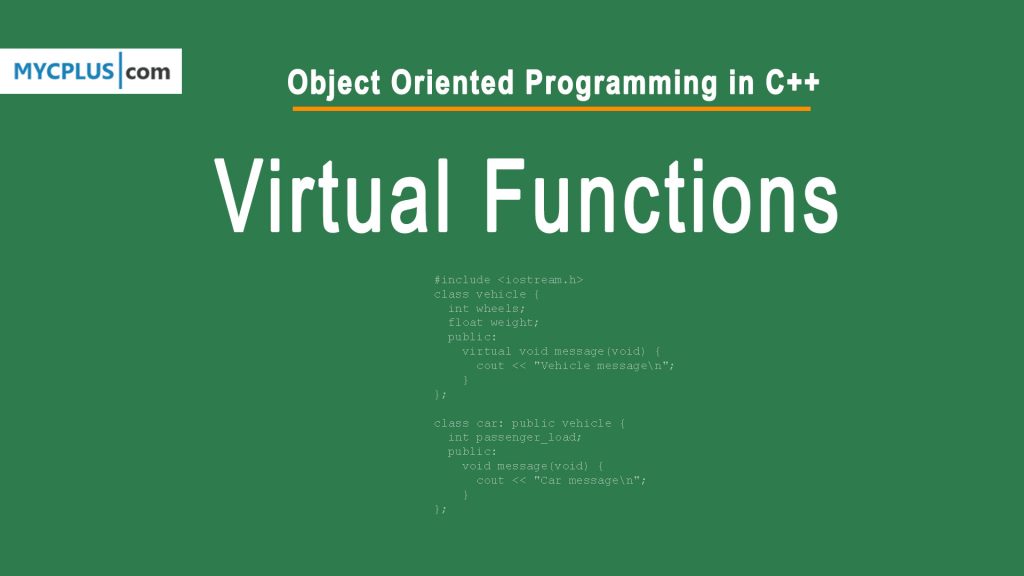
In OOP terms, polymorphism represents the ability to resolve a reference to an object’s method at run time. Specifically, different objects could make a call to a Draw or Print method, and these methods would act differently with each object; the process can take different forms behind a common interface. One of the benefits of polymorphism is that because the interface is common to objects, any object is able to respond differently to some common set of tasks, and objects are independent of each other.
, , ,
Personal Organizer
Utility Programs & Applications – C, C++ & Other Languages

Personal Organizer

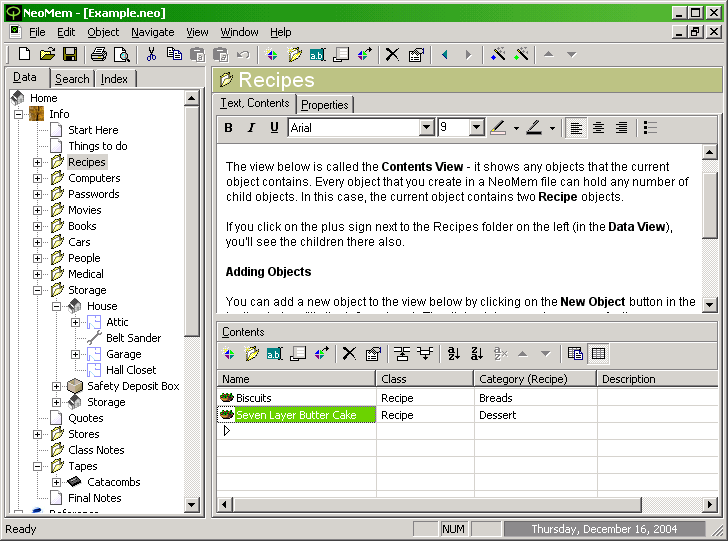
NeoMem allows you to store and organize all kinds of information in a cross between a word processor and database. The interface is similar to Windows Explorer, except that instead of dealing with files on a hard disk you deal with objects in a file. It can be used to store to do lists, books, website passwords, addresses, account information, and collections of all kinds. You can define your own classes for items that you want to store information about, and define properties for those objects. Each object can also store formatted text in a simple word processor view.

,
Basics of Encapsulation in C++
C++ Tutorials & Articles – Learn C++ Basics, Features & Compilers

Understanding the Basics of Encapsulation in C++

Encapsulation is a fundamental concept in Object Oriented Programming (OOP) that involves bundling data (attributes) and methods (functions) into a single unit known as a class. This encapsulated unit acts as a self-contained module which enhances code organization and promotes a more intuitive and manageable structure for programmers.

, , ,
Functions in C++
C++ Tutorials & Articles – Learn C++ Basics, Features & Compilers

Functions in C++ Programming

Functions are the building blocks of any programming language. In C++, a function is a block of code that performs a specific task. Think of it as a mini-program within your main program, designed to execute a particular operation. Functions are like building blocks that help break down complex problems into manageable chunks, making your code more readable and modular.

, , ,
Scroll to Top