
The Dark Engine is the proprietary C++ game engine Looking Glass Studios built in the late 1990s to power Thief: The Dark Project, System Shock 2, and Thief II: The Metal Age — three games that invented the stealth genre as we know it and defined the immersive sim. The engine’s commercial life lasted barely five years, yet its games are still sold, still modded, and still being remastered in 2025 and 2026. This is the story of gaming’s most influential dead engine: how it worked, why its AI was a generation ahead, and how an anonymous fan patch gave it a second life longer than its first.
What Is the Dark Engine?
The Dark Engine is a 3D game engine written in C++ by Looking Glass Studios, the Cambridge, Massachusetts developer whose alumni went on to shape studios like Irrational Games and Ion Storm. Built for Windows and never licensed externally, it powered exactly four commercial releases between 1998 and 2000 — but what a four: the two original Thief games plus Thief Gold, and System Shock 2.
What made the Dark Engine different was its priorities. In an era when id’s and Epic’s engines competed on rendering, Looking Glass built an engine that competed on simulation: how sound travels through a building, how well a guard can see you in shadow, how objects, physics, and AI senses interact into emergent gameplay. Graphically it was merely adequate for 1998; systemically, parts of it weren’t matched for a decade.
For how the Dark Engine fits into the wider landscape, see our complete list of top 100 game engines written in C/C++.
Origins and History
Work on the technology began around 1995, with programmer Sean Barrett building the renderer — a software renderer broadly comparable to Quake’s, with colored lighting and skybox support in the same class as early Unreal. The engine grew alongside the project that named it: The Dark Project, which shipped in November 1998 as Thief: The Dark Project, the game that effectively created the first-person stealth genre.
Looking Glass paired the engine with its editor, DromEd, and an unusually data-driven architecture (more on that below) that let designers build systemic levels rather than scripted corridors. Thief Gold (1999) expanded the original; System Shock 2 (August 1999), co-developed with Ken Levine’s Irrational Games, bent the same technology toward survival-horror RPG; and Thief II: The Metal Age (March 2000) refined the stealth formula to what many still consider its peak.
Then it ended abruptly. Looking Glass Studios — chronically undercapitalized despite its critical acclaim — closed in May 2000, two months after Thief II shipped. The Dark Engine was never licensed, never sold, and its source code never officially released. By every normal measure, that should have been the end.
Dark Engine Timeline
| Year | Milestone | Significance |
|---|---|---|
| ~1995 | Engine development begins | Sean Barrett’s renderer; built for “The Dark Project” |
| 1998 | Thief: The Dark Project | First Dark Engine game; invents the stealth genre |
| 1999 | Thief Gold; System Shock 2 | Expanded edition; Irrational co-develops the immersive-sim landmark |
| 2000 | Thief II: The Metal Age; Looking Glass closes | Final Dark Engine game ships in March; studio shuts in May |
| 2012 | NewDark patch appears | Anonymous modernization; later shipped in GOG/Steam releases |
| 2025–2026 | Remaster era | System Shock 2: 25th Anniversary Remaster (2025); Thief remaster announced (2026) |
Games Built on the Dark Engine
Four commercial releases — a catalog as short as it is canonical:
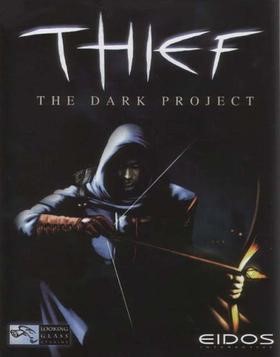
- Thief: The Dark Project (November 1998) — the first “first-person sneaker.” Playing master thief Garrett in a gaslamp-fantasy city, you avoid combat rather than seek it, reading light and sound the way other games’ players read health bars. Its shadow-and-noise stealth model is still the genre’s grammar.
- Thief Gold (1999) — an expanded edition adding three missions and fixes; the version modern storefronts sell.
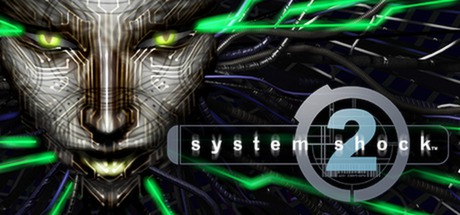
- System Shock 2 (August 1999) — Irrational Games and Looking Glass’s dystopian starship RPG, designed by Ken Levine. Its blend of horror, role-playing systems, and environmental storytelling became the blueprint for BioShock and half the immersive sims since.
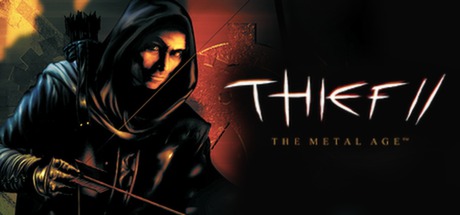
- Thief II: The Metal Age (March 2000) — bigger, more systemic missions built around pure stealth; frequently cited among the greatest stealth games ever made, and the engine’s swan song.
Worth clarifying for searchers: the original System Shock (1994) predates the Dark Engine and ran on Looking Glass’s earlier technology, and the 2014 Thief reboot was built by Eidos Montréal on a heavily modified Unreal Engine 3 — the Dark Engine’s actual catalog is the four games above.
Distinctive Features of the Dark Engine
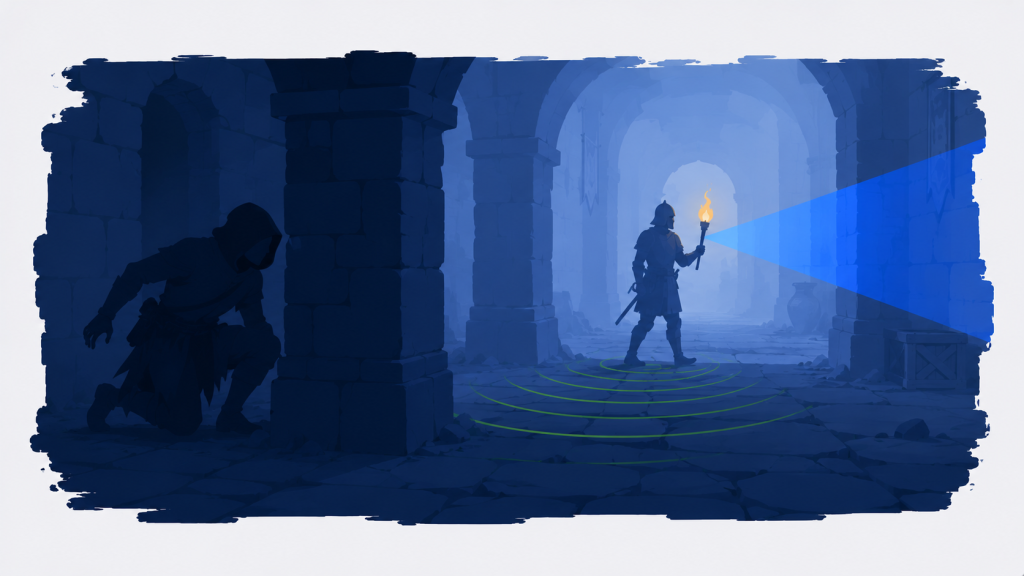
- A generation-ahead AI sensory model. Dark Engine NPCs didn’t simply “see” the player — they perceived. Guards evaluated visual stimuli against light level, distance, and movement, and escalated through graded awareness states: a flicker of suspicion (“Did you hear that?”), active searching, and full alert. Alerts decayed realistically, so a guard who lost you would grumble and return to his patrol. In 1998, when most game AI was a state machine bolted to a pathfinding grid, this was astonishing.
- True sound propagation. Sound didn’t radiate through walls in a simple radius — it traveled through the level’s room structure, muffling through doors and carrying down corridors. Players learned to walk on carpet instead of tile because the AI genuinely heard the difference. Designers had full access to this propagation model when building levels.
- Light-based visibility. The player’s visibility to AI was computed from the lighting at their position — surfaced to the player as Thief’s famous “light gem.” Shadow became a resource, and the entire stealth genre followed.
- A data-driven object system. The engine’s object architecture was built on archetypes, properties, and inheritance links stored as data rather than hard-coded classes. Designers composed behavior by attaching properties and links to objects in the editor — remarkably close to the entity-component thinking that mainstream engines adopted a decade later.
- Scripting via OSM modules. The engine had no built-in scripting language; AI and object behavior extended through Object Script Modules (.OSM) — native DLLs loaded at runtime and wired to objects in DromEd, often combined into elaborate Rube Goldberg contraptions of triggers and links.
- A renderer of its era. Palettized PCX/TGA textures up to 256×256 organized into shared-palette “families,” roughly a thousand terrain polygons on screen, colored lighting, and skyboxes. Competent for 1998, dated by 2000 — the engine’s simulation aged far better than its pixels.
Dark Engine vs Its 1998 Rivals
| Feature | Dark Engine | Quake II Engine (id Tech 2) | Unreal Engine 1 |
|---|---|---|---|
| Developer | Looking Glass Studios | id Software | Epic Games |
| Priority | Simulation: AI senses, sound, systems | Rendering speed, netcode | Rendering, tools, scripting |
| AI sophistication | Graded senses, propagated sound | Basic monster logic | Basic, moddable via UnrealScript |
| Licensing | Internal only | Widely licensed | Widely licensed — engine business begins |
| Legacy | Stealth genre, immersive sims | FPS engine lineage to id Tech 7 | Today’s dominant engine |
The comparison explains the Dark Engine’s paradox: it lost the engine war it never entered — no licensing, no sequels to the technology — while its design ideas conquered everything. Every stealth system with light and sound meters, every immersive sim, every guard who says “must have been rats” is running a philosophical fork of the Dark Engine.
Life After Looking Glass: The NewDark Patch
Here the story turns unique in engine history. For a decade after 2000, the games limped along on aging executables — increasingly broken on modern Windows. Then, in September 2012, an anonymous developer known only as “Le Corbeau” (The Raven) posted an unofficial patch on a French forum: NewDark, an updated Dark Engine executable adding DirectX 9 rendering, native widescreen and high resolutions, multi-monitor support, and hundreds of engine fixes for Thief 1/Gold, Thief II, and System Shock 2.
Where did it come from? The prevailing account, documented on Wikipedia: in 2010 a hobbyist disassembled a purchased Dreamcast development kit and found Looking Glass source code among its contents, which is believed to have enabled the patches. NewDark was never officially sanctioned — its author remains anonymous, updating it quietly for years (Thief II reached version 1.27, System Shock 2 version 2.48) — yet it proved so stable that GOG and Steam ship their official releases pre-patched with NewDark. An unauthorized fan patch became the commercial product: there is nothing else quite like it in engine history.
NewDark also updated DromEd, and the fan-mission community that formed around it — centered on the Through the Looking Glass (TTLG) forums — has now produced original missions continuously for over 25 years, with community installers (TFix, Tafferpatcher, SS2Tool) making modern setup one click. The free standalone The Dark Mod, a Thief-style stealth game built on id Tech 4, carries the design tradition forward on open-source technology.
Are Dark Engine Games Still Playable in 2026?
Emphatically yes — three ways, from authentic to modernized:
- Original games with NewDark: the GOG and Steam versions of Thief Gold, Thief II, and System Shock 2 run on modern Windows out of the box, because they include NewDark. This remains the definitive way to experience the original engine.
- System Shock 2: 25th Anniversary Remaster (Nightdive Studios): released for PC in June 2025 and consoles that July, with a Nintendo Switch 2 edition following in June 2026 — built on Nightdive’s KEX engine from the disassembled original source, adding cross-platform co-op and quality-of-life improvements.
- Thief: The Dark Project Remastered: announced by Nightdive in mid-2026 for a winter release across PC and consoles, again on KEX — meaning the Dark Engine’s debut game reaches PlayStation, Xbox, and Switch for the first time, 28 years after it shipped.
Note the remasters are ports of the games, not revivals of the engine — the Dark Engine itself lives on only through NewDark and its modding community.
Can You Download the Dark Engine?
Not officially. The Dark Engine was proprietary, was never licensed to other studios, and its source code was never formally released — the studio’s closure left the technology in legal limbo that persists today.
What you can legitimately get:
- DromEd, the actual level editor, ships with the GOG/Steam releases of the Thief games (ShockEd for System Shock 2) — the closest anyone outside Looking Glass has ever come to using the real engine, with a 25-year archive of community documentation on TTLG.
- The Dark Mod — free, standalone, open-source stealth in the Thief tradition, if you want to build rather than just play.
- For commercial projects wanting Dark Engine-style systemic stealth, modern engines are the practical path; the AI sensory concepts translate directly to Unreal’s or Unity’s toolsets.
Browse more of our game development coverage for deep dives into every major engine.
Frequently Asked Questions
Conclusion
The Dark Engine’s ledger looks like a failure: four games, zero licenses, a dead studio, and source code lost to legal limbo. Yet judged by influence per line of code, it may be the most successful engine of its generation — the stealth genre’s rules, the immersive sim’s ambitions, and the now-universal idea of composing game objects from data-driven components all trace back to technology that lived barely five years.
Its afterlife is stranger and more instructive than its life. An anonymous patch built from source code found in a secondhand Dreamcast kit became the official commercial release; a fan community has now maintained the engine five times longer than its creator could; and in 2025–2026, remasters are introducing these games to consoles that didn’t exist when Looking Glass closed its doors. Engines are usually survived by their games. The Dark Engine is survived by an idea — that a game world should listen, watch, and react — and that idea shows no sign of retiring.