
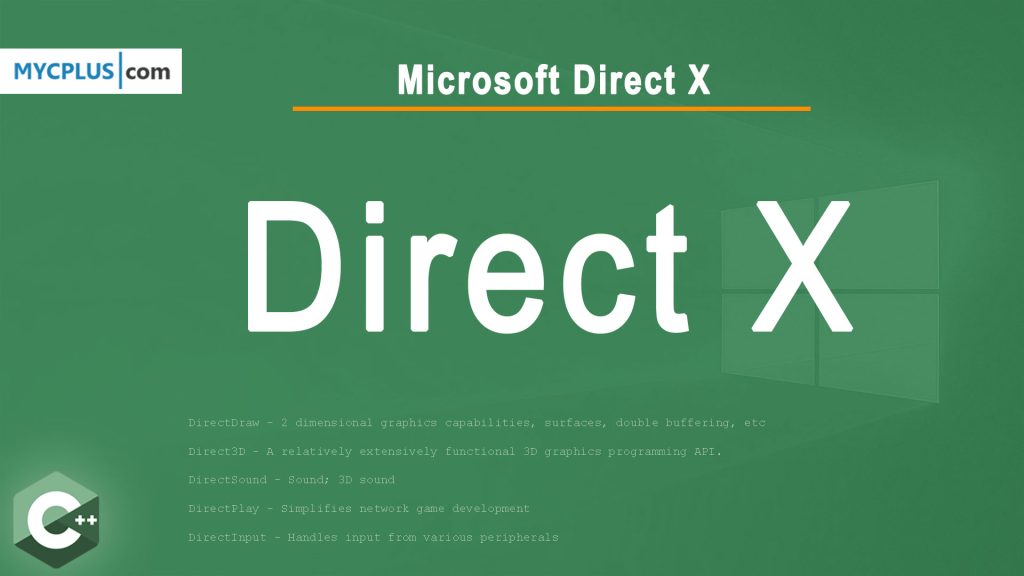
DirectX Programming: A Sample for Microsoft DirectDraw
This is a very simple DirectDraw sample using Microsoft DirectX under Visual C++.
This is a very simple DirectDraw sample using Microsoft DirectX under Visual C++.
Screen modes come in several flavours, based on how many bits are used to store the color of each pixel on the screen. Naturally, the more bits you use per pixel, the more colours you can display at once; but there is more data to move into graphics memory to update the screen.
One of the main purposes of DirectX is to provide a standard way of accessing many different proprietary hardware devices. DirectX is comprised of application programming interfaces (APIs) that are grouped into two classes: The DirectX Foundation layer and The DirectX Media layer. These APIs enable programs to directly access many of your computer”s hardware devices.

In C#, an exception is a runtime error or unexpected behavior that occurs during the execution of a program. Exceptions
As we begin the study of C++ and object oriented programming, a few comments are in order to help you get started. Since the field of object oriented programming is probably new to you, you will find that there is a significant amount of new terminology for you to grasp. This is true of any new endeavor and you should be warned not to be intimidated by all of the new concepts.
Every application begins with a namespace in C# .NET that has the same name as the project. Of course, you can change the namespace to anything you like in order to maintain compatibility with other projects. For example we declared namespace Mycplus.CSharpBasics while taking an Overview of C#. We can write the whole application with in one namespace or we can declare multiple namespaces as needed in our project. The general syntax of declaring a namespace is
The real nuts and bolts of a programming languages is that which controls the flow of a program called statements.
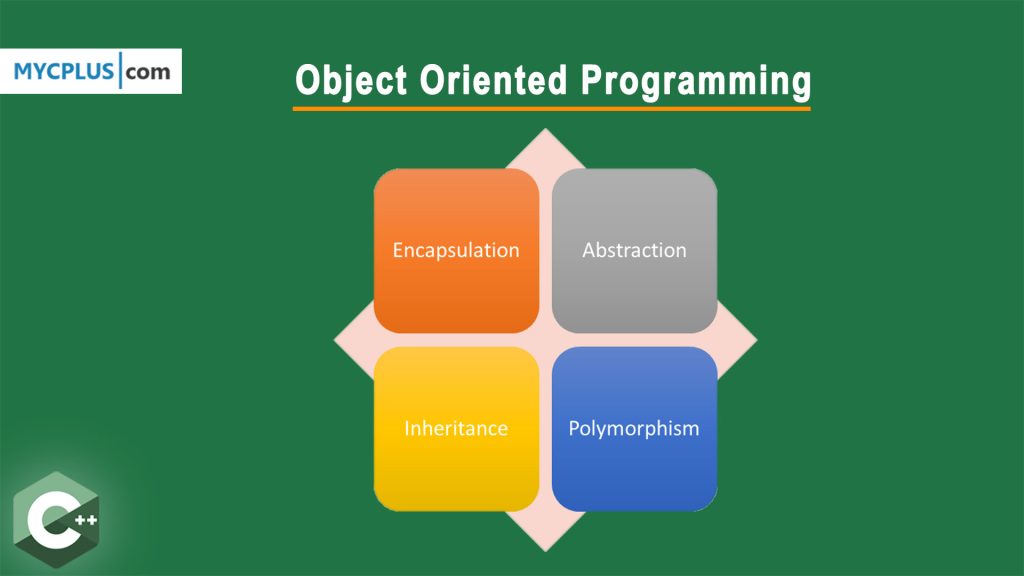
In OOP terms, polymorphism represents the ability to resolve a reference to an object’s method at run time. Specifically, different objects could make a call to a Draw or Print method, and these methods would act differently with each object; the process can take different forms behind a common interface. One of the benefits of polymorphism is that because the interface is common to objects, any object is able to respond differently to some common set of tasks, and objects are independent of each other.
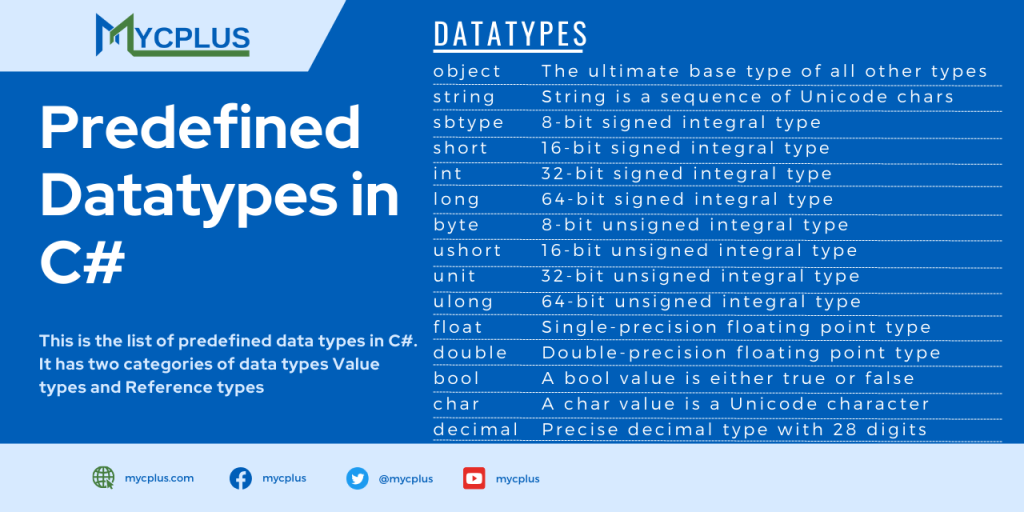
Here we will see the data types available in C#. Before examining the data types in C#, first we will try to understand the C# have two categories of data types. Value types and Reference types. Value type data type is that which stores the value directly in the memory. Its just like int, float and double. But reference types variables only store the reference of the memory where the actual value is.