Programming Tutorials — C, C++, C#, Java, JavaScript, Python, PHP, and Game Development

Flat illustration of a desktop workspace featuring a monitor displaying structured code icons representing computer programming tutorials

Programming powers modern technology — from desktop software and websites to mobile apps, games and enterprise systems. Strong programming skills remain essential for developers, students and technology professionals building modern digital solutions.

MYCPLUS has been publishing programming tutorials, source code examples and practical development guides since 2004. This programming hub brings together tutorials for C, C++, C#, Java, JavaScript, PHP and Python, along with game development and real-world coding examples designed for hands-on learning.

You will find beginner-friendly programming tutorials, practical source code examples and advanced development guides covering object-oriented programming, debugging, modern programming techniques and professional software development practices. Whether you are learning your first language, improving coding skills or exploring modern development technologies, this section provides structured resources for real-world programming and software engineering.

What You’ll Learn:

  • C programming fundamentals — variables, functions, pointers, memory management, file handling and procedural programming concepts
  • Modern C++ development — object-oriented programming, STL, templates, smart pointers, lambda expressions and advanced C++ features
  • Python programming — scripting, automation, data processing, application development and beginner-friendly programming concepts
  • Java and C# development — object-oriented design, application architecture and enterprise programming fundamentals
  • JavaScript and PHP programming — web development, frontend and backend programming, dynamic applications and interactive user experiences
  • Game development programming — graphics programming, game engines, real-time systems and practical game development concepts using C and C++

Why MYCPLUS: One of the web’s longest-running programming resources — trusted since 2004 with hundreds of tutorials, practical coding guides, source code examples and developer learning resources designed for real-world programming skills.

Arrays in C

Different ways to initialize an array in C Programming

In C, an array can be initialized using aggregates, which are a collection of values enclosed in braces ({}) and separated by commas. Another way to initialize array by using a loop which allows you to set the initial values of an array using a more flexible and dynamic approach. The basic idea is to use a loop to assign values to each element of the array based on some condition or calculation.
Defensive Programming Techniques

Defensive Programming Techniques

This source code is from Thinking in C++, 2nd Edition, Volume 2, by Bruce Eckel & Chuck Allison. You can use Borland, G++ (For version 3 and above only), Microsoft (For C++ with .NET only) to compile and build this source code. Writing perfect software may be a daunting task for developers, but a few defensive techniques which are routinely applied can go a long way toward narrowing the gap between code and ideal. Defensive programming practices are often used where high availability of the application is required, safety if utmost concern, or security is needed for application to work.

Print days of week in C

Display Days of Week using enum Keyword in C

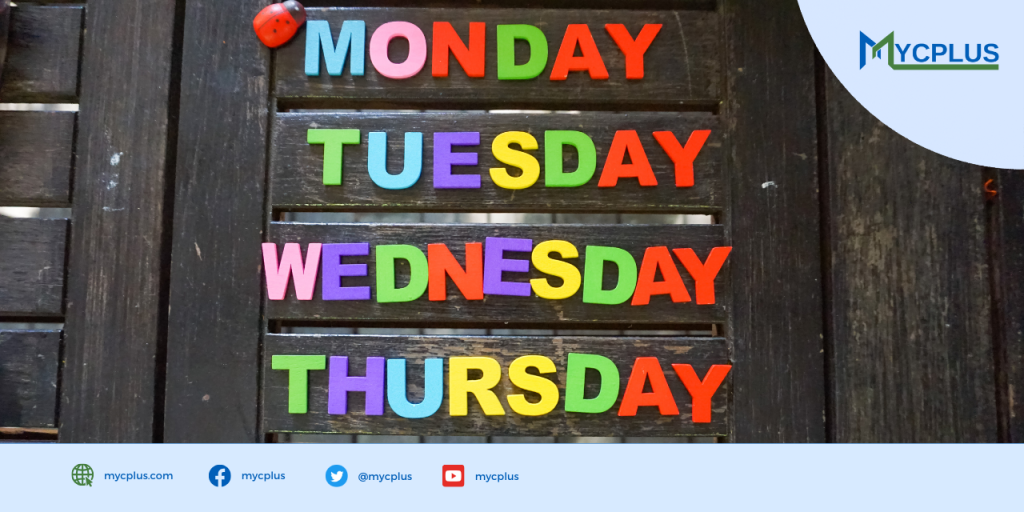
This C program uses enumerated types to display days of week. The enumerated type is then declared as a different name using typedef keyword i.e. enum days  to typedef enum days days. The function prints for each day of the week, today, yesterday, and tomorrow, both as a string and as a number.

Multiplication of Two Matrices in C

Multiplication of Two Matrices in C

This C code multiplies two 2×2 matrices. It prompts the user to input values for both matrices, displays the input matrices, performs matrix multiplication using nested loops, and then prints the resulting matrix. The code adheres to modern C standards, using printf and scanf for I/O and avoiding outdated functions for better readability and compatibility.

Number Base Conversion in C

Number Base Conversion in C – Decimal, Binary and Octal

This is a Number Base Conversion Program written in C. It is designed to assist novice C programmers in understanding and implementing basic number base conversions. New C programmers can use this program as a reference to grasp fundamental concepts of number base conversions and modular programming in the C language.

ICMP Ping - C Implementation

ICMP Ping Program in C

This sample illustrates how an ICMP ping app can be written using the SOCK_RAW socket type and IPPROTO_ICMP protocol. By creating a raw socket, the underlying layer does not change the protocol header so that when we submit the ICMP header nothing is changed so that the receiving end will see an ICMP packet. Additionally, we use the record route IP option to get a round trip path to the endpoint. Note that the size of the IP option header that records the route is limited to nine IP addresses.

Scroll to Top