
The Standard C++ Library
The 1998 C++ standard consists of two parts: the core language and the C++ standard library; the latter includes most […]
C++ is one of the most powerful and widely used programming languages in the world. Built on the foundation of C, it adds object-oriented programming, generic programming through templates, and the rich Standard Template Library — making it the language of choice for game development, systems programming, high-frequency trading, real-time applications, and performance-critical software.
MYCPLUS has been one of the web’s longest-running C++ programming resources, publishing tutorials, source code examples and practical guides since 2004. This section covers everything from the absolute basics of C++ syntax through to modern C++ features introduced in C++11, C++14, C++17 and beyond. You will find clear explanations of classes, inheritance, polymorphism and encapsulation, practical STL container and algorithm examples, and real-world source code that demonstrates how C++ is used in professional software development.
Whether you are a student learning C++ for the first time, a C programmer making the transition to object-oriented development, or an experienced developer exploring modern C++ features like smart pointers, move semantics and lambda expressions — this section has the resources you need to level up your C++ skills.
Why MYCPLUS: One of the web’s longest-running C++ resources — trusted since 2004 with hundreds of tutorials, examples and source code projects built for real learning.
The 1998 C++ standard consists of two parts: the core language and the C++ standard library; the latter includes most […]

Nine free C and C++ resources, checked for whether they are actually free, actually maintained, and actually teaching modern C++.

Fifteen characters cost nothing; sixteen cost a heap allocation. A measured guide to std::string, string_view, and where the copies come from.

The ternary operator (?:) picks between two values in one expression. Tested examples: nesting, constexpr, auto, performance, and C vs C++ rules.

C++23 is the production-ready C++ standard: std::print, std::expected, deducing this and completed ranges — every feature explained with tested code.

File handling in C++ uses the stream classes ifstream, ofstream and fstream. Tested examples cover reading, writing, errors, binary files and C++17.

Famous applications written in C and C++ include Windows, Linux, Chrome, Unreal Engine, MySQL and Photoshop. See the full list and why C/C++ endures.

Is C++ still relevant in 2026? TIOBE ranks it #3, C++26 shipped reflection and contracts, and games, browsers and finance still run on it. The data.

C++ classes group data with the functions that operate on it. Learn constructors, access specifiers, RAII and more — every example compiled and tested.

The C++ modulus operator (%) returns the remainder of a division. This guide covers everything — negative numbers, fmod() for decimals, real use cases, and the pitfalls to avoid.
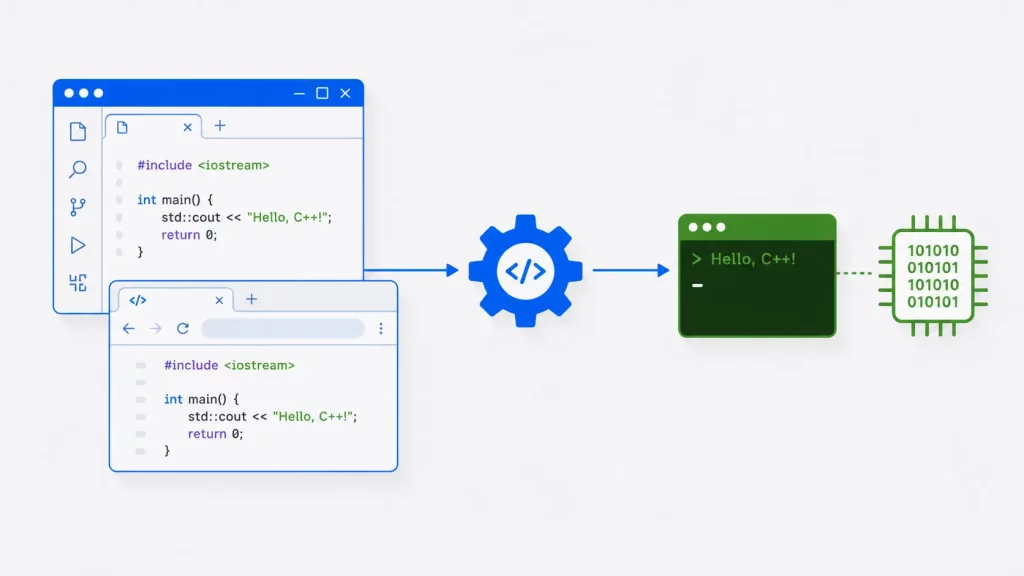
Choosing a C++ compiler shapes your whole workflow. Here’s how GCC, Clang, MSVC, Intel and the best online compilers compare in 2026 — with clear picks for beginners and pros.
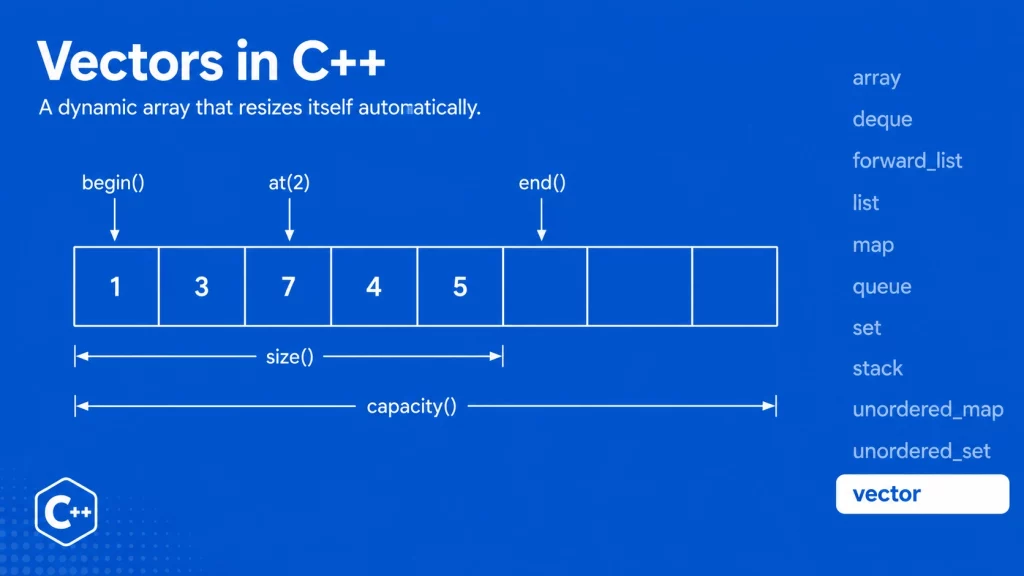
std::vector is the workhorse container of modern C++. This guide covers every core operation, performance tips like reserve(), 2D vectors, and when to use it over arrays and lists.