C Programming Tutorials — From Beginner Basics to Advanced Concepts

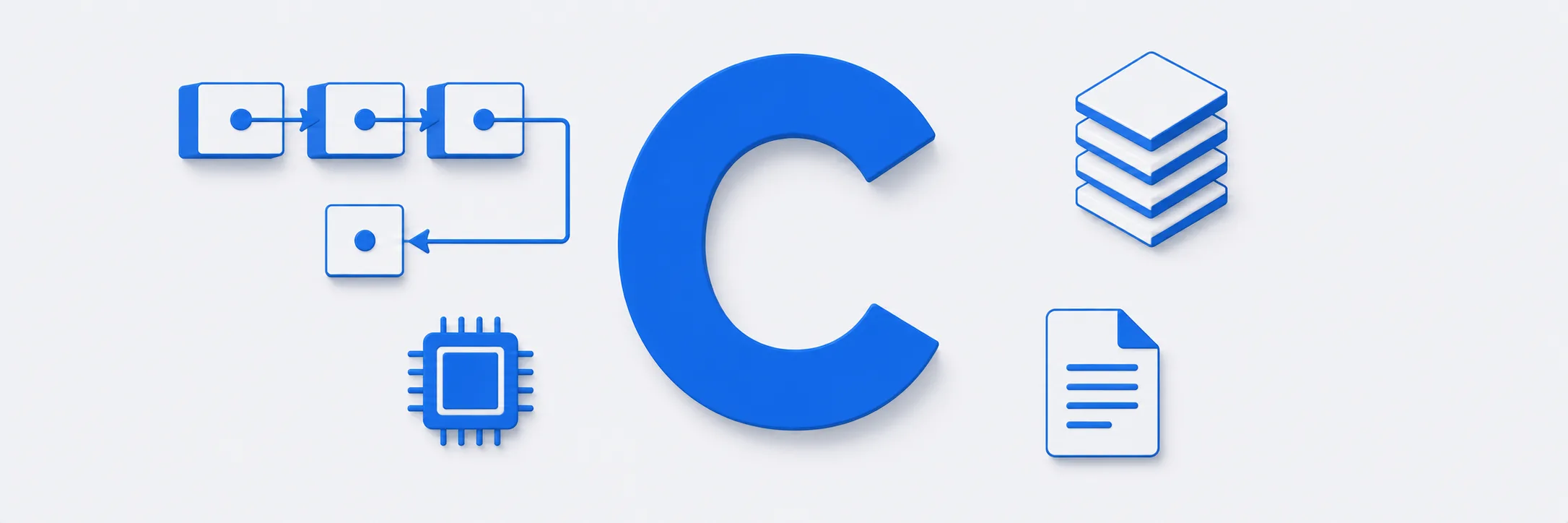
Flat illustration of a bold letter C with pointer arrows memory blocks stack diagram and file handling icons representing C programming tutorials

C is one of the most important programming languages ever created. Developed in the early 1970s, it remains the foundation of operating systems, embedded systems, compilers, and high-performance software used across the world today. Learning C gives you a deep understanding of how computers actually work — memory, pointers, data structures, and low-level system operations that higher-level languages hide from you.

At MYCPLUS we have been publishing C programming tutorials, source code examples, and practical guides since 2004. Whether you are writing your first Hello World program or working through complex data structure implementations, this section covers every stage of the C learning journey. You will find step-by-step tutorials, working source code you can compile and run immediately, and clear explanations of concepts that are often poorly explained elsewhere.

C is the language that powers Linux, Windows internals, embedded microcontrollers, game engines, and countless performance-critical applications. If you want to become a serious systems programmer, understand how memory works, or simply build a rock-solid foundation before moving to C++, Java or Python — start here.

What You’ll Learn:

  • Core C syntax — variables, data types, operators, control flow and functions explained from first principles
  • Pointers and memory management — heap allocation, pointer arithmetic, dynamic arrays and avoiding memory leaks
  • Data structures in C — arrays, linked lists, stacks, queues and trees implemented from scratch
  • File handling — reading and writing files, binary data and practical I/O operations in C
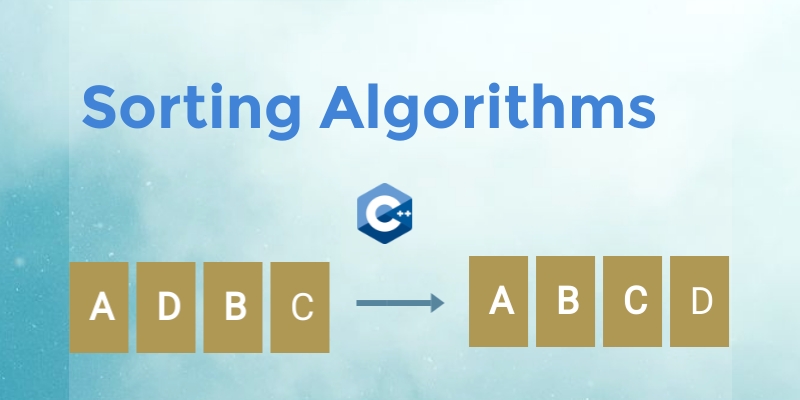
  • Algorithms in C — sorting, searching, recursion and graph traversal with working source code examples
  • Systems programming concepts — understanding how C interacts with the operating system, processes and memory

Why MYCPLUS Trusted by C programmers since 2004 — every tutorial includes working source code you can compile, run and learn from immediately.

Basic Data Types in C Programming

Basic Data Types in C Programming

C language provides a standard and minimal set of basic data types. Sometimes these are called primitive data types. More complex data structures can be built up from these basic data types. Data types specify how we enter data into our C programs and what type of data we use for different operations. C has some predefined set of data types to handle various kinds of data that we can use in our program.

Number Shuffling Game

C Program: Number Shuffling Game

This C program is a simple console-based implementation of a number-shuffling game. The game presents a grid of numbers, and the objective is to rearrange them in ascending order. The player can move the numbers by pressing the corresponding number keys, and the game tracks the number of moves taken to complete the puzzle.

Snake Game – C Imlementation

This C program simulates the game “snake” which is usually available in old mobile phones. A string of characters moves on the screen according to arrow keys pressed by user. If it touches itself or screen boundary, the program terminates. When the snake moves, in arbitrary screen positions some digit (1-9) appears. The objective of the game is to make the snake eat the said digit, so that it is added to the score. When a digit is eaten, the size of the snake increases by the number of characters equal to the value of the digit.

Fibonacci Numbers

C Program to show Fibonacci Sequence

This C program prints out the first Fibonacci series of N numbers. In mathematics, the Fibonacci numbers are a sequence of numbers named after Leonardo of Pisa, known as Fibonacci. The first number of the sequence is 0, the second number is 1, and each subsequent number is equal to the sum of the previous two numbers of the sequence itself, thus creating the sequence 0, 1, 1, 2, 3, 5, 8, etc. The standard form of writing Fibonacci series is:

Datagram Operations using C

Datagram Operations using C

This application demonstrates the various datagram operations possible from NetBIOS. This includes sending and receiving both directed and group datagrams as well as broadcast datagrams.

file handling in C

Learn File Handling Concepts in C Programming

This article is about file handling using C programming language. File stores information for many purposes and retrieve whenever required by our C programs. A file represents a sequence of bytes on the disk where a group of related data is stored. File is created for permanent storage of data. C programming language can handle files as Stream-oriented data (Text) files and System oriented data (Binary) files.

Working with Pointers

Working with Pointers in C

A pointer is a variable that represents the location of a data item, such as a variable or an array element. Pointers are used frequently in C, as they have a number of useful applications. For example, pointers can be used to pass information back and forth between a function and its reference point. Pointers provide a way to return multiple data items from a function via function arguments to
be specified as arguments to a given function.

graphics.h Reference

Graphics in C Language

In a C program, first step is to initialize the graphics drivers on the computer. This is done using the initgraph() method provided in graphics.h  library. In the next few pages we will discuss graphics.h library in more details. Important functions in graphic.h  library will be discussed in details and samples programs will be provided to show the power of C programming language especially for graphic programming developing graphical user interfaces.

Input and Output in C

Input and Output in C: Stream Functions

The standard way of handling all input and output is done with streams in C programming regardless of where input is coming from or where output is going to. This approach has definite advantages for the programmer. A library package has been evolved which is known as known as the Standard I/O Library which is used in any C program by using stdio.h header. First, however, we need to understand exactly what the terms input and output mean in context of C.

Scroll to Top