C++ Tutorials & Articles

Transitioning from C to C++

Transitioning from C to C++: A Quick Guide for Novice Programmers

As we begin the study of C++ and object oriented programming, a few comments are in order to help you get started. Since the field of object oriented programming is probably new to you, you will find that there is a significant amount of new terminology for you to grasp. This is true of any new endeavor and you should be warned not to be intimidated by all of the new concepts.

Basics of Encapsulation in C++

Understanding the Basics of Encapsulation in C++

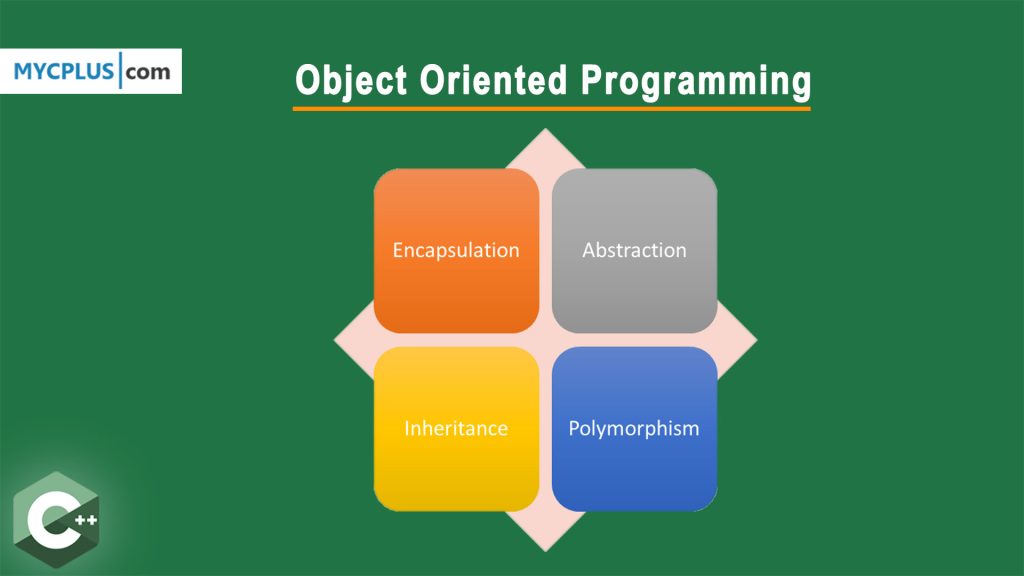
Encapsulation is a fundamental concept in Object Oriented Programming (OOP) that involves bundling data (attributes) and methods (functions) into a single unit known as a class. This encapsulated unit acts as a self-contained module which enhances code organization and promotes a more intuitive and manageable structure for programmers.

Functions in C++

Functions in C++ Programming

Functions are the building blocks of any programming language. In C++, a function is a block of code that performs a specific task. Think of it as a mini-program within your main program, designed to execute a particular operation. Functions are like building blocks that help break down complex problems into manageable chunks, making your code more readable and modular.

Pointers in C++

Pointers in C++

The pointer is a variable which holds the memory address of another variable. If one variable contains the address of another variable, the first variable is said to point to the second. There are two types of pointer operators; * and &. the & is a unary operator that returns the memory address of its operand.

Multiple Inheritance in C++

Multiple Inheritance in C++

Multiple Inheritance in C++ is a powerful yet intricate feature that allows a class to inherit properties and behaviors from more than one base class. In traditional single inheritance, a class can have only one immediate parent, but with multiple inheritance, a derived class can inherit from multiple base classes.

Compounded Types in C++

Compounded Types in C++

Welcome to the another C++ article where we will uncover the language’s flexibility and power through various data types. In this article, we’ll explore the compounded types such as Enumerated Types, Simple Structures, Very Simple Classes, the intriguing concept of the union and Type Conversions in C++. So, buckle up, aspiring programmers, as we embark on a journey to demystify these essential building blocks of C++.
Exception Handling in C++ Programming

Exception Handling in C++

Exceptions are the way of flagging unexpected conditions or errors that have occurred in C++ program. C++ Language provides a good mechanism to tackle these conditions. The exception mechanism uses three keywords: try, catch and throw.

mycplus

Constructors in C++

A constructor is a special method that is created when the object is created or defined. This particular method holds the same name as that of the object and it initializes the instance of the object whenever that object is created. The constructor also usually holds the initialization of the different declared member variables of its object.

Scroll to Top