Programming Tutorials

advanced exception handling in C++

A Guide to Advanced Exception Handling in C++ Programming

An exception usually signals an error. One of the major features in C++ is exception handling, which is a better way of thinking about and handling errors. Thought it doesn’t always indicate an error, it can also signal some particularly unusual even in your program that deserves special attention. This article also covers try, throw, and catch, the C++ keywords that support exception handling.

Operator Overloading in C++

Operator Overloading in C++

Operator Overloading enables us to make the standard operators, like +, -, * etc, to work with the objects of our own data types or classes. We can write a function which redefines a particular operator so that it performs a specific operation when it is used with the object of a class.

Multiple Inheritance in C++

Multiple Inheritance in C++

Multiple Inheritance in C++ is a powerful yet intricate feature that allows a class to inherit properties and behaviors from more than one base class. In traditional single inheritance, a class can have only one immediate parent, but with multiple inheritance, a derived class can inherit from multiple base classes.

Pointers in C++

Pointers in C++

The pointer is a variable which holds the memory address of another variable. If one variable contains the address of another variable, the first variable is said to point to the second. There are two types of pointer operators; * and &. the & is a unary operator that returns the memory address of its operand.

Functions in C++

Functions in C++ Programming

Functions are the building blocks of any programming language. In C++, a function is a block of code that performs a specific task. Think of it as a mini-program within your main program, designed to execute a particular operation. Functions are like building blocks that help break down complex problems into manageable chunks, making your code more readable and modular.

Microsoft .NET - C# Programming

Microsoft .NET – C# Programming

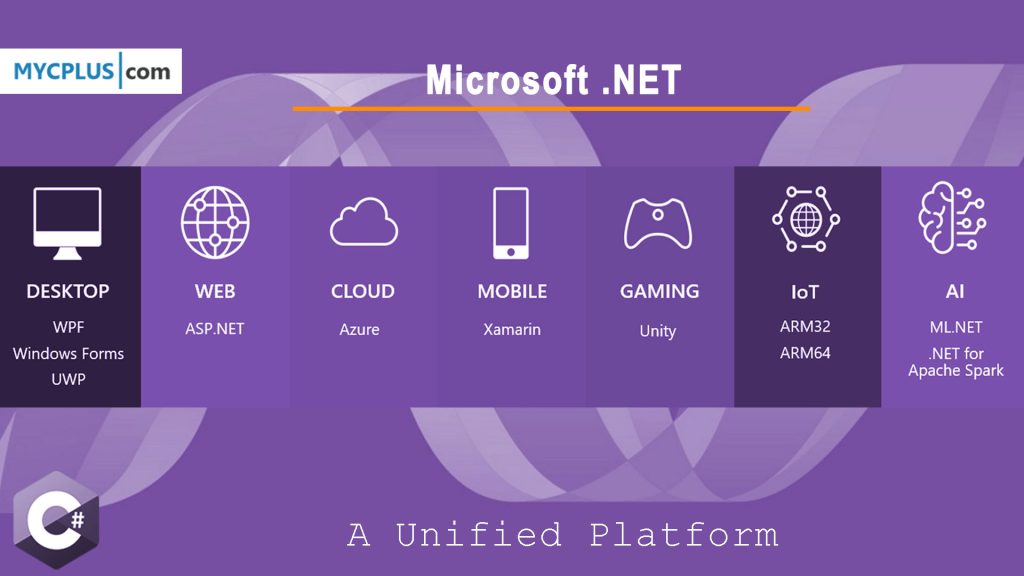
C# and .NET have a symbiotic relationship. Certain features in C# are tailored to complement the capabilities of .NET, and conversely, specific aspects of .NET are designed to align seamlessly with C#. However, it’s worth noting that .NET is versatile, aiming to accommodate a plethora of programming languages.

Working with Namespaces in C#

Every application begins with a namespace in C# .NET that has the same name as the project. Of course, you can change the namespace to anything you like in order to maintain compatibility with other projects. For example we declared namespace Mycplus.CSharpBasics while taking an Overview of C#. We can write the whole application with in one namespace or we can declare multiple namespaces as needed in our project. The general syntax of declaring a namespace is

Scroll to Top