
Pyrogenesis is the engine Wildfire Games built for 0 A.D., the free historical real-time strategy game that has been in public development for over two decades. It’s one of very few complete, open-source 3D RTS engines. Its renderer, pathfinding, networking and modding system were built for armies of hundreds of units, and it shipped its biggest milestone in February 2026, when 0 A.D. Release 28 dropped the “alpha” label for the first time.
This profile explains what Pyrogenesis is, how its C++ engine and JavaScript game logic split the work, what changed in the latest releases, where it runs, which games use it, and which other open-source RTS engines to consider. Versions and dates were checked against Wildfire Games’ own announcements in October 2026.
What Is Pyrogenesis?
Pyrogenesis is an open-source 3D real-time strategy engine developed by Wildfire Games for the game 0 A.D. Its engine is written in C++, while game logic, AI and the user interface are written in JavaScript running on Mozilla’s SpiderMonkey. The code is GPL-licensed, and the engine’s current release ships with 0 A.D. Release 28 (February 2026).
Pyrogenesis at a glance
| Developed by | Wildfire Games (volunteer team, founded 2001) |
|---|---|
| Built for | 0 A.D.: Empires Ascendant, a free historical RTS |
| Open source since | July 10, 2009 |
| Latest release | 0 A.D. Release 28 “Boiorix”, February 18, 2026 |
| Engine written in | C++ |
| Game logic, AI and UI | JavaScript on SpiderMonkey 128 |
| Graphics | OpenGL, plus Vulkan since Alpha 27 |
| Licences | Code: GPL v2 or later; art and music: CC BY-SA 3.0 |
| Runs on | Windows 10 and 11, macOS 10.15+, Linux, FreeBSD, OpenBSD |
| Official site | play0ad.com |
From an Age of Empires II Mod to Its Own Engine
Wildfire Games started in 2001 as a volunteer modding team. 0 A.D. began that year as a planned total conversion of Age of Empires II: The Age of Kings. The team soon outgrew what a mod could do and moved to an engine of its own, which became Pyrogenesis, turning 0 A.D. into a standalone game.
The project stayed closed until July 10, 2009, when Wildfire Games released the source code. Since then the engine code has been licensed under the GPL (version 2 or later) and the game’s art and music under Creative Commons CC BY-SA 3.0 (Wikipedia’s 0 A.D. article covers the history). The project has always been volunteer-run. A 2013 Indiegogo campaign raised about $33,000 toward hiring a programmer, and Software in the Public Interest manages most of its finances.
How Pyrogenesis Works: A C++ Engine and JavaScript Game Logic
Pyrogenesis draws a firm line between the engine and the game:
- The C++ engine handles everything that has to be fast or close to the hardware: rendering, terrain, pathfinding, unit movement, networking, audio, file loading and the scripting runtime.
- The game itself is mostly data and JavaScript. Units, buildings and civilisations are defined in data files, while gameplay rules, the AI opponents and the interface are written in JavaScript that runs on SpiderMonkey, the JavaScript engine from Firefox.
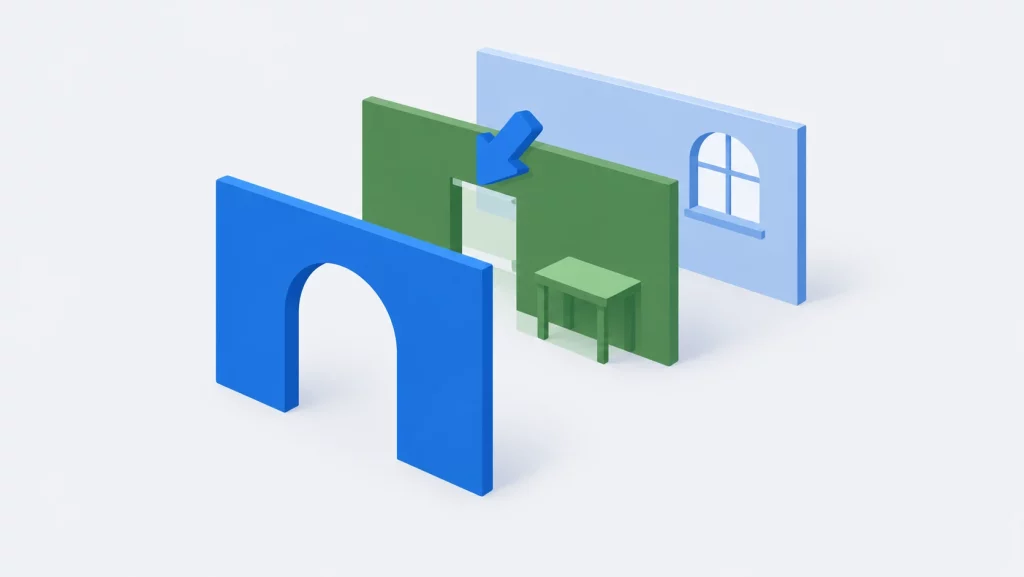
That split is what makes Pyrogenesis such a strong modding platform. According to Wildfire Games’ modding guide, mods never change the engine. Instead, they replace or add files on top of the base game’s public mod: textures, models, animations, sounds, scenarios and JavaScript logic. Mods load in order, so a later mod can override files from an earlier one, and none of this needs the engine to be recompiled. Since Alpha 27, modders can also use JavaScript Promises and async/await in GUI and simulation code.
Rendering goes through OpenGL, or Vulkan since Alpha 27; Pyrogenesis doesn’t use DirectX, which keeps Linux and macOS first-class platforms. Multiplayer is peer-to-peer, with no central game server, and players find each other through an online lobby that uses TLS-encrypted connections by default; Release 28 also turned on certificate verification by default.
What’s New in Pyrogenesis: Alpha 27 and Release 28
The last two releases changed the engine more than any in years.
Alpha 27 “Agni” (January 30, 2025) (release announcement) brought:
- A Vulkan renderer alongside OpenGL, aimed at more stable and predictable performance. It runs on a single thread for now.
- AMD FidelityFX Super Resolution as a resolution-scale option, trading sharpness for speed.
- GPU skinning as an option, which the team says can add 10 to 20 FPS, and lets animated models such as elephants use normal maps.
- SpiderMonkey 115, up from version 78, with JavaScript Promises available to modders.
Release 28 “Boiorix” (February 18, 2026) (release announcement) followed with:
- No more “alpha” label. Release 28 is the first version of 0 A.D. released without it.
- On-the-fly font rendering with FreeType, which uses less memory, sharpens text at large GUI scales and on Hi-DPI screens, and lets East Asian scripts ship without separate font mods.
- SpiderMonkey 128. This upgrade ended support for Windows 7 and 8.1 and for macOS older than 10.15.
- A 64-bit Windows build alongside the 32-bit one. It becomes the default in the next release.
- An official Linux AppImage, with Snap and Flatpak packaging in progress.
- Engine support for unit variants (appearance, voice and other traits), which made gendered civilian units possible, plus a new Germans civilisation.
Where Pyrogenesis Runs
With Release 28, the supported platforms are Windows 10 and 11, macOS 10.15 or later and Linux, all available from the official site (play0ad.com). FreeBSD and OpenBSD are also listed platforms, reached through their own package systems. There are no official console, Android or iOS versions.
The engine’s source lives on Wildfire Games’ own Git server (the 0ad repository). There’s no separate “Pyrogenesis” download: the engine ships inside the 0 A.D. source tree, and other projects fork that tree to build their own games.
Games and Projects Built on Pyrogenesis
- 0 A.D.: Empires Ascendant. The flagship and the reason the engine exists. It’s a historical RTS covering roughly 500 BC to 1 BC, free to download for Windows, macOS and Linux.
- BYZEN – 1811. A separate game built on Pyrogenesis and released in 2016, according to the engine’s ModDB listing.
- 0BC Time Machine. A project that began as a fork of 0 A.D.
- 0 A.D. mods. Total conversions and faction packs built on the modding system described above. ModDB keeps a list (Pyrogenesis on ModDB).


Is Pyrogenesis Still Being Developed in 2026?
Yes. Releases now arrive roughly once a year:
- Release 28 shipped in February 2026, about a year after Alpha 27 and its July 2025 patch release (27.1).
- Release 28 dropped the “alpha” label, a symbolic step after two decades of public alphas.
- The roadmap is concrete: the 64-bit Windows build becomes the default next, the 32-bit build is on its way out, and a secure lobby connection becomes mandatory in future releases.
It remains a volunteer project with no fixed release schedule, so dates are never promised in advance. But there’s no question it’s alive.
Pyrogenesis Alternatives
If you want an open-source engine for a real-time strategy game, Pyrogenesis has two main peers:
- Recoil: a fork of the SpringRTS engine, known for very large battles. It powers Beyond All Reason, which runs on Windows and Linux and signed a Steam publishing deal with Hooded Horse in June 2026. Choose it if you want the “huge army” style of RTS.
- OpenRA: a GPL-3.0 engine written in C# that recreates classic Westwood RTS games (Command & Conquer, Red Alert, Dune 2000), with an SDK for making your own games on top (OpenRA on GitHub). Pick it for 2D, classic-style strategy.
- A general-purpose engine such as Godot or Unity, if your strategy game needs features no RTS engine provides out of the box. You’ll write the unit control, pathfinding and multiplayer networking yourself.
For more open-source engines across every genre, see our directory of open-source C++ game engines.
Key Takeaways
- Pyrogenesis is Wildfire Games’ open-source 3D RTS engine, written in C++ for 0 A.D., with game logic, AI and UI in JavaScript on SpiderMonkey.
- It went open source on July 10, 2009. The code is GPL (v2 or later) and the art is CC BY-SA 3.0. Its roots are a 2001 Age of Empires II mod project.
- The current release is 0 A.D. Release 28 “Boiorix” (February 18, 2026), the first without the “alpha” label.
- Recent engine upgrades: a Vulkan renderer (Alpha 27), FreeType text, SpiderMonkey 128, a 64-bit Windows build and a Linux AppImage.
- It runs on Windows 10/11, macOS 10.15+, Linux and the BSDs. There are no console or mobile versions.
- Modding needs no recompiling: mods replace data, art and JavaScript on top of the base game.
Conclusion
Pyrogenesis shows what a patient volunteer project can build: a full 3D RTS engine, free from top to bottom, that has kept improving for more than twenty years and finally dropped its “alpha” label in 2026. For players, that means a polished free strategy game. For developers, it’s one of the best places to study how a real RTS handles thousands of units, scripting and multiplayer, or to build your own game on proven code.
We’ll update this profile with the next 0 A.D. release. For more engines across every genre, browse our game development hub.