
Adventure Game Studio has been around since 1997, which makes it older than most of the people now releasing games with it. It is a free, open-source engine built for one genre, the 2D point-and-click adventure, and it has carried that genre through its quietest years. Wadjet Eye Games built a publishing business on it. Thousands of free community games exist because of it. And in 2026 it is still getting new releases, both of the engine and of games made with it.
This profile covers what AGS is, how it works, which well-known games run on it, what changed in recent versions, and when another tool is the better choice. Versions and dates were checked against the project’s own release pages in October 2026.
What Is Adventure Game Studio?
Adventure Game Studio (AGS) is a free, open-source engine and Windows editor for making 2D point-and-click adventure games. Chris Jones created it in 1997, and a volunteer team has maintained it since the source was opened in 2010–2011. Games are scripted in a C-like language and run on Windows, Linux, macOS, Android, iOS and the web.
A Short History of AGS
Chris Jones, a British programmer, released the first version of what is now Adventure Game Studio in 1997 as an MS-DOS program called Adventure Creator. It made low-resolution games controlled from the keyboard. The first complete game built with it, Lassi Quest, followed in 1999. Comedy adventures such as Ben “Yahtzee” Croshaw’s Rob Blanc series helped the engine spread in 2000 and 2001. The AGS Awards, still run every year by the community, began in 2001.
Version 3.0 in January 2008 was the big rewrite: a new editor built on Microsoft’s .NET Framework, and hardware-accelerated rendering. Then Jones handed the project to its users. The editor source was published on October 26, 2010, and the runtime engine followed on April 27, 2011, both under the Artistic License 2.0 (Wikipedia’s AGS article has the full history). Since then, AGS has been developed in the open on GitHub by volunteers, which makes it one of the longest-running projects among open-source game engines.
How AGS Works
An AGS project is built in the editor, a Windows application where you lay out rooms (backgrounds with walkable areas, hotspots and objects), draw or import character sprites, set up dialogue trees and inventory items, and design the GUI. Behaviour is written in AGS Script, a language with C-style syntax. For example, an Interact function on a door hotspot can check whether the player holds a key, and either change rooms or play a line of dialogue. Much of the standard point-and-click machinery (walking, pathfinding, verb cursors, inventory, speech) is built in, which is why small teams can finish a full game. Anyone comfortable with C, C# or Java will read AGS Script easily; our guide to the best programming languages for game development explains where these C-family languages fit in the wider industry.
The engine is the C++ runtime that plays the compiled game. Because the editor and engine are separate, a game made on Windows can be shipped to other platforms without the editor being available there.
Graphics range from 320×200 pixel art up to high-resolution, true-colour games with alpha channels. The 256-colour, low-resolution reputation comes from AGS’s early years and the style many developers still choose, not from a limit in today’s engine.
What’s New: AGS 3.6 and AGS 4.0
AGS 3.6.0 (April 1, 2023) was the most significant release in years (official release notes):
- SDL2 replaced Allegro 4 as the engine’s base for graphics, sound and input, which made ports easier to maintain.
- Unicode support arrived for game text, scripts, translations and player input, a long-standing request from non-English developers.
- Web builds became possible from the editor, alongside Android.
- Old features were dropped: the Hqx scaling filters, Windows Game Explorer support and DirectShow video playback. Video is now OGG Theora (
.ogv) only. - The editor needs the .NET Framework 4.6.
The 3.6.2 line has been patched regularly since; Patch 11 (August 1, 2026) is the current stable build, and 3.6.3 is at the release-candidate stage (AGS releases on GitHub).
AGS 4.0 is the next major version, in public alpha testing since June 2023 and at Alpha 34 as of September 2026. Its main goal is removing deprecated settings and script functions, and that breaks compatibility on purpose. AGS 4 won’t run games made with AGS 2.x or 3.x, it imports only projects already saved in 3.6, and a project saved in the alpha can’t be opened in older versions. Treat it as a preview: the backward-compatible 3.6 branch is the one to ship with today.
Can AGS Games Run on Mac, Linux, Mobile and Consoles?
Yes for most of them, with one important split: the editor is Windows-only, but the games aren’t. The official repository lists Windows, Linux, macOS, Android, iOS and a web (Emscripten) port as engine targets (AGS on GitHub). An old PSP port also exists but is no longer maintained. Developers on Linux or macOS can run the editor through Wine, though that isn’t an officially supported setup.
ScummVM also plays AGS games. ScummVM 2.5.0 (October 9, 2021) added support for games made with AGS 2.5 and later (ScummVM 2.5.0 release notes). That puts a large back catalogue of AGS games on the many systems ScummVM runs on.
Consoles are a different story. AGS has no official console support. Several AGS games have reached the Nintendo Switch, including Unavowed (2021), Primordia (2022) and The Excavation of Hob’s Barrow (2023), but through separate porting work rather than an export button in the editor. Plan for that if a console release matters to you.
Notable Games Made with AGS
Every title below is confirmed as an AGS game by its developer’s or publisher’s own records, Wikipedia’s game infobox, or the official AGS games database.
| Year | Game | Developer (publisher) | Why it matters |
|---|---|---|---|
| 2006–2014 | The Blackwell series | Wadjet Eye Games | Five-game ghost-mystery series that built Wadjet Eye’s reputation |
| 2011 | Gemini Rue | Joshua Nuernberger (Wadjet Eye) | Sci-fi noir from a solo developer, later ported to iOS and Android |
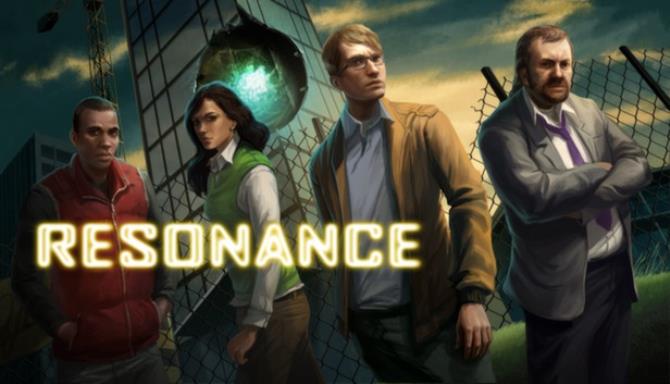
| 2012 | Resonance | XII Games (Wadjet Eye) | Sci-fi thriller with four playable characters |
| 2012 | Primordia | Wormwood Studios (Wadjet Eye) | Post-apocalyptic robot adventure, later ported to iOS and Switch |
| 2012 | The Cat Lady | Harvester Games | Psychological horror, cited among AGS’s commercial successes |
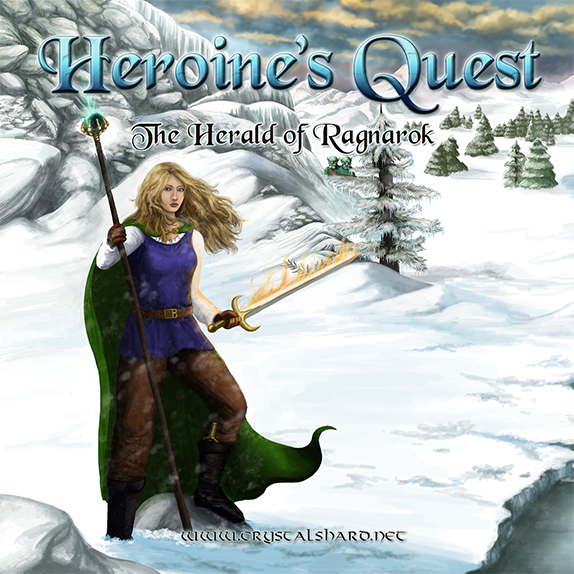
| 2013 | Heroine’s Quest: The Herald of Ragnarok | Crystal Shard | Free adventure/RPG hybrid; Best Game Created with AGS, 2013 |
| 2015 | Technobabylon | Technocrat Games (Wadjet Eye) | Cyberpunk detective story |
| 2018 | Unavowed | Wadjet Eye Games | Party-based supernatural adventure, later on Switch |
| 2022 | The Excavation of Hob’s Barrow | Cloak and Dagger Games (Wadjet Eye) | Folk-horror adventure, acclaimed in 2022 |
| 2025 | Rosewater | Grundislav Games (Application Systems Heidelberg) | Western adventure, released March 27, 2025 |
| 2026 | Perfect Tides: Station to Station | Three Bees | Released January 22, 2026; Switch version announced |
Beyond the commercial titles, the community side is just as important. The official games database lists thousands of free games, from fan remakes of Sierra classics to entries in the monthly MAGS competition, where developers build a complete game in a month around a set theme.
Is Adventure Game Studio Still Used in 2026?
Yes, and actively. Three signs:
- The engine is still being released. AGS 3.6.2 received Patches 8 through 11 between May and August 2026, 3.6.3 is in release candidates, and AGS 4.0 reached its 34th public alpha in September 2026.
- Commercial games keep shipping on it. Perfect Tides: Station to Station came out in January 2026 and Rosewater in March 2025, both on AGS.
- The community keeps finishing games. The forum’s completed-game announcements show new releases nearly every week in 2026, from fangames to MAGS entries.
AGS isn’t growing the way general-purpose engines are, and it was never meant to. But for its genre it remains one of the most-used options, and its long history means answers to almost any AGS problem already exist on the forums.
AGS Alternatives
AGS is the right choice when you want a free, focused tool for classic 2D point-and-click games and are comfortable on Windows. These are the main alternatives and when each makes more sense:
- Visionaire Studio: a commercial point-and-click engine with visual scripting and Lua for custom logic. Its biggest advantage over AGS is official console export (Switch, Xbox, PlayStation) with the right distribution licence, subject to platform-holder approval. Daedalic’s Deponia games and Foolish Mortals (2025) were made with it. A free version is limited to 25 scenes per project (Visionaire Studio).
- Adventure Creator (for Unity): a paid Unity Asset Store toolkit for 2D, 2.5D and 3D adventures, built around a visual “ActionList” system. Pick it if you want 3D or need Unity’s platform reach. Our Unity engine guide covers what that brings, including Unity’s pricing.
- PowerQuest (for Unity): a free, pay-what-you-want 2D adventure toolkit for Unity by Powerhoof, whose developer introduced it to the AGS community on the AGS forums. It’s worth a look if you know AGS and want Unity’s ecosystem.
- Godot: a free, open-source general engine. It has no adventure framework built in, but it’s a good fit if your game mixes point-and-click with other genres. See our Godot game engine profile.
- ScummVM: not a development tool, but the best way to play AGS games on unusual hardware, as covered above.
For the wider field of 2D engines, see the 2D and casual engines in our directory of 100+ C++ game engines.
Key Takeaways
- AGS is a free, open-source engine for 2D point-and-click adventures, created by Chris Jones in 1997 and community-maintained since 2010–2011 under the Artistic License 2.0.
- It’s still active in 2026: 3.6.2 Patch 11 (August 2026) is the stable release, 3.6.3 is in release candidates, and AGS 4.0 is in public alpha.
- The editor is Windows-only, but games are not. They run on Windows, Linux, macOS, Android, iOS and the web, and in ScummVM.
- AGS isn’t limited to 256 colours or low resolution. That’s an early-era reputation; the modern engine handles true-colour, high-resolution games.
- Commercial hits run on it, from Gemini Rue and Unavowed to Rosewater (2025) and Perfect Tides: Station to Station (2026).
- Consoles need separate porting work. If official console export matters, Visionaire Studio is the closest alternative.
Conclusion
Adventure Game Studio has outlasted the commercial adventure slump, the engine wars and its own creator stepping back. It did that by staying narrow: one genre, one free tool, and a community that answers questions and finishes games. In 2026 it is still the shortest path from an idea for a point-and-click adventure to a finished, playable game, especially for a solo developer or a small team.
We’ll update this profile when AGS 3.6.3 becomes the stable release and when AGS 4.0 leaves alpha. For more engines across every genre and size, browse the game development hub.