

Aleph One is the open-source game engine that keeps Bungie’s Marathon trilogy alive. It began in 2000, when Bungie released the source code of Marathon 2: Durandal, and a community of volunteers has developed it ever since. Today it runs Marathon, Marathon 2 and Marathon Infinity on modern Windows, macOS and Linux, powers dozens of community-made games, and is the engine behind the free “Classic Marathon” releases on Steam.
This profile covers where Aleph One came from, how it works, how to script it in Lua, the games it runs, and where it stands in 2026. It includes a Lua script we wrote and tested on the current engine. Facts were checked against the Aleph One source repository and release notes, the project’s website, and Steam in November 2026.
What Is Aleph One?
Aleph One is a free, open-source first-person shooter engine written in C++, based on the source code of Bungie’s Marathon 2 (1995). It plays the classic Marathon trilogy and community scenarios on Windows, macOS and Linux, adds OpenGL rendering, Lua scripting and Internet multiplayer, and is licensed under the GPL. The latest release is 1.11.1 (September 2026).
Aleph One at a glance
| Type | First-person shooter engine (Marathon) |
|---|---|
| Based on | Bungie’s Marathon 2 source code, released in 2000 |
| First version | 0.1, January 30, 2000 |
| Written in | C++17 |
| Scripting | Lua (since 2003), plus MML for settings |
| Platforms | Windows, macOS, Linux |
| Multiplayer | Up to 8 players, LAN or Internet |
| Licence | GNU GPL |
| Latest release | 1.11.1 (September 30, 2026) |
| On Steam | Classic Marathon trilogy, free (2024) |
From Marathon 2 to Aleph One
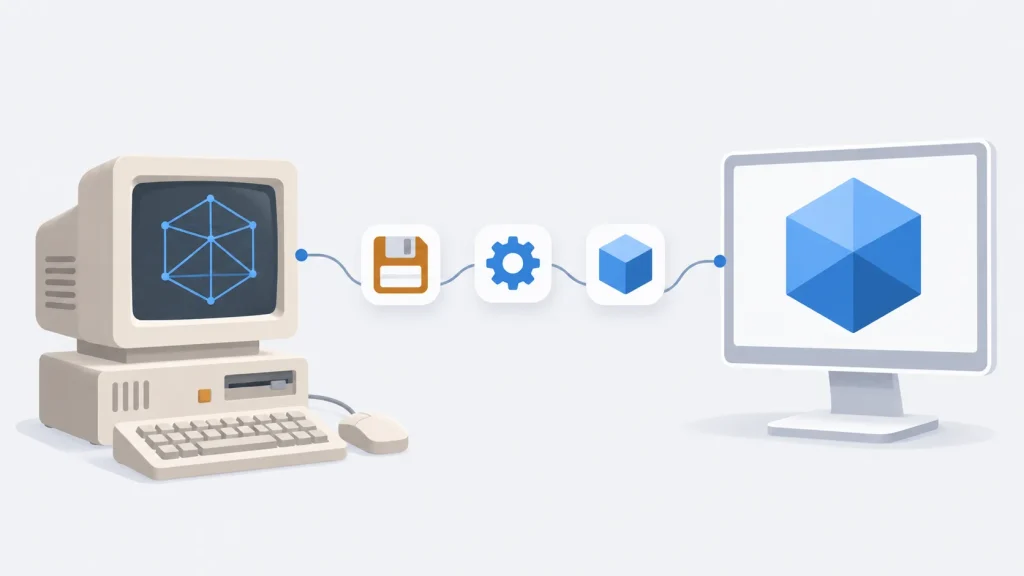
Bungie made the Marathon games for the Macintosh in the mid-1990s: Marathon (1994), Marathon 2: Durandal (1995) and Marathon Infinity (1996). In 2000, shortly before Microsoft bought the studio, Bungie released the Mac source code of Marathon 2 under the GNU General Public License. Its readme warned that the code was “provided as-is” and that Bungie couldn’t offer support.
Fans took it from there. Loren Petrich’s change log records version 0.1 on January 30, 2000, and the project was named Aleph One. Key milestones followed:
- 2000: Christian Bauer’s SDL port took the engine beyond the Mac, to Linux and Windows.
- 2003: Matthew Hielscher added Lua scripting, which remains the main way to extend the engine.
- 2005: Bungie allowed the whole Marathon trilogy to be distributed for free, so Aleph One could ship with complete games, not just the engine.
- 2024: the Aleph One team released the trilogy on Steam, with Bungie’s permission: Classic Marathon on May 10, Classic Marathon 2 on July 12, and Classic Marathon Infinity on August 22, 2024, all free.
The repository’s history shows the project passing between a small number of volunteers: Loren Petrich in the early years, Gregory Smith for most of the 2000s and again from 2020, Jeremiah Morris through the 2010s, and Benoît Hauquier as the most active contributor from 2022 to 2025.
How Aleph One Works
Aleph One keeps Marathon’s core design, a 2.5D world of polygons with heights, rendered in first person, and builds on it:
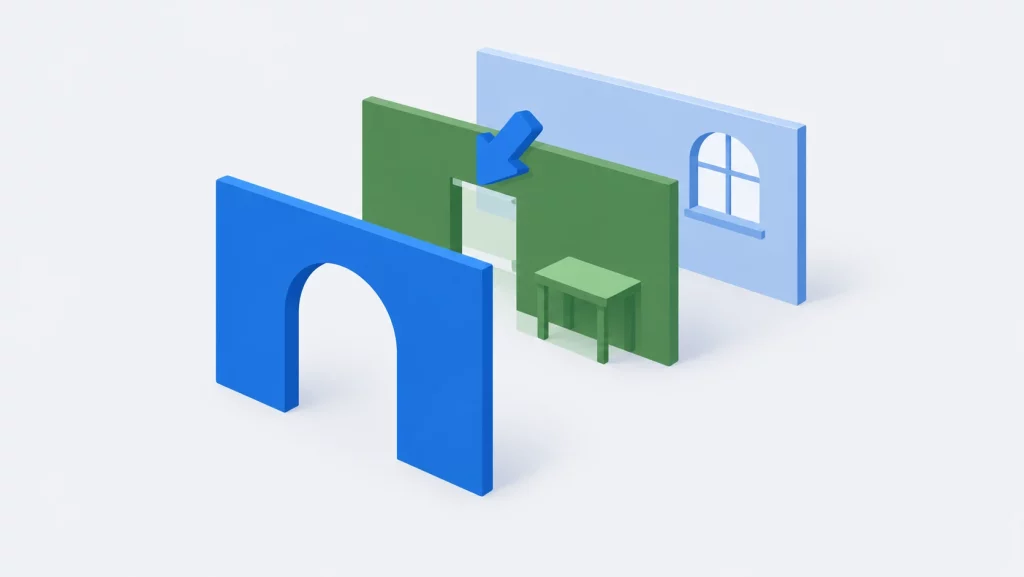
- Scenario data. A game is a scenario: a folder with a map file, shapes (graphics), sounds, physics models and optional plugins. The engine itself contains no game content, which is why one executable runs all three Marathon games and every community scenario.
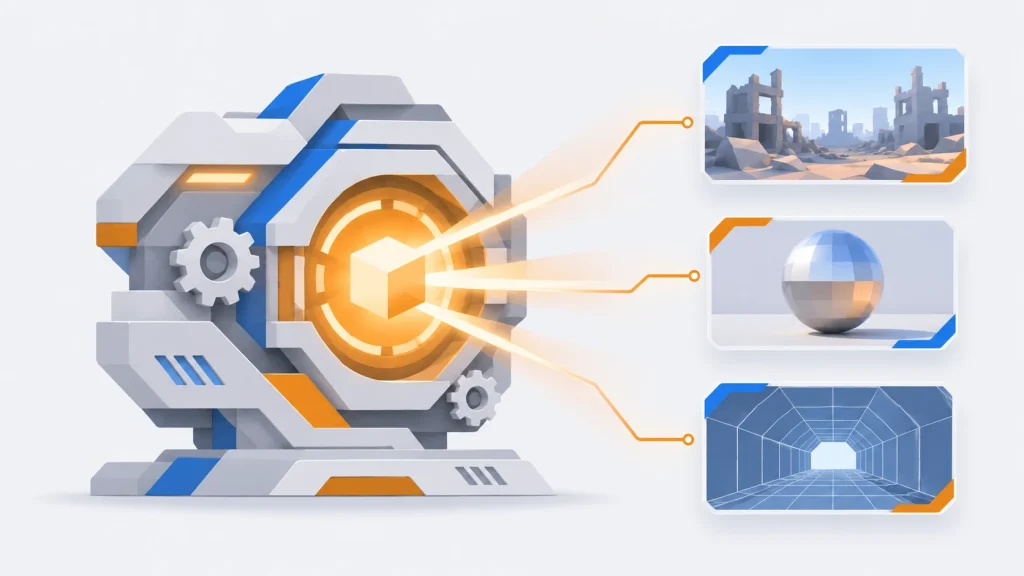
- Two renderers. The classic software renderer reproduces the 1990s look, while the OpenGL renderer adds high resolutions, smooth frame rates beyond the classic 30 per second, high-resolution textures, shaders and 3D models.
- Lua and MML. Lua scripts change gameplay, and Marathon Markup Language (MML) files adjust the engine’s settings for a scenario.
- Multiplayer. Up to eight players can play co-op or competitive games, peer-to-peer over a LAN or the Internet, with a global matchmaking lobby run by the community (the Aleph One website).
- Films and replays. The engine records games as films, and version 1.11 added replay films for saved games.
The engine is written in C++17 and uses SDL2, OpenAL, Boost and other open-source libraries. Its source is about 250,000 lines of C++ (Aleph One on GitHub).
Scripting Aleph One with Lua
Aleph One’s Lua scripts react to triggers, functions that the engine calls when something happens: init at the start of a level, idle on every game tick, player_damaged when a player is hurt, and dozens more. Through tables such as Players, Monsters and Level, a script can read and change almost anything in the game world.
This solo script gives the player slowly regenerating shields: after five seconds without taking damage, the shields recover one point every third of a second, up to one full bar:
-- Regen.lua: a solo Lua script for Aleph One.
-- Slowly restores the player's shields after 5 seconds without damage.
Triggers = {}

local last_hit = 0       -- game tick of the last damage taken
local DELAY = 5 * 30     -- 5 seconds (the engine runs at 30 ticks a second)
local MAX_LIFE = 150     -- one bar of shields

function Triggers.init(restoring_game)
  Players.print("Regeneration active on " .. Level.name)
end

function Triggers.player_damaged(victim, aggressor_player, aggressor_monster,
                                 damage_type, damage_amount, projectile)
  last_hit = Game.ticks
end

function Triggers.idle()
  if Game.ticks - last_hit < DELAY or Game.ticks % 10 ~= 0 then
    return
  end
  for p in Players() do
    if p.life > 0 and p.life < MAX_LIFE then
      p.life = p.life + 1
    end
  end
end
A few things to notice:
Triggers = {}at the top tells the engine this is a modern script, which also skips older compatibility code.- The engine runs at 30 ticks a second, so
5 * 30is five seconds andGame.ticks % 10runs the healing three times a second. Players()loops over every player, so the script works in co-op too. A player’slifeof 150 is one full bar of shields.
To use it, save it as Regen.lua, then in Preferences → Environment, turn on Use Solo Script and select the file.
How we tested it: we built Aleph One from its main branch (October 29, 2026) with gcc 13 on Ubuntu 24.04, loaded the free Marathon 2 data, and ran the first level under a virtual display with the script plus two test-only lines: start with 60 shields, and print the shield value every two seconds. The message “Regeneration active on Waterloo Waterpark” appeared, the shields stayed at 60 for five seconds, then rose by 6 every two seconds (64, 70, 76, 82). When we dealt 20 damage at tick 390, the shields dropped to 65 and didn’t start recovering again until five seconds later, exactly as intended.
Games That Run on Aleph One
| Game | Released | Notes |
|---|---|---|
| Marathon | 1994 (Steam: May 2024) | The first game: a fight for survival against the alien Pfhor on a colony ship |
| Marathon 2: Durandal | 1995 (Steam: July 2024) | The game whose source code became Aleph One. The Steam version offers the updated graphics from the 2007 Xbox Live Arcade remake as a free add-on |
| Marathon Infinity | 1996 (Steam: August 2024) | The last of the trilogy, and the version most online multiplayer matches use |
| Community scenarios | 1990s to today | Total conversions such as Marathon: Eternal (52 levels), Marathon: Rubicon X, Marathon: Phoenix, Apotheosis X and the RPG Marathon: Istoria |
All three classic games are free on Steam for Windows, macOS and Linux, as Classic Marathon, Classic Marathon 2 and Classic Marathon Infinity (Classic Marathon on Steam), with Steam Workshop support for community scenarios. They’re also free from the Aleph One website.
Aleph One in 2026
- It’s actively maintained. Version 1.11 (August 2025) added native Linux support on Steam, audio improvements, a new sprite-rendering option for the 3D view and replay films for saved games. 1.11.1 followed on September 30, 2026, as a security and bug-fix release, and the release notes ask players to update, especially for network games (Aleph One release notes). In-game settings were added to the main branch in October 2026.
- Bungie’s new Marathon is a separate game. Bungie’s extraction shooter Marathon launched on March 5, 2026, for PC, PlayStation 5 and Xbox Series X|S (WePC on the launch). It’s a new game on a different engine; Aleph One and the classic trilogy are unaffected, and the Aleph One website points fans of the new game to Bungie’s own site.
- The community runs it. Development happens on GitHub, support on Discord, and the project accepts donations through Patreon. Bungie’s trademarks are used with its permission.
Common Misconceptions About Aleph One
- “Bungie released the Marathon 2 source in 1999.” The source was released in 2000; the earliest Aleph One change log entry is January 30, 2000.
- “Aleph One is a general-purpose game engine.” It’s built to run Marathon-style games. Community scenarios can replace every texture, sound, weapon and monster, but they all use Marathon’s engine design, so it isn’t a starting point for other genres.
- “You need to buy the old games to play.” You don’t. Bungie made the trilogy free, and the Aleph One team distributes complete, ready-to-play versions on its website and on Steam.
Aleph One Alternatives
- GZDoom: if you like classic first-person shooters, GZDoom is a free, open-source source port for Doom-engine games, with its own large modding community (GZDoom).
- Godot: a free, open-source general-purpose engine, if you want to make your own retro-style shooter rather than a Marathon scenario. See our Godot engine profile.
- Unreal Engine: for full 3D shooters at a professional scale. See our Unreal Engine profile.
For more open-source engines, browse our directory of open-source C++ game engines.
Key Takeaways
- Aleph One is the open-source continuation of Bungie’s Marathon 2 engine, started when Bungie released the source code in 2000.
- It plays the whole Marathon trilogy and dozens of community scenarios on Windows, macOS and Linux.
- It adds OpenGL rendering, Lua scripting and Internet multiplayer to Marathon’s design.
- The trilogy is free, on the Aleph One website and on Steam since 2024.
- It’s actively maintained: 1.11.1 came out in September 2026.
- Bungie’s 2026 Marathon is a different game and doesn’t use Aleph One.
Conclusion
Aleph One shows what an open-source release can do for a game: more than a quarter of a century after Bungie published the code, a small group of volunteers has kept Marathon playable, moddable and online, and put it on Steam. It’s a niche engine by design, built for one style of game, but for that style it’s mature, well supported and still improving.
For more engines across every genre, browse our game development hub.