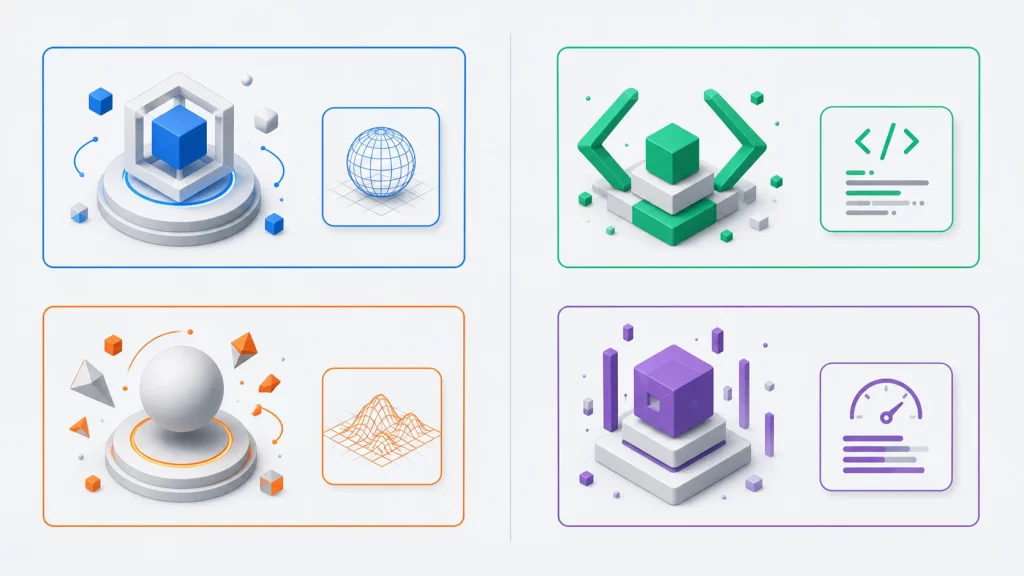

Antiryad Gx, now also called the AGX Engine, is a 2D and 3D game engine from Arkham Development (Arkhamdev), a small French company near Paris. It’s unusual on several counts. Its roots go back to a 1992 demoscene group, it has its own scripting languages, Gel and GScript, and it still runs on platforms most engines left behind long ago, from DOS and AmigaOS to OpenBSD. It’s free to download, and in 2026 it’s still being actively updated: version 9.4.12 was released in September 2026.
This profile covers where Antiryad Gx came from, how it works, its languages and platforms, the games tied to it, and where it stands today. Facts were checked against Arkhamdev’s own wiki, release feed and documentation pages in November 2026.
What Is Antiryad Gx?
Antiryad Gx (AGX Engine) is a cross-platform, multi-core 2D and 3D game engine by Arkham Development of France, in development since 1992. It includes an editor and tools, and supports C, C++ and its own Gel and GScript languages. It runs on Windows, Linux, macOS, OpenBSD, DOS and AmigaOS, under a freeware licence. The current version is 9.4.12 (September 2026).
Antiryad Gx at a glance
| Also called | AGX Engine |
|---|---|
| Developer | Arkham Development (Arkhamdev), France |
| Roots | Argonauts and Arkham demo groups, 1992 |
| First public release | Antiryad Gx v1, 2002 |
| Current version | 9.4.12 (September 27, 2026) |
| LTS version | 8.9.01 (March 2026) |
| Languages | C, C++, Gel and GScript |
| Platforms | Windows, Linux, macOS, OpenBSD, DOS, AmigaOS, AROS (some LTS only) |
| Ended platforms | Consoles (by v7.0), Android and iOS (v6.1) |
| Licence | Freeware; professional licence available |
From a 1992 Demo Group to a Game Engine
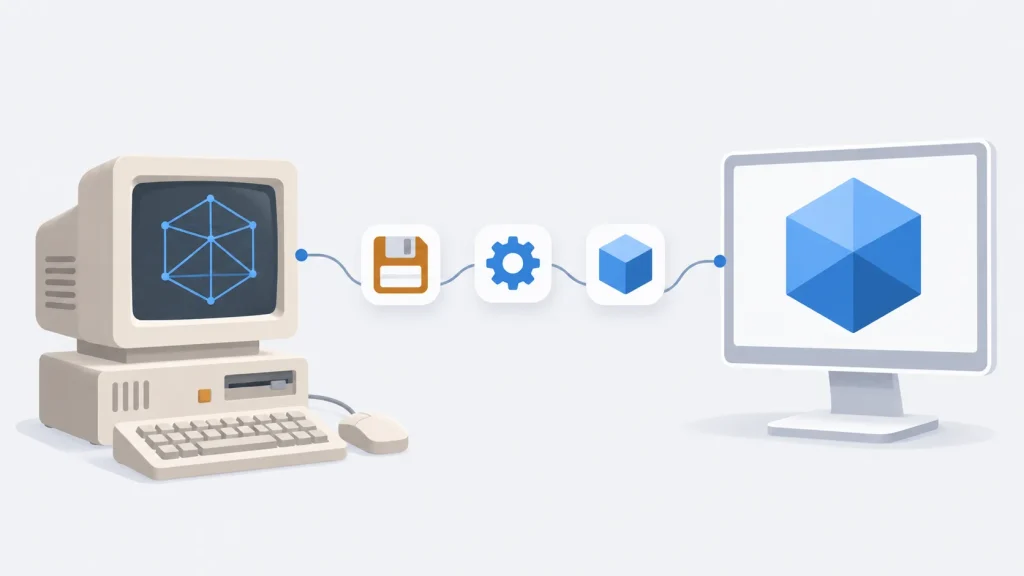
Antiryad Gx began in the demoscene, the community of programmers who made real-time audiovisual “demos” for the PC and Amiga. Arkhamdev’s history traces the engine to the Argonauts and Arkham demo groups in 1992. Their tools were built on an in-house kernel called Kanergy, and each new kernel version brought a new engine generation:
- 1992–1997: Kanergy 1.0 to 3.0 powered 16-bit and then 32-bit DOS engines and tools, including a game editor called GameEd.
- 1997–2002: Kanergy 4.0 was the first multiplatform kernel, under the name Antiryad Gx (v0.x).
- 2002: Kanergy 5.0 and Antiryad Gx v1 became the first public release.
- 2010–2023: versions 2 to 7 followed. Version 4, first released in 2015, became a long-term-support (LTS) branch that’s still listed today as 4.9.04.
- 2023 onwards: version 8 (LTS, now 8.9.01) and version 9, the current branch. Arkhamdev’s published roadmap runs to version 10, planned for 2027 to 2031.
Arkhamdev also published many of its old demo-group projects as open source: DOS and Amiga demos from 1991 to 1998, x86 assembly 3D engines, and DOS tools such as a paint program and an AdLib sound tracker.
How Antiryad Gx Works
Arkhamdev describes Antiryad Gx as a “unified cross platform and multi core” engine with a “simplified and documented API completely platform independent” (Arkhamdev’s AGX Engine page). In practice that means:
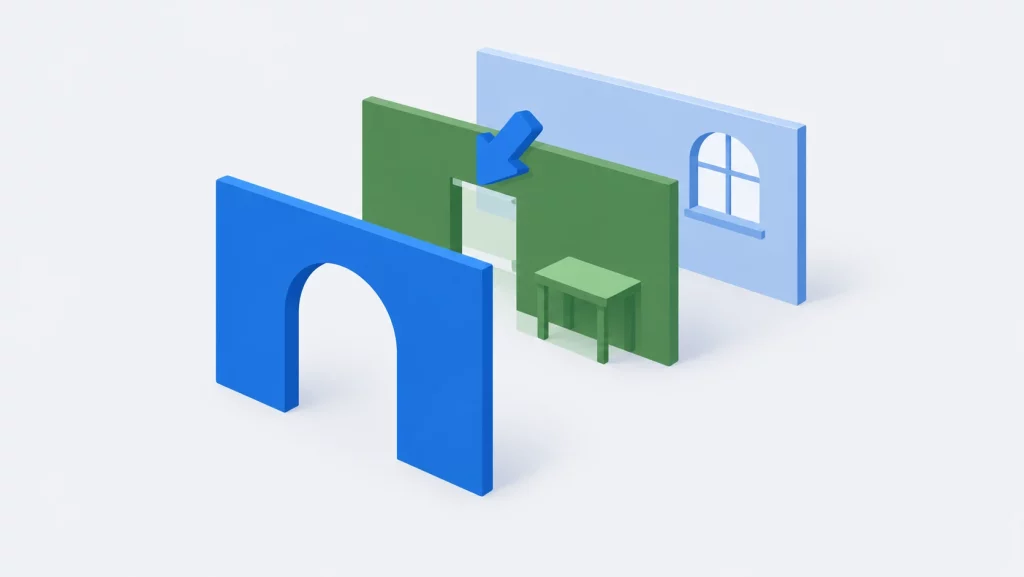
- One API on every platform. Games call the same engine API whether they run on Windows, Linux or AmigaOS, and the engine handles the differences.
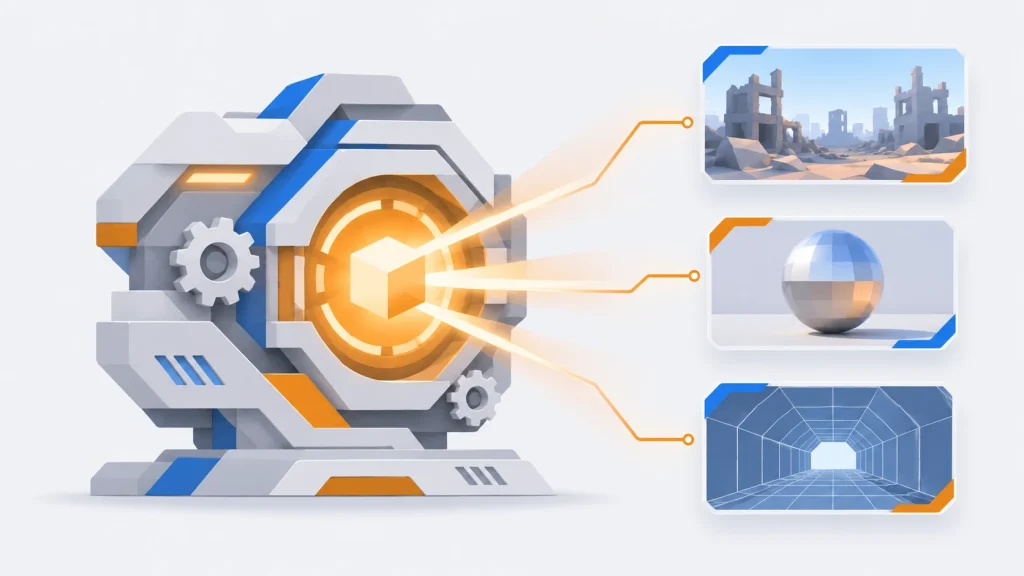
- A complete toolset. Antiryad Gx includes its own editor, an executable compiler that packages a project for several platforms at once, and modules for particles, water and volumetric fog, real-time shadows, collision, navigation meshes, networking, video and audio.
- A plugin system. Native plugins can add external libraries, such as other rendering engines, physics engines or languages.
- Companion tools. Antiryad IDE, a free multiplatform code editor that Arkhamdev uses for its own development, and the Akm Package Manager, a Python script that installs engine versions from the command line.
Gel and GScript: The Engine’s Own Languages
You can write Antiryad Gx programs in C or C++, but the engine also has two languages of its own (Arkhamdev’s Gel and GScript page):
- Gel, first released in 1998, is an object-oriented language with a syntax that mixes BASIC and C/C++. It’s compiled to bytecode and run by a cross-platform virtual machine embedded in the engine, with a graphical debugger. Arkhamdev says several of its games were written entirely in Gel, including Ushuaia (2007) and the Dark Area series.
- GScript is a translation language based on Gel’s syntax that generates C, C#, Java or Python code. GScript is itself written in GScript, and Arkhamdev uses it to develop Antiryad Gx, Antiryad IDE and its other tools.
This is the first Gel program from Arkhamdev’s own “How to create a Gel application” guide. It opens a message box:
import antiryadgx.gx_winbox

class boot

declarefunction nothing,main,nothing

/* ---- */
/* main */
/* ---- */
function main
gx_winbox::request(string::"A first program!" ,-1,-1)

return(0)
endfunction
You save it as init.gel in a new project created with the engine’s Tools → Exe compiler menu. The same window then builds executables for the platforms you tick, with options to create a Debian package, an Inno Setup installer for Windows, or a macOS app bundle.
About this example: this is Arkhamdev’s own example, not code we wrote or ran. Engine downloads weren’t available from our test environment, so we couldn’t compile it. The facts in this article come from Arkhamdev’s wiki, documentation and release feed, all checked in November 2026.
Which Platforms Does Antiryad Gx Support in 2026?
Antiryad Gx’s platform list is one of its most distinctive features, and it has changed a lot over the years. Arkhamdev’s current table lists:
| Platform | Architectures | Branches | Minimum version |
|---|---|---|---|
| Windows | x86, x64 | All | Windows 2000 (x86), Windows 7 (x64) |
| Linux | x64, x86, arm32, arm64 | All | glibc 2.20+ (x86/x64), Debian 10 (arm32) |
| Linux | ppc32 | LTS only | Debian 7 |
| macOS | x64 | LTS only | macOS 12.6, with Cocoa and XQuartz |
| OpenBSD | x64, x86 | LTS only | OpenBSD 6.7 |
| DOS | x86 | All | DOS 5.0 |
| AmigaOS | m68k | All | AmigaOS 3.0 |
| AROS | x86, x64, ppc32, arm32 | LTS only | AROS ABIv0 |
Consoles and mobile are no longer supported. The engine once ran on PlayStation 2, PSP, the first Xbox, Nintendo DS, GameCube and Wii, which were dropped between versions 2.1 and 3.0, and on PlayStation 3 until version 7.0. Android and iOS support ended in version 6.1, and Mac PowerPC, MorphOS and Chrome’s Native Client in version 5.0. If you need consoles or mobile today, Antiryad Gx isn’t the engine for it.
Games Made with Antiryad Gx
Arkhamdev says the engine has been used for more than 50 projects. The titles its own documentation ties to the engine and its Gel language are mostly the company’s own games:
| Game | Year | Notes |
|---|---|---|
| Ushuaia | 2007 | Published by Mindscape; written entirely in Gel, according to Arkhamdev |
| Dark Area | 2009 | Arkhamdev’s own game, released on iOS, Android, Linux, Windows and Mac OS X |
| Dark Area 2 and 3 | 2010, 2011 | Sequels for iOS and Android |
| Bionightmare, Break Diamond | 2012 | Arkhamdev’s mobile games for Android and iOS |
Arkhamdev’s screenshots page lists many more titles “released with Arkhamdev services”. They include Wii party games such as Kick Party and Let’s Play Ballerina, and Microids adventures such as Syberia 3, Syberia: The World Before and Flashback 2. That wording covers consulting and porting work as well as the engine, so not all of these were made with Antiryad Gx. Arkhamdev does say GScript was used in developing Syberia: The World Before and Flashback 2.
Antiryad Gx in 2026
Antiryad Gx is actively developed, with several releases a year:
| Version | Released | Highlights |
|---|---|---|
| 9.0.51 | September 2025 | The first 9.x release in Arkhamdev’s feed |
| 9.1.17 | December 2025 | Improved actor components, template compiler, navigation meshes and image encoders |
| 8.9.01 LTS | March 2026 | New long-term-support version, with Gel and GScript improvements |
| 9.2.01 | March 2026 | Security system, Gel improvements, new file-stream compression and a resource optimiser |
| 9.3.16 | June 2026 | New static modules system, particle, raytracer and player modules, and better navigation meshes |
| 9.4.12 | September 2026 | Removed the old Megalib plugin system, improved native plugins and the build system, and added properties to Gel classes |
Release dates come from Arkhamdev’s release feed (Arkhamdev’s release feed). The engine is a freeware download. Arkhamdev’s guide says you install and register the “standard version” or buy a professional licence, and some build options are reserved for an enterprise version. The full licence terms are on a page that requires a customer login, so check them with Arkhamdev before a commercial release.
The engine’s old home page at pyro.akm.free.fr no longer exists. Arkhamdev’s wiki at arkham-development.com and its site at arkhamdev.net are the current sources, and the company runs a Discord server for support.
Antiryad Gx Alternatives
- Godot: a free, open-source engine with a large community, exporting to desktop, mobile, web and consoles through partners. See our Godot engine profile.
- Panda3D: an open-source C++ engine scripted in Python, if you want a programmer-first engine with a long track record. See our Panda3D engine profile.
- SDL: if what draws you to Antiryad Gx is running one codebase on many operating systems, SDL is the widely used open-source C library for exactly that (SDL).
For more engines, browse our directory of C++ game engines.
Key Takeaways
- Antiryad Gx (AGX Engine) is a French 2D and 3D game engine from Arkham Development, with roots in a 1992 demo group and a first public release in 2002.
- It has its own languages: Gel, an object-oriented bytecode language from 1998, and GScript, which translates to C, C#, Java and Python.
- It still targets unusual platforms, including DOS, AmigaOS, AROS and OpenBSD, alongside Windows, Linux and macOS.
- Consoles and mobile are no longer supported: console ports ended by version 7.0, and Android and iOS by version 6.1.
- It’s actively developed: version 9.4.12 came out in September 2026, with 8.9 as the long-term-support branch.
- It’s freeware, but the full licence terms sit behind a customer login, so check them before a commercial release.
Conclusion
Antiryad Gx has an unusually long history for an independent engine: a demo group’s toolkit that grew into a full engine and is still updated more than thirty years later. It’s a niche choice, best suited to developers who value its own languages, its unusual platform reach or a direct line to the people who build it. For mainstream console or mobile games, a bigger engine fits better.
For more engines across every genre, browse our game development hub.