
Laout managers applet demo
This applet demonstrates various layout managers. The applet itself uses a border layout with a JPanel in the center, a […]
Java remains one of the most widely used programming languages in the world — taught in universities, used in enterprise systems, and powering billions of devices through the Java Virtual Machine. Its write-once-run-anywhere philosophy, strong object-oriented foundation and rich standard library make it a first-choice language for students learning programming fundamentals and professionals building scalable enterprise applications.
MYCPLUS has been publishing Java programming tutorials and source code examples since 2004. This section covers Java from the ground up — starting with core language fundamentals and progressing through practical topics including arrays and data structures, graphical user interface development with Java Swing and AWT, object-oriented design patterns and real-world application examples you can compile and run immediately.
With over 45 articles covering beginner through advanced Java concepts, you will find clear explanations of Java syntax and core programming principles, practical source code examples for common programming challenges, and hands-on GUI tutorials that show how to build interactive Java applications from scratch. Whether you are a student working through your first Java course, a developer brushing up on fundamentals, or a programmer transitioning from C++ or Python — this section gives you the practical Java resources you need.
Why MYCPLUS: Trusted by Java developers and students since 2004 — every tutorial includes working source code you can compile and run immediately, with clear explanations designed for real-world Java programming skills.
This applet demonstrates various layout managers. The applet itself uses a border layout with a JPanel in the center, a […]
The KeyboardAnimation2 applet provides a generic framework for applets both display an animation and respond to keyboard events. The animation
This applet is a simple card game. The user sees a card and tries to predict whether the next card
his program lets the user play HighLow, a simple card game that is described in the output statements at the
Double buffering is a technique used in graphical applications, including Swing-based Java applications, to reduce flickering and improve the overall visual quality of animations or dynamic updates on the screen.
This is a Java source code for a simple graphical application that demonstrates how to use various types of borders in Swing, a Java GUI toolkit. The program defines a class BorderDemo that extends JApplet, a Swing component used for embedding a Java application in a web page or other container.
This Java Code supports two-way chatting between users. It implements a client for the ConnectionBroker server, which can set up a relayed connection between a pair of such clients. There are really two functions: The user can register with the server as a client who is willing to accept a connection, or the user can make a connection with one of the clients who is waiting on the server. The code retrieves and displays a list of waiting clients when it starts. There is a Refresh button that the user can click to refresh this list (since the list of waiting clients can change from time to time).
The Blackjack game written in Java provides a graphical user interface (GUI) for players to enjoy a simplified version of the classic card game. Upon starting the game, players are dealt an initial set of two cards each, and the goal is to build a hand with a total value as close to 21 as possible without exceeding it. The game features a deck of standard playing cards, including numbered cards, face cards (King, Queen, Jack), and Aces, each contributing their respective values to the hand.

The following Java program shows the Zodiac sign corresponding to a given date. This little program can be used to find your Zodiac sign if you input your date of birth.
Text Tool [code=’java’]/******************************************************* * MYCPLUS Sample Code – https://www.mycplus.com * * * * This code is made available as a
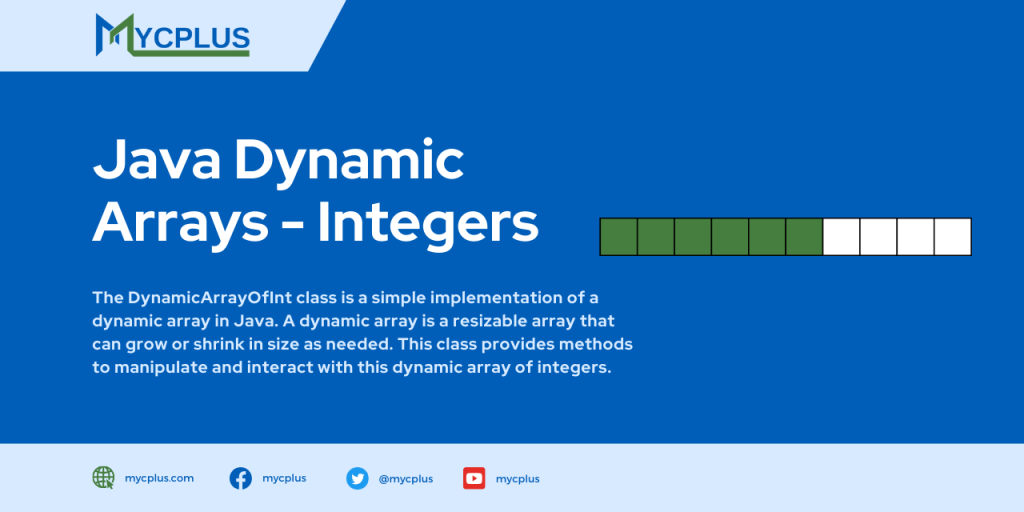
The DynamicArrayOfInt class is a simple implementation of a dynamic array in Java. A dynamic array is a resizable array that can grow or shrink in size as needed. This class provides methods to manipulate and interact with this dynamic array of integers. In the constructor, initially the data array has a size of 1 and grows as necessary.
A ColorChooserApplet shows six scroll bars that the user can manipulate to set the red, gree, blue, hue, brightness, and