
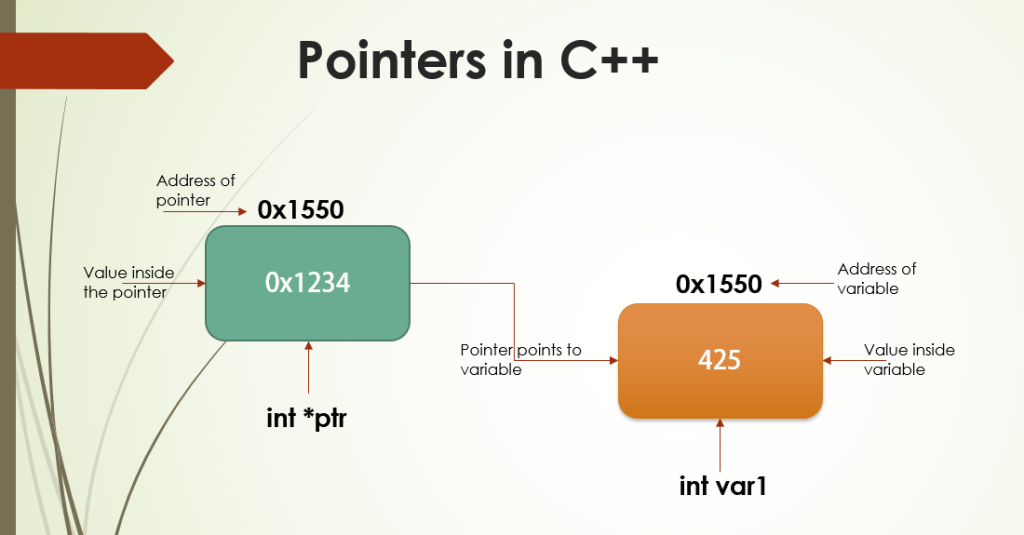
Pointer to a Function is an address of a function in memory [C/C++]
This is a C program of showing how to use a pointer to a function. The pointer to a function […]
This is a C program of showing how to use a pointer to a function. The pointer to a function […]
This C program reads a sequence of positive integers as input by the user and print their sum. The program keeps on taking the input from user until user enters number ( 0 ) and program calculates the sum of all input numbers. Finally this C program prints the sum of all the numbers on screen and terminates.
A prime number is a number greater than 1 that cannot be formed by multiplying two smaller natural numbers. A natural number greater than 1 that is not prime is called a composite number.
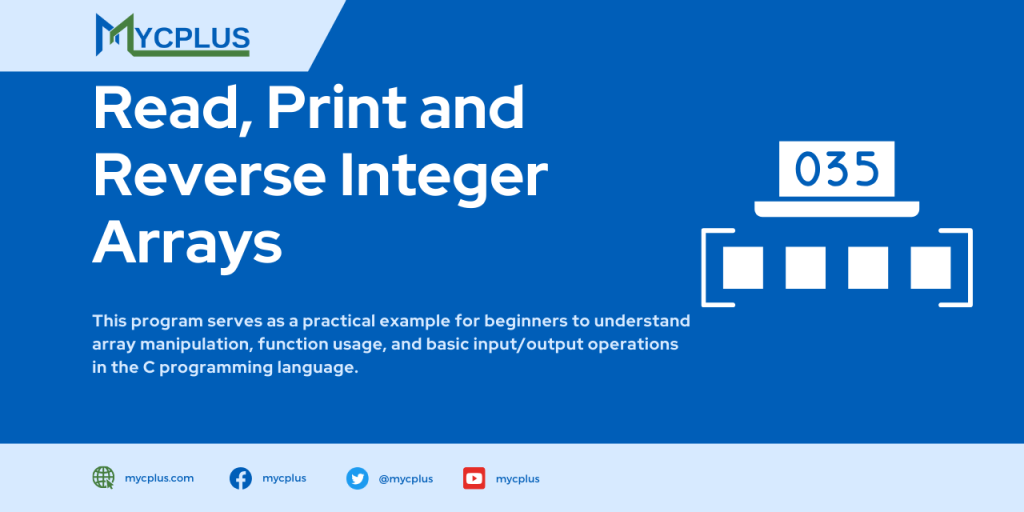
This program serves as a practical example for beginners to understand array manipulation, function usage, and basic input/output operations in the C programming language. It also introduces concepts like function prototypes and error handling.
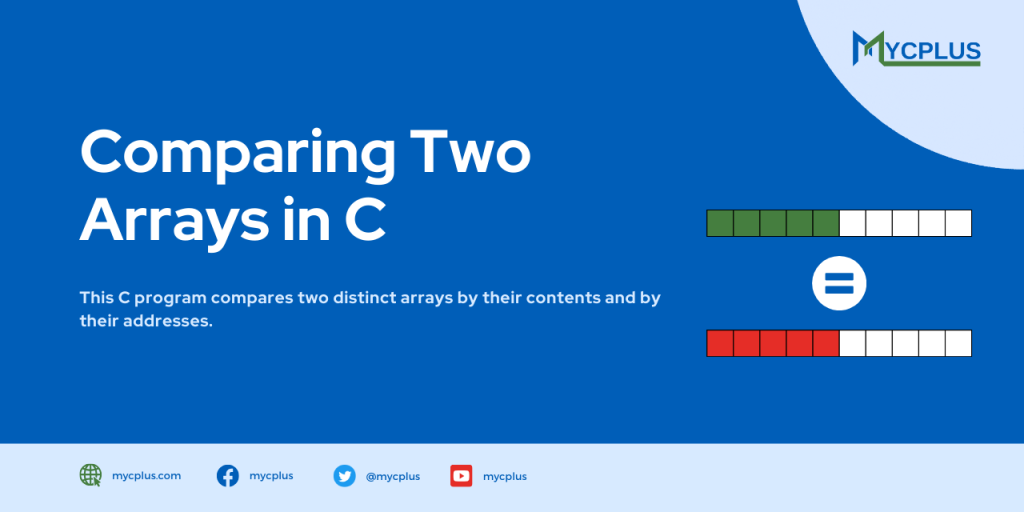
This C program compares two distinct arrays and if the arrays are same then content results in FALSE. The behavior of comparison is explained when we note that the comparison is a comparison of addresses, not contents.
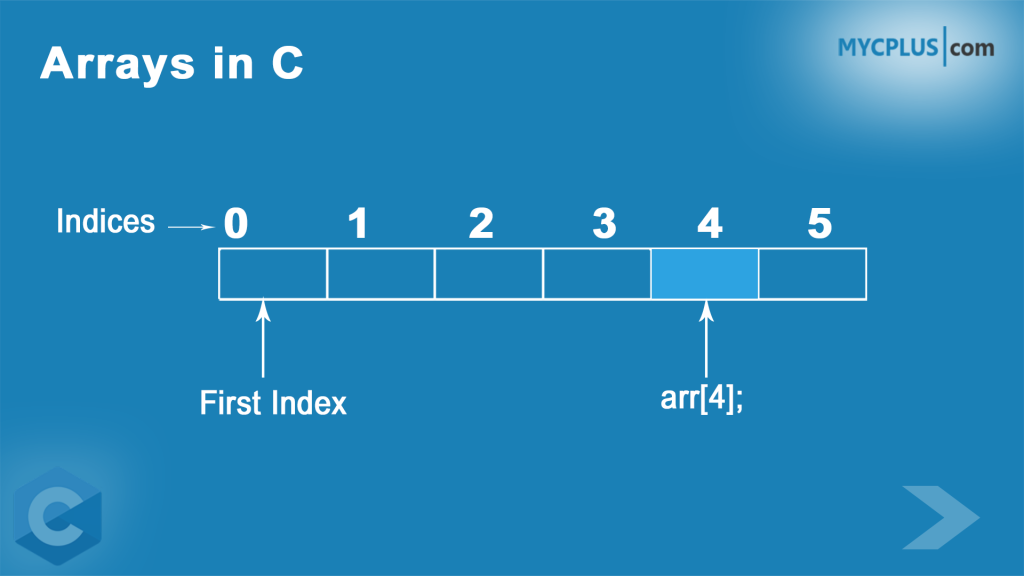
This C program shows insertion in Arrays. It shows how to insert an element in an array at any point. This program also shows how to print the updated array after the item is inserted in the array.
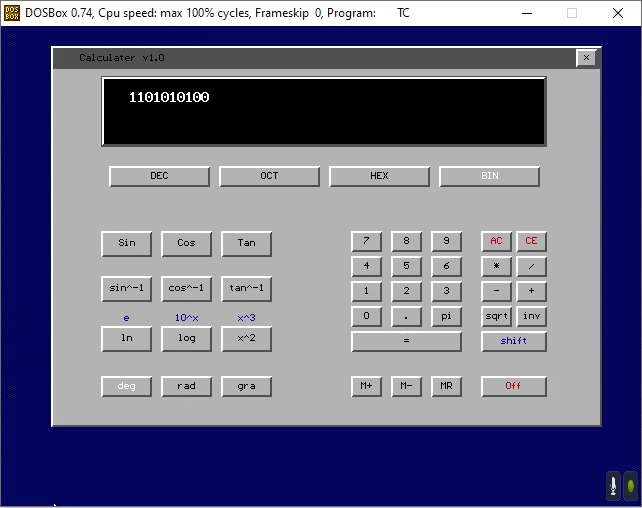
This is a C implementation of basic and few advance scientific features of calculator. It shows a nice graphical UI of the calculator with 3D buttons and demonstrates click button animation functionality. The functionalities of the calculator includes: Basic Mathematics (Add, Subtract, Multiply and Divide), Advance Mathematics (Square root, Square, Cube), Logarithmic Functions (Log, Natural Log (ln), e, Exponential), Number Conversions (Binary, Decimal, Hexadecimal and Octal), Trigonometric Functions (Sine, Cosine, Tangent, Cotangent, Secant and Cosecant), Angle Measurement (Degree, Radia and Gradian), Other Functions (Memory, Pi and Inv).
This is a C Language Program to show the drawing and filling of some basic shapes like rectangle, circle etc. with colors and different shades by using Turbo C graphics.h and modern SDL libraries.
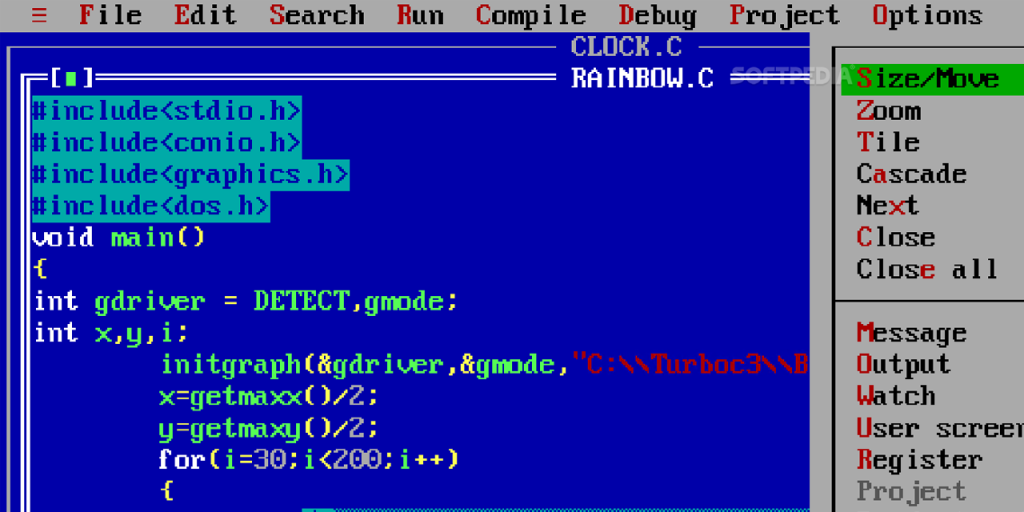
This is a Borland C/C++ compiler Interface using the graphics.h library. This program uses many functions of graphics.h library provided by C Language. These functions include line(), setcolor(), outtextxy() etc.
This C program is a simple banking system designed for novice programmers. The program uses graphics.h for graphical user interface elements, such as windows and buttons, and provides basic banking functionalities like creating a new account, listing all accounts, and handling account transactions. The program starts with an introduction, displaying the name of the bank using basic graphics functions.

This is a Game program written in C++. The objective of the game is to get to your proper plane on
In C, an array can be initialized using aggregates, which are a collection of values enclosed in braces ({}) and separated by commas. Another way to initialize array by using a loop which allows you to set the initial values of an array using a more flexible and dynamic approach. The basic idea is to use a loop to assign values to each element of the array based on some condition or calculation.