
Text Tool
Text Tool [code=’java’]/******************************************************* * MYCPLUS Sample Code – https://www.mycplus.com * * * * This code is made available as a […]
Programming powers modern technology — from desktop software and websites to mobile apps, games and enterprise systems. Strong programming skills remain essential for developers, students and technology professionals building modern digital solutions.
MYCPLUS has been publishing programming tutorials, source code examples and practical development guides since 2004. This programming hub brings together tutorials for C, C++, C#, Java, JavaScript, PHP and Python, along with game development and real-world coding examples designed for hands-on learning.
You will find beginner-friendly programming tutorials, practical source code examples and advanced development guides covering object-oriented programming, debugging, modern programming techniques and professional software development practices. Whether you are learning your first language, improving coding skills or exploring modern development technologies, this section provides structured resources for real-world programming and software engineering.
Why MYCPLUS: One of the web’s longest-running programming resources — trusted since 2004 with hundreds of tutorials, practical coding guides, source code examples and developer learning resources designed for real-world programming skills.
Text Tool [code=’java’]/******************************************************* * MYCPLUS Sample Code – https://www.mycplus.com * * * * This code is made available as a […]
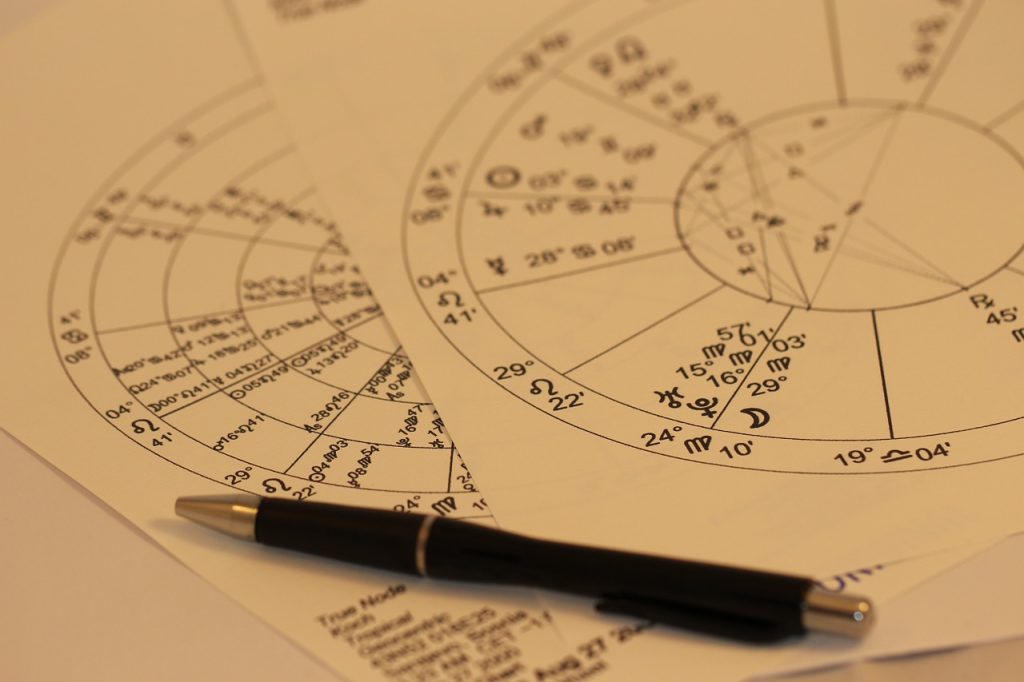
The following Java program shows the Zodiac sign corresponding to a given date. This little program can be used to find your Zodiac sign if you input your date of birth.
The Blackjack game written in Java provides a graphical user interface (GUI) for players to enjoy a simplified version of the classic card game. Upon starting the game, players are dealt an initial set of two cards each, and the goal is to build a hand with a total value as close to 21 as possible without exceeding it. The game features a deck of standard playing cards, including numbered cards, face cards (King, Queen, Jack), and Aces, each contributing their respective values to the hand.
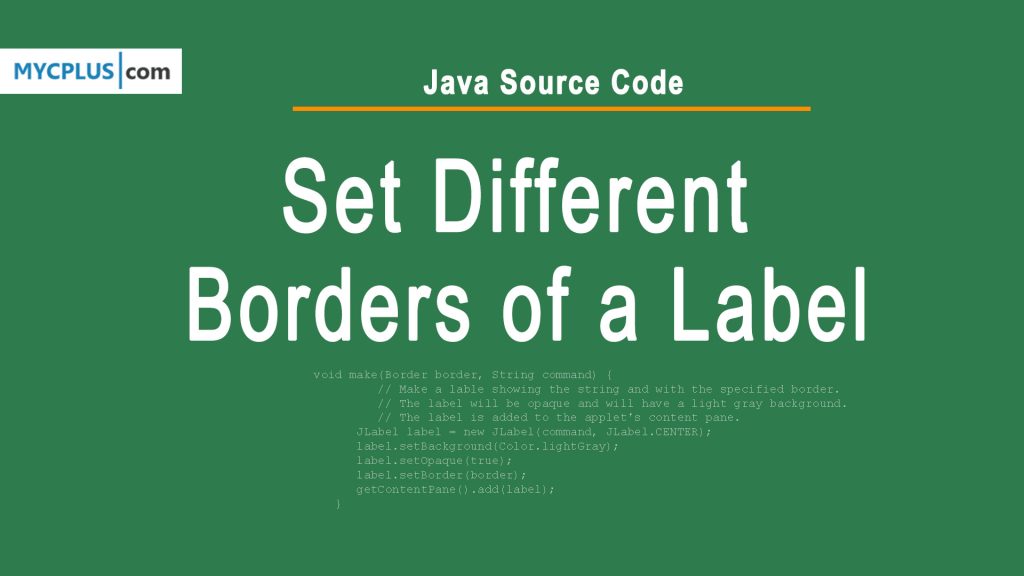
This is a Java source code for a simple graphical application that demonstrates how to use various types of borders in Swing, a Java GUI toolkit. The program defines a class BorderDemo that extends JApplet, a Swing component used for embedding a Java application in a web page or other container.
This Java Code supports two-way chatting between users. It implements a client for the ConnectionBroker server, which can set up a relayed connection between a pair of such clients. There are really two functions: The user can register with the server as a client who is willing to accept a connection, or the user can make a connection with one of the clients who is waiting on the server. The code retrieves and displays a list of waiting clients when it starts. There is a Refresh button that the user can click to refresh this list (since the list of waiting clients can change from time to time).
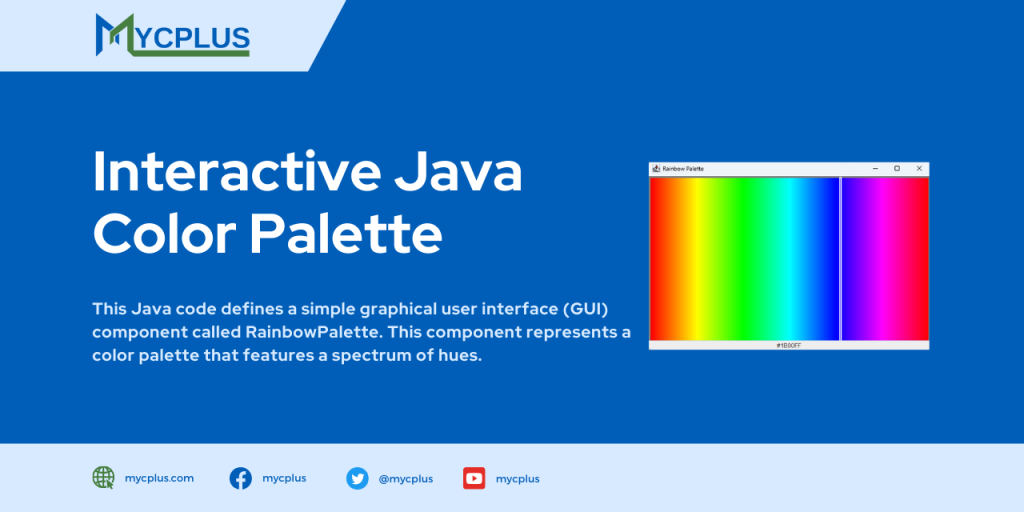
This Java code defines a simple graphical user interface (GUI) component called RainbowPalette. This component represents a color palette that features a spectrum of hues. Users can interact with the palette by clicking on different colors, and the selected color’s HEX value is displayed in a text box below the palette.
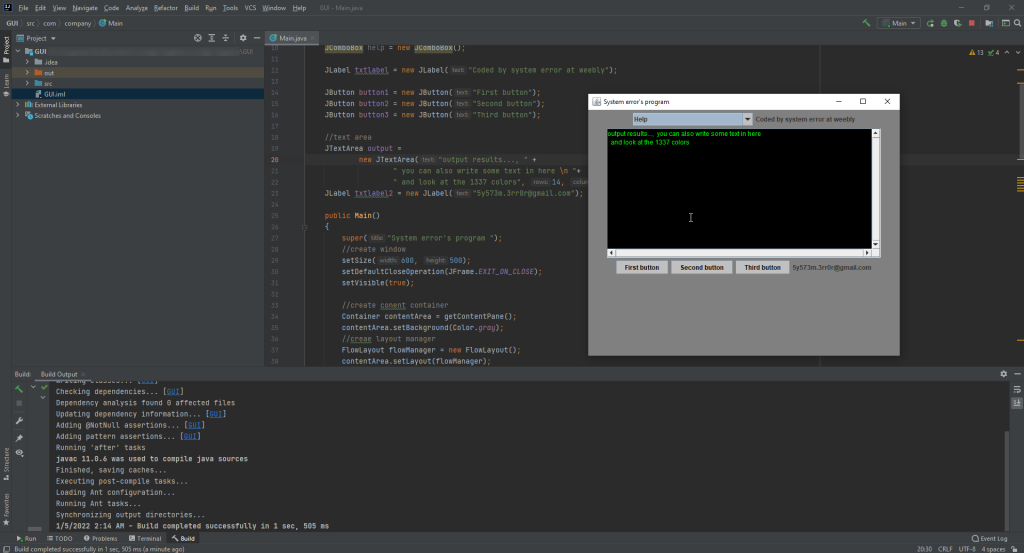
This Java source code is an example of a Graphical User Interface (GUI) with different GUI elements such as TextBox, Buttons, TextArea, Text Area and Labels. It is implemented using Java Swing API which provides a set of “lightweight” (all-Java language) components. This code example extends the functionality of JFrame class to show a JFrame window and Implements ActionListener on buttons to catch the click event on those buttons.
This Java source code implements a basic calculator with a graphical user interface (GUI) using AWT and Swing. The program is structured in a way that makes it suitable for novice programmers to understand and learn about GUI development in Java. It serves as an excellent starting point for those looking to explore basic GUI applications and understand the principles of event-driven programming.
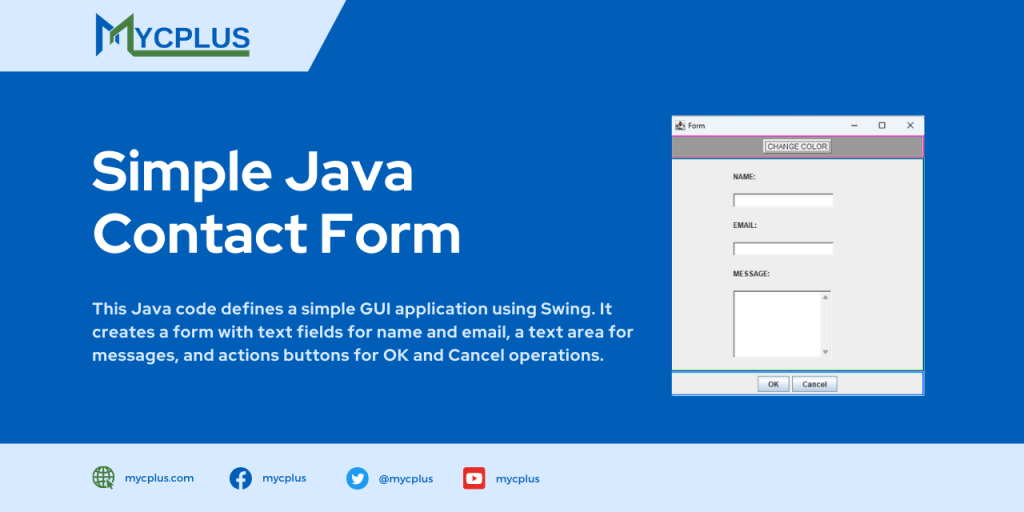
The following Java code defines a simple GUI application using Swing. It creates a form with text fields for name and email, a text area for messages, and actions buttons for OK and Cancel operations. Additionally, there is a button to change the background color of the form.
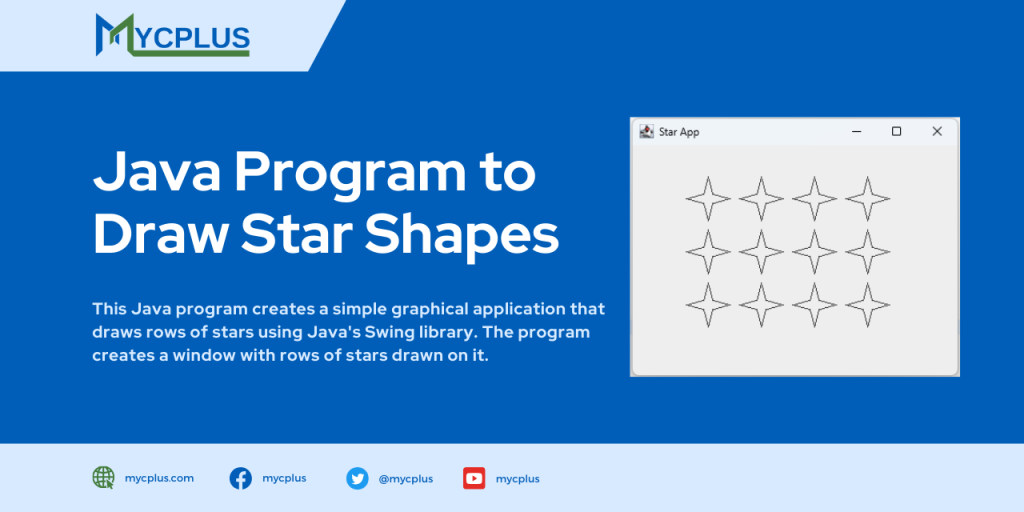
This Java program creates a simple graphical application that draws rows of stars using Java’s Swing library. The program creates a window with rows of stars drawn on it. The Star class defines the shape of a star, the StarPane class handles the drawing logic, and the StarApplet class sets up the main frame for the application. This example showcases basic GUI programming with Swing.
This Java program calculates and displays information about the volumes of the Earth and the Sun. It also show the ratio of their volumes.
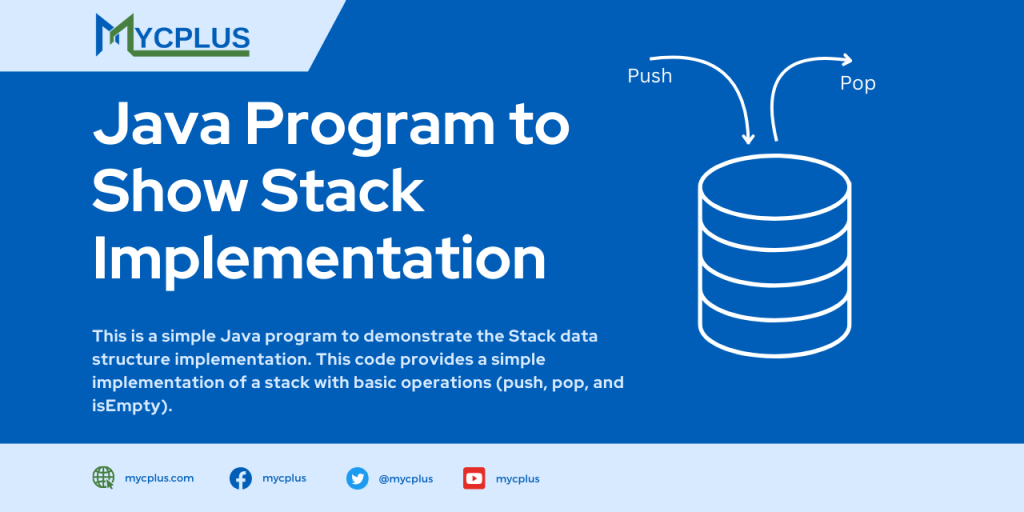
This java code implements stack functionality by using arrays. It can Pop and Push an item in stack with the help of array. The item can only be an integer number and internally the java program uses arrays to maintain items in stack.