Muhammad Saqib – Senior Software Engineer & Founder of MyCPlus

Muhammad Saqib author banner — MyCPlus

Muhammad Saqib is the founder and lead author of MyCPlus, the programming-education site he launched in 2004. The idea grew out of his own struggle learning to program at university — C was the first language he picked up — and the help he wished he’d had became the site he built for others. What began as a C and C++ resource has since grown into a broad hub of tutorials, working code examples, and computer science guides across many languages and skill levels.

He holds an MSc in Computer Applications from the University of Plymouth, UK (2008) and has spent over 15 years building large-scale software across automotive, healthcare, retail, mobility, and education. Along the way he has worked with Ford, Hyundai, Trilogy/DevFactory, OT EMR, Al Othaim Markets, and NUST–SEECS, and today leads backend engineering as Technical Team Lead at a public transportation authority.

A hands-on, polyglot engineer, he works across C/C++, Java, C#, PHP, Python, and JavaScript, and writes here about programming, software engineering, DevOps, Agile, and computer science.

More than twenty years on, MyCPlus keeps the goal it started with: clear tutorials, real source code, and a place for learners to get unstuck — written by someone who has been on both sides of the problem.

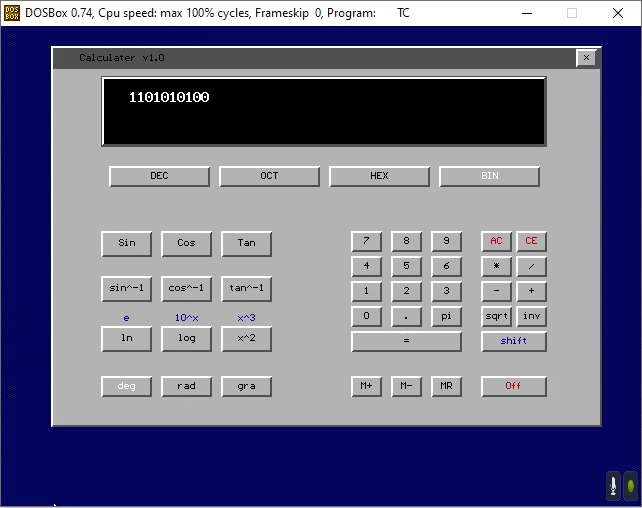
Scientific Calculator - C Implementation

Graphical Scientific Calculator with Advance Features

This is a C implementation of basic and few advance scientific features of calculator. It shows a nice graphical UI of the calculator with 3D buttons and demonstrates click button animation functionality. The functionalities of the calculator includes: Basic Mathematics (Add, Subtract, Multiply and Divide), Advance Mathematics (Square root, Square, Cube), Logarithmic Functions (Log, Natural Log (ln), e, Exponential), Number Conversions (Binary, Decimal, Hexadecimal and Octal), Trigonometric Functions (Sine, Cosine, Tangent, Cotangent, Secant and Cosecant), Angle Measurement (Degree, Radia and Gradian), Other Functions (Memory, Pi and Inv).

Multiplication of Two Matrices in C

Multiplication of Two Matrices in C

This C code multiplies two 2×2 matrices. It prompts the user to input values for both matrices, displays the input matrices, performs matrix multiplication using nested loops, and then prints the resulting matrix. The code adheres to modern C standards, using printf and scanf for I/O and avoiding outdated functions for better readability and compatibility.

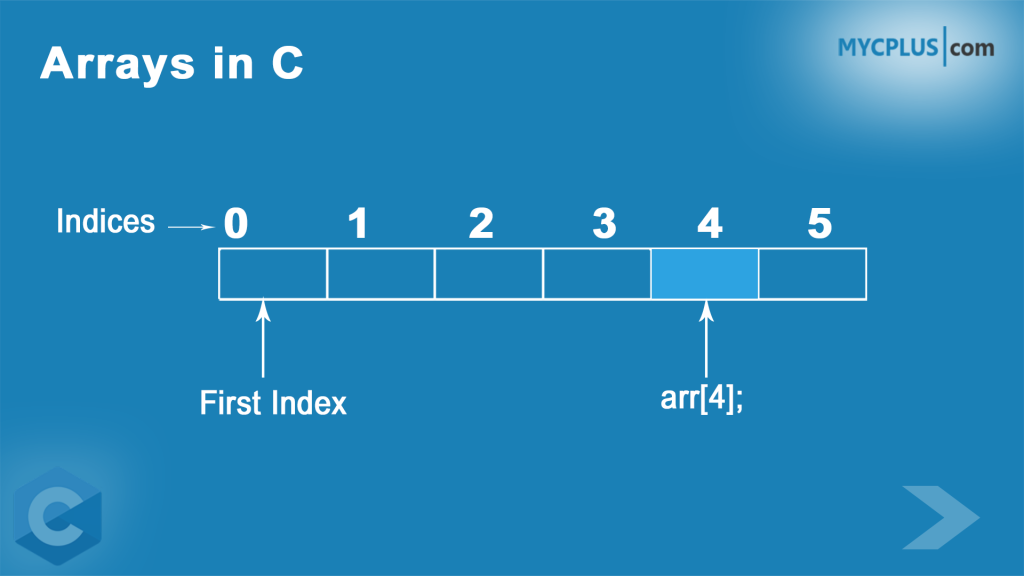
Arrays in C

Different ways to initialize an array in C Programming

In C, an array can be initialized using aggregates, which are a collection of values enclosed in braces ({}) and separated by commas. Another way to initialize array by using a loop which allows you to set the initial values of an array using a more flexible and dynamic approach. The basic idea is to use a loop to assign values to each element of the array based on some condition or calculation.

mycplus

C Program to Add Sequence of Numbers

This C program reads a sequence of positive integers as input by the user and print their sum. The program keeps on taking the input from user until user enters number ( 0 ) and program calculates the sum of all input numbers. Finally this C program prints the sum of all the numbers on screen and terminates.

Scroll to Top