
Spring is the open-source engine that began as a fan remake of Total Annihilation and grew into a platform for a whole family of large-scale strategy games. Two of today’s most ambitious free RTS games, Beyond All Reason and Zero-K, trace their code back to it. But if you search for “Spring RTS engine” in 2026, there’s a twist: most active development no longer happens on Spring itself. It happens on Recoil, a fork of Spring that now powers both of those games.
This profile explains what Spring is, how it works, which games were built on it, what changed with Recoil, and which engine to use for a new strategy game. Versions and dates were checked against project releases and contemporary reports in October 2026.
What Is the Spring Engine?
Spring is a free, open-source 3D real-time strategy engine written in C++, with games and interfaces scripted in Lua. It started in 2005 as TA Spring, a GPL remake of Total Annihilation in 3D. Its last major release was Spring 106.0 in January 2022; active development has since continued in Recoil, a fork that runs Beyond All Reason and Zero-K.
Spring engine at a glance
| Origin | TA Spring, a 3D remake of Total Annihilation by the Swedish Yankspankers clan; first playable release in 2005 |
|---|---|
| Created by | Stefan Johansson, Tomaz Kunaver and Jelmer Cnossen; community-developed since |
| Latest Spring release | 106.0, January 2022 (OpenGL 4 support) |
| Active successor | Recoil, a hard fork of Spring 105; releases through 2026.07 (August 2026) |
| Written in | C++ |
| Game scripting | Lua; skirmish AIs in Lua, C, C++, Python or Java |
| Licence | GNU GPL v2 or later (Recoil: GPL v2) |
| Multiplayer | Deterministic simulation: only player commands are sent between clients |
| Best-known games | Beyond All Reason and Zero-K (both now on Recoil), Balanced Annihilation, Spring: 1944 |
| Runs on | Windows and Linux |
From a Total Annihilation Remake to an Engine
Spring started as TA Spring, a project by Stefan Johansson, Tomaz Kunaver and Jelmer Cnossen, members of the Swedish Yankspankers game clan. They wanted to bring the 1997 classic Total Annihilation into full 3D, while still running its mods and third-party units. The first playable version arrived in spring 2005, released under the GPL. A French Linux news site reported in May 2005 that the team had hesitated for a long time before opening the code, fearing forks would split the community (LinuxFR, May 2005).
The fear proved half right. Spring did attract many forks, but of games rather than engines. The community took over development, the project dropped its “TA” prefix, and Spring became a general-purpose RTS engine hosting many independent games (Wikipedia’s Spring Engine article).
How Spring Works
Spring splits the work the way most modern RTS engines do:
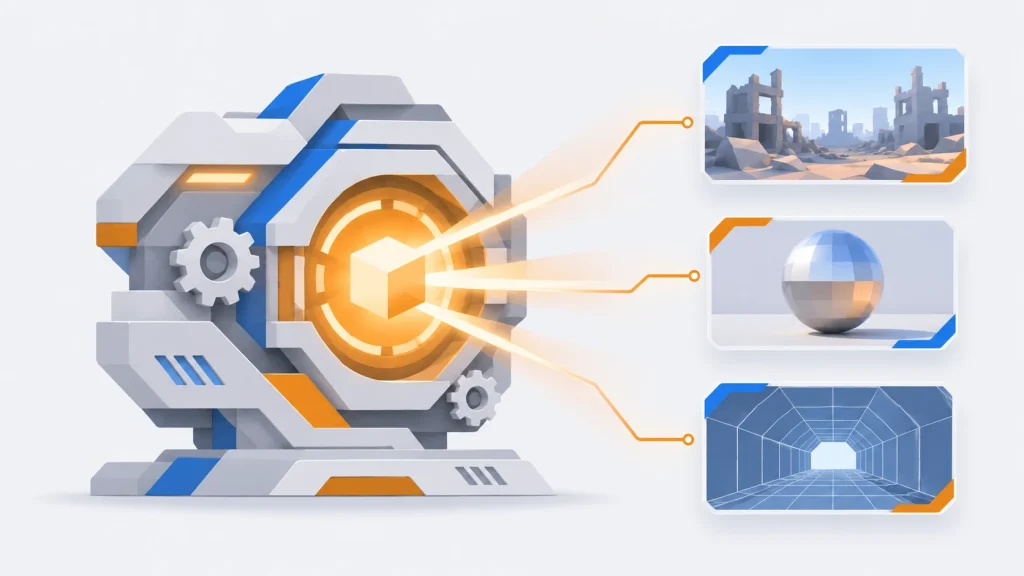
- A C++ engine handles rendering, deformable terrain, 3D projectile physics, water, pathfinding and networking.
- Lua scripts define the game itself: units, rules, user interface and mission logic. A Spring game is essentially a package of Lua code, models and data that the engine loads, which is why one engine could host so many different games.
- Skirmish AIs can be written in Lua, C, C++, Python or Java-family languages, so the computer opponents are as moddable as everything else.
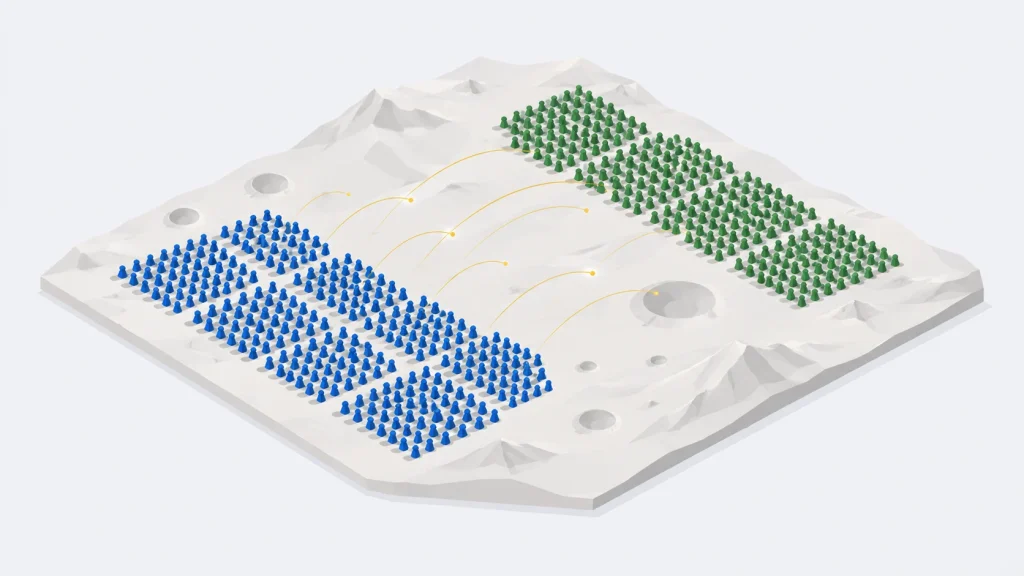
Multiplayer uses deterministic simulation: every client runs the same simulation, and only player commands travel over the network. That keeps bandwidth tiny even with thousands of units, at the cost of every client needing to stay perfectly in step. Matches are organised through an IRC-style lobby, and Spring also includes a mission editor and in-map drawing for team coordination.
Spring 106 and the Move to Recoil
Spring 106.0 (January 2022) was the first major Spring release in years. It added modern OpenGL 4 rendering for better performance on newer hardware. It also broke most existing Lua rendering code, so games needed substantial rewrites to adopt it (GamingOnLinux’s report). The developers were also divided over where the engine should go next.
The Beyond All Reason team had been building on its own engine branch, and it became Recoil: a hard fork of the Spring 105 code, licensed under the GPL v2 and still written in C++ with a Lua API. Recoil is now the actively developed member of the family. It has a steady stream of releases, with year-named versions from 2025.01 to 2026.07, the latest shipped in August 2026 (Recoil releases on GitHub). Zero-K also moved to a Recoil build, and describes itself as running on “Spring/Recoil”.
Recoil keeps Spring’s architecture, but it has diverged. Its changelogs list breaking changes since Spring 105.0, and it publishes a migration guide, so a game written for classic Spring may need work to run on it.
Games Built on Spring and Recoil
| Game | Engine today | Notes |
|---|---|---|
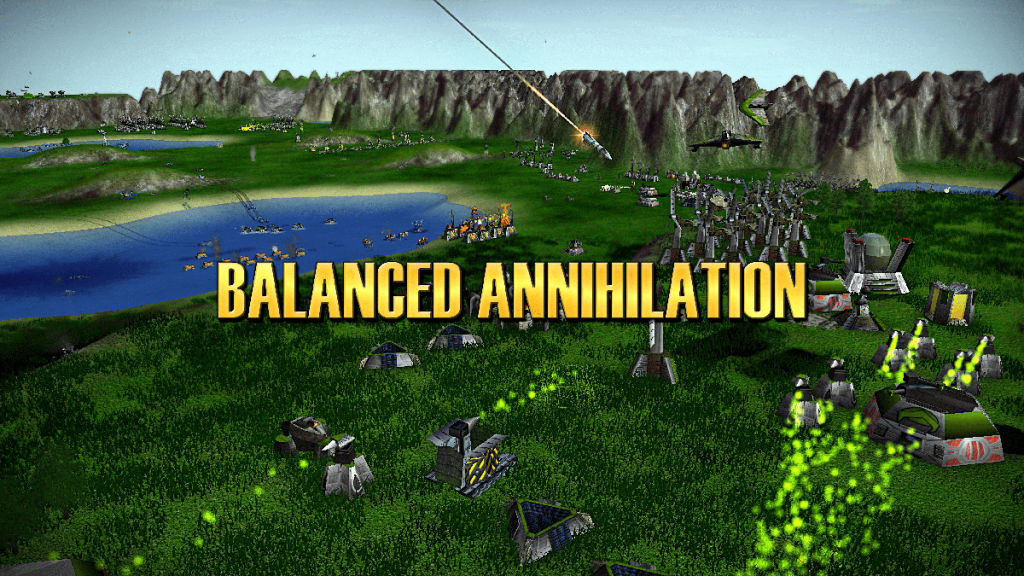
| Beyond All Reason | Recoil | Forked from Balanced Annihilation in February 2019; large-scale RTS in alpha; signed a Steam publishing deal with Hooded Horse in June 2026 |
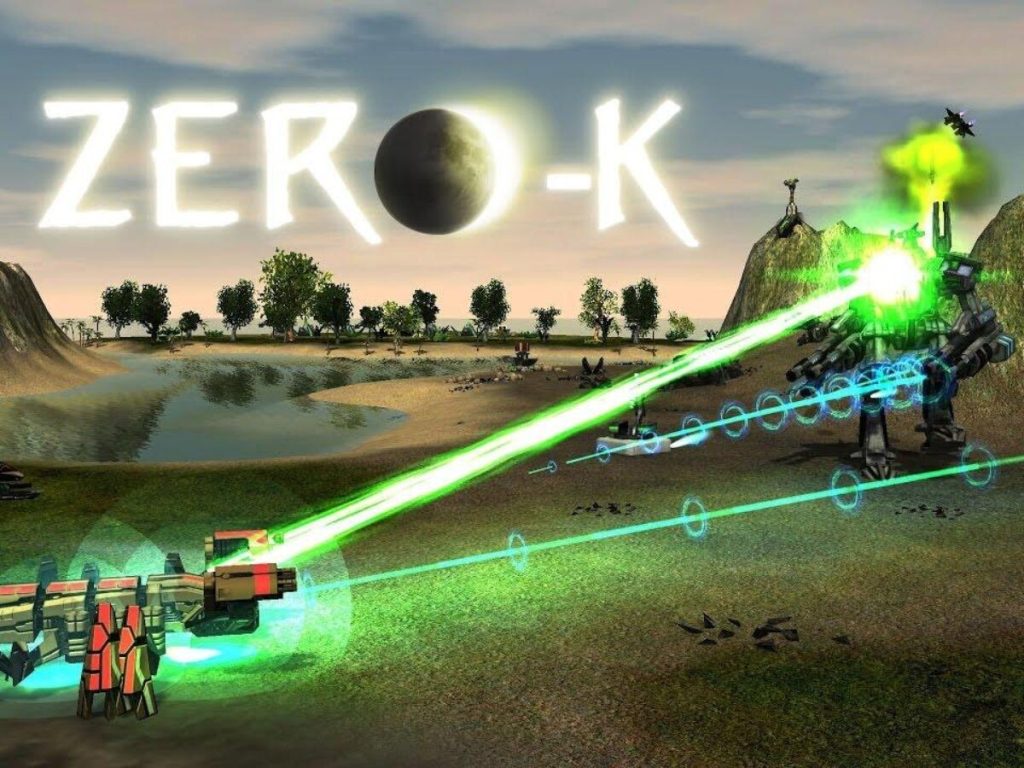
| Zero-K | Recoil | Began in 2007 as Complete Annihilation, a fork of Balanced Annihilation; renamed Zero-K and on Steam since April 27, 2018 |
| Balanced Annihilation | Spring | Rebalanced Total Annihilation mod from late 2006; parent of both Zero-K and BAR |
| Evolution RTS | Spring | The first Spring game on Steam (April 2014); removed in April 2020 |
| Spring: 1944 | Spring | World War II strategy with nearly 300 units, the best-known independent Spring game |
| XTA, NOTA, Kernel Panic, P.U.R.E. | Spring | Early community games; XTA was among the first Total Annihilation-based Spring games |
The two flagship games share a lot under the hood (maps, many interface widgets and some unit models) but play very differently. Zero-K has moved further from Total Annihilation, with shared team economies, upgradeable commanders, jumpjets and terrain manipulation. Beyond All Reason stays closer to Total Annihilation‘s factions, tech levels and economy (BAR’s comparison FAQ).
Is the Spring Engine Still Used in 2026?
The answer depends on what you mean by “Spring”:
- Classic Spring hasn’t had a major release since 106.0 in January 2022. Older community games still run on it, and Linux distributions continue to package it, but it’s no longer where the energy is.
- The Spring family is very much alive through Recoil. Beyond All Reason is heading to Steam with Hooded Horse, Zero-K is still updated on Steam, and Recoil ships engine releases several times a year.
For a new project, “use Spring” in practice means “use Recoil”. That’s where the bug fixes, performance work and active community are.
Spring Alternatives
If you want an open-source engine for a real-time strategy game, these are the main options:
- Recoil: the natural choice if you like Spring’s model. Large battles, Lua scripting, and two successful games to learn from.
- Pyrogenesis: Wildfire Games’ C++/JavaScript RTS engine behind 0 A.D., focused on historical warfare. See our Pyrogenesis engine profile.
- OpenRA: a GPL-3.0 C# engine that recreates classic Westwood RTS games such as Command & Conquer and Red Alert, with an SDK for building your own (OpenRA on GitHub).
- A general-purpose engine such as Godot, if your design needs something RTS engines don’t provide. You’ll write unit control, pathfinding and lockstep networking yourself.
For more open-source engines across every genre, see our directory of open-source C++ game engines.
Key Takeaways
- Spring is an open-source C++ RTS engine with Lua scripting, born in 2005 as TA Spring, a GPL remake of Total Annihilation in 3D.
- Its last major release was Spring 106.0 (January 2022), which added OpenGL 4 but broke most games’ Lua rendering code.
- Recoil is the active successor: a hard fork of Spring 105, with releases through August 2026.
- The biggest games now run on Recoil. Beyond All Reason (Steam deal in 2026) and Zero-K (on Steam since 2018) both moved over.
- Multiplayer is deterministic, so only player commands cross the network, which lets battles scale to thousands of units.
- For a new open-source RTS, look at Recoil, Pyrogenesis or OpenRA.
Conclusion
Spring did what its founders feared and hoped in equal measure: it spawned forks. Those forks became the most successful games the engine ever hosted, and eventually an engine of their own. Classic Spring now sits in the background, while Recoil carries its design, its Lua scripting and its huge-battle ambitions into Steam releases in 2026.
We’ll update this profile as Recoil and Beyond All Reason reach their Steam milestones. For more engines across every genre, browse our game development hub.