
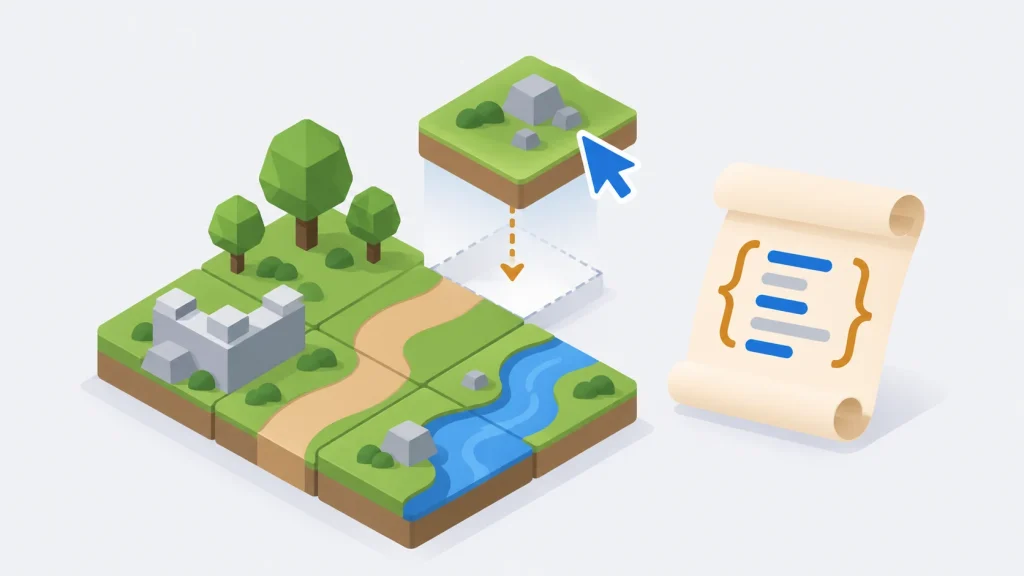
The Aurora Engine is the 3D role-playing game engine BioWare built for Neverwinter Nights (2002), and the Aurora Toolset is the editor that shipped with it. Together they let players build their own adventures, called modules, with the same tools BioWare used: paint areas from tilesets, place creatures and items, write dialogue, and program events in NWScript, a C-like scripting language. Aurora went on to underpin some of BioWare’s and its partners’ best-known RPGs. In 2026, more than two decades later, the toolset still ships with Neverwinter Nights: Enhanced Edition, and its script compiler has been released as open source.
This profile covers where Aurora came from, how the toolset and NWScript work, the games built on it, and where things stand in 2026. It includes an NWScript example we compiled with the official open-source compiler. Facts were checked against the compiler’s source repository, Neverwinter Nights community documentation, and contemporary news coverage in November 2026.
What Is the Aurora Engine and Toolset?
The Aurora Engine is BioWare’s 3D RPG engine, written in C++ and first used for Neverwinter Nights (June 2002). The Aurora Toolset is its module editor, shipped with the game on Windows, with NWScript for game logic. Aurora was the basis of the Odyssey (Knights of the Old Republic) and Electron (Neverwinter Nights 2) engines and of The Witcher. It lives on in Neverwinter Nights: Enhanced Edition.
Aurora Engine and Toolset at a glance
| Developer | BioWare |
|---|---|
| First game | Neverwinter Nights (June 18, 2002) |
| Written in | C++ |
| Predecessor | Infinity Engine (Baldur’s Gate) |
| Derived engines | Odyssey (Knights of the Old Republic, Jade Empire), Electron (Neverwinter Nights 2) |
| Licensed to | CD Projekt Red for The Witcher (2007) |
| Toolset | Aurora Toolset (nwtoolset.exe), 32-bit Windows |
| Scripting | NWScript, a C-like language compiled to bytecode |
| Script compiler | Open source since July 2023 (GPL-3.0) |
| Current home | Neverwinter Nights: Enhanced Edition (Beamdog, 2018; community patches) |
From the Infinity Engine to Aurora
BioWare’s first big engine, the Infinity Engine, powered the 2D Baldur’s Gate games and was licensed for Planescape: Torment and Icewind Dale. As it aged, BioWare built a successor for a new Dungeons & Dragons game. The Aurora Engine brought full 3D environments, real-time lighting and shadows, and surround sound.
Neverwinter Nights launched on June 18, 2002, directed and produced by Trent Oster. It shipped with the engine, a single-player and multiplayer campaign, and, on Windows, the Aurora Toolset. According to BioWare’s history on Wikipedia, players had made more than a thousand modules within half a year of release. The toolset won RPG Vault’s technology award, which called it “an unprecedented combination of power, flexibility and ease of use”. Three expansions followed: Shadows of Undrentide and Hordes of the Underdark (2003), and Kingmaker (2004).
Engines Built on Aurora
Aurora’s code became the foundation for several later engines:
| Engine or game | Year | Developer | Relationship to Aurora |
|---|---|---|---|
| Neverwinter Nights | 2002 | BioWare | The first Aurora Engine game, with the toolset |
| Odyssey Engine: Star Wars: Knights of the Old Republic | 2003 | BioWare | An updated Aurora, and BioWare’s first engine for consoles |
| Odyssey Engine: KotOR II: The Sith Lords | 2004 | Obsidian Entertainment | Built on BioWare’s Odyssey Engine |
| Odyssey Engine: Jade Empire | 2005 | BioWare | Odyssey again, for BioWare’s first RPG in a world of its own |
| Electron Engine: Neverwinter Nights 2 | 2006 | Obsidian Entertainment | An updated Aurora, with its own toolset |
| The Witcher | 2007 | CD Projekt Red | Licensed Aurora, with a rendering module rewritten from scratch |
BioWare’s later Eclipse Engine, used for Dragon Age: Origins (2009), succeeded Odyssey and again shipped with a toolset for players (BioWare’s engine history on Wikipedia).
How the Aurora Toolset Works
A Neverwinter Nights adventure is a module (.mod), and the toolset is where you build one:
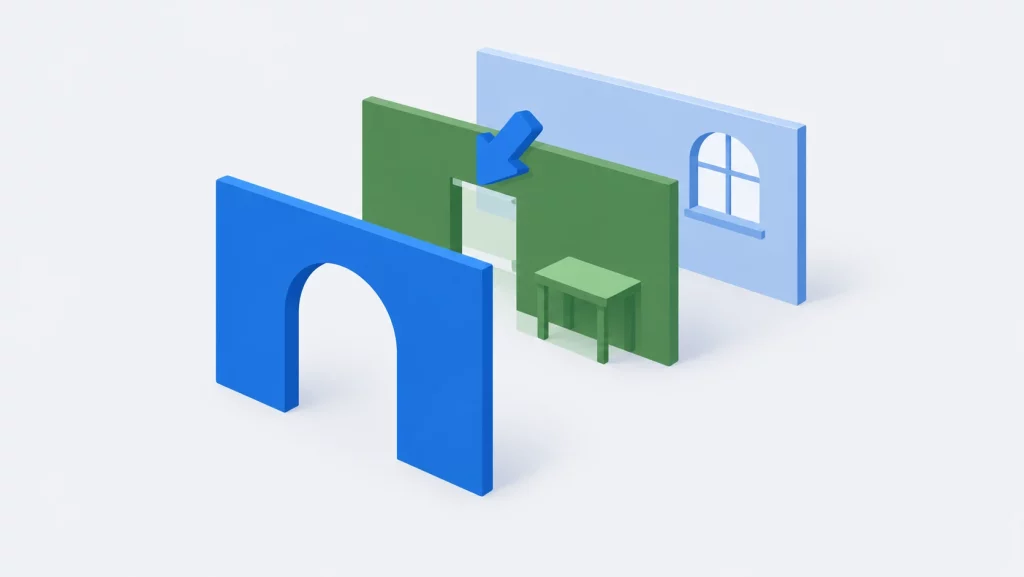
- Areas from tilesets. You paint terrain such as forests, castles, cities and dungeons onto a grid of tiles, choosing from themed tilesets. Features like walls and bridges are built into the tiles, so areas come together quickly.
- Objects from palettes. Creatures, placeables (chests, doors, levers), items, triggers, sounds and waypoints are dragged from palettes on the right and placed in the 3D view.
- Dialogue and journals. A conversation editor builds branching dialogue, with conditions and actions attached to each line, and a journal editor tracks quests.
- Scripts on events. Almost every object has event slots, such as OnUsed, OnDeath, OnEnter and OnHeartbeat. You attach an NWScript file to an event, and the engine runs it when the event fires.
The toolset is a 32-bit Windows program (nwtoolset.exe), even in the Enhanced Edition. Community documentation notes that it can run under Wine on Linux, but not reliably, and advises saving often (the nwn.wiki toolset manual).
NWScript: How Aurora Games Are Programmed
NWScript looks like C, with types designed for RPGs: int, float and string, but also object, location, effect and itemproperty. The engine exposes its functions and constants through a file called nwscript.nss. In the current Enhanced Edition data, that’s about 1,190 functions and more than 6,000 constants, such as GetLastUsedBy(), SetLocalInt() and ActionPlayAnimation(). Scripts are compiled to compact bytecode (.ncs files), which the engine’s virtual machine runs when the event fires.
In July 2023, the official NWScript compiler’s source code was published for the first time, under the GPL-3.0 licence, as part of the open-source neverwinter.nim tools for Enhanced Edition. Community developers have kept improving it since, and Enhanced Edition patches have shipped those compiler improvements to players (neverwinter.nim on GitHub).
Hello, Aurora: A Lever Script in NWScript
This script goes in a lever’s OnUsed event. Each time a player uses the lever, it toggles between on and off, plays the matching animation, counts the pulls, and shows a floating message over the player:
// lever_onused.nss - OnUsed event script for a lever placeable.
// Each use toggles the lever, plays its animation and counts the pulls.

void main()
{
    object oPC = GetLastUsedBy();
    if (!GetIsPC(oPC))
        return;

    int bOn = !GetLocalInt(OBJECT_SELF, "LEVER_ON");
    SetLocalInt(OBJECT_SELF, "LEVER_ON", bOn);

    int nPulls = GetLocalInt(OBJECT_SELF, "LEVER_PULLS") + 1;
    SetLocalInt(OBJECT_SELF, "LEVER_PULLS", nPulls);

    if (bOn)
        ActionPlayAnimation(ANIMATION_PLACEABLE_ACTIVATE);
    else
        ActionPlayAnimation(ANIMATION_PLACEABLE_DEACTIVATE);

    FloatingTextStringOnCreature("The lever clicks " + (bOn ? "on" : "off")
        + ". Pulls so far: " + IntToString(nPulls), oPC, FALSE);
}
OBJECT_SELF is the object running the script, here the lever. SetLocalInt stores a named number on the lever that stays with it, which is how most module state is kept.
Tested: we built the official open-source NWScript compiler from its C++ source and compiled this script against the Enhanced Edition’s nwscript.nss. It produced a 431-byte bytecode file with the standard NCS V1.0 header, and the compiler correctly rejected a deliberately broken script with a type error. We then compiled every script that ships with the base game. Of the 4,051 with an entry point, 4,000 compiled, and the 51 failures are exactly the ones the compiler project already lists as known to fail. We didn’t run the toolset or the game itself, which need Windows and a game licence.
Aurora and Neverwinter Nights in 2026
- The game lives on as Enhanced Edition. Beamdog, a studio founded by former BioWare developers and led by CEO Trent Oster, who directed the 2002 game, released Neverwinter Nights: Enhanced Edition on Steam on March 27, 2018. Android followed in December 2018, and Nintendo Switch, PlayStation 4 and Xbox One in December 2019. It includes the toolset on Windows. The game itself runs on Windows, macOS and Linux, and costs $19.99 on Steam; only the toolset is Windows-only. Beamdog was acquired by Aspyr in 2022.
- Community developers now ship the patches. The January 2025 update was, in Beamdog’s words, built “by unpaid software engineers from the NWN community” (GamingOnLinux on the community patch). Patch 8193.37-17 in October 2025 added script compiler improvements and fixes, and the open-source tools were still being updated in October 2026.
- BioWare itself is closing. On October 21, 2026, BioWare announced that the Edmonton studio was closing and that early development on the next Mass Effect had ended (BNN Bloomberg on the closure). The Aurora games continue through Beamdog’s Enhanced Edition and the community around it.
Aurora Toolset Alternatives
- Neverwinter Nights 2 toolset: Obsidian’s Electron toolset, which shipped with the 2006 sequel and works the same way, with modules, areas and NWScript. Aspyr released an Enhanced Edition of Neverwinter Nights 2 in July 2025.
- Godot: a free, open-source engine if you want to build your own RPG from scratch, rather than a module for an existing game. See our Godot engine profile.
- Unreal Engine: for full 3D RPGs at a professional scale. See our Unreal Engine profile.
For more engines, browse our directory of C++ game engines.
Key Takeaways
- Aurora is BioWare’s 3D RPG engine, written in C++ and first used for Neverwinter Nights in June 2002.
- The Aurora Toolset let players build full modules from tilesets, palettes, dialogue and NWScript, and more than a thousand appeared within six months.
- Aurora was the basis of later engines: Odyssey (Knights of the Old Republic, Jade Empire), Electron (Neverwinter Nights 2) and The Witcher.
- NWScript is a C-like language compiled to bytecode, and its official compiler has been open source since July 2023.
- The toolset still ships with Neverwinter Nights: Enhanced Edition, now patched by community developers.
- The official compiler still works on BioWare’s own scripts: in our test, it compiled 4,000 of the 4,051 base-game scripts.
Conclusion
The Aurora Toolset handed players the same tools BioWare used, and the result was a modding community that is still active more than twenty years later. The engine’s descendants shaped Knights of the Old Republic, Neverwinter Nights 2 and The Witcher, and BioWare’s own story is now ending. Neverwinter Nights itself is still being patched, its compiler is open source, and its community is still patching and extending the game more than twenty years on.
For more engines across every genre, browse our game development hub.