Source Code

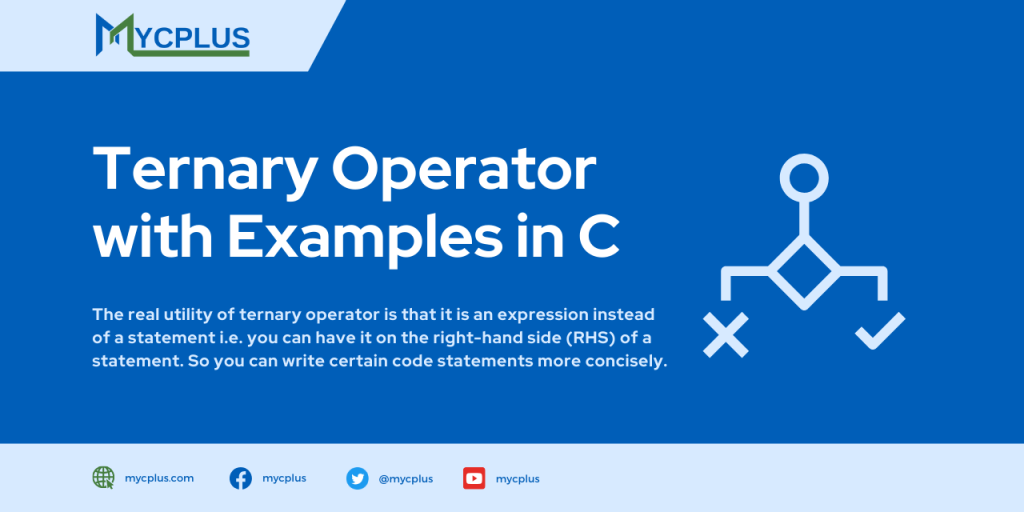
Ternary Operator with Examples in C
C Programming Articles – Learn C as Your First Programming Language

Ternary Operator with examples in C

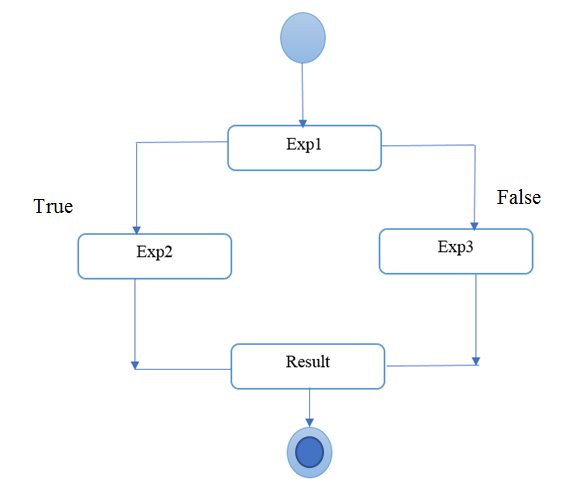
In C Programming, ternary operator allows executing different code depending on the value of a condition. The returned value is the result of the expression when the code is executed. The main advantage of using ternary operator is to reduce the number of lines of code and improve the performance of application. In C, the real utility of ternary operator is that it is an expression instead of a statement i.e. you can have it on the right-hand side (RHS) of a statement. So you can write certain code statements more concisely.
, ,
Ternary Operator Diagram
C++ Tutorials & Articles – Learn C++ Basics, Features & Compilers

Ternary Operator with examples in C++

In C++, ternary operator allows executing different code depending on the value of a condition, and the result of the expression is the result of the executed code. The ternary operator uses 3 operands. It evaluates a condition and after that chooses one of its two branches to execute, depending upon the result of condition. The symbol for ternary operator is “? :”. The syntax for the ternary operator is: ? : ;

, ,
Base 64 Encoding and Decoding
C Programming Source Code Examples

C Implementation of Base64 Encoding and Decoding

Base64 encoding and decoding schemes are commonly used to encode binary data. Normally this is required when textual data needs to be transferred over the network or similar media and make sure that data is transferred without any modification. Base64 is commonly used in a number of applications, including email via MIME, and storing complex data in XML. This is a very simple implementation of base64 encoding and decoding in C programming language. There are number of C libraries available for encoding and decoding as well i.e. libb64, OpenSSL Base64, Apple’s Implementations, arduino-base64 etc.

, , ,
Scroll to Top