

The UbiArt Framework is a proprietary 2.5D game engine created by Ubisoft Montpellier to turn hand-drawn 2D artwork into playable games with minimal coding. Written in C++, it powered some of the most beautiful 2D games of the 2010s — Rayman Origins, Rayman Legends, Child of Light, and Valiant Hearts — before quietly fading from Ubisoft’s lineup. Here is the full story: how it worked, every game built on it, and where it stands today.
What Is the UbiArt Framework?
The UbiArt Framework is a 2.5D (pseudo-3D) game engine developed by Ubisoft Montpellier under the creative direction of Rayman creator Michel Ancel. Its core idea was radical for its time: let artists and animators drive game production directly. Instead of building games around polygons and textures, UbiArt organizes 2D animated vector graphics into interactive scenes, so an illustrator’s original artwork appears on screen essentially as drawn.
The stated goal was to limit the repetitive tasks of game development so small teams could ship big-looking games. The engine is optimized for HD displays and can run games at 60 frames per second at resolutions beyond 1080p — one reason Rayman Legends still looks pristine on modern 4K screens.
Ubisoft has built several proprietary engines over the years, including the Jade Game Engine, Anvil, and Snowdrop. UbiArt is the only one designed exclusively for 2D games. For a broader view of how it compares to other proprietary technology, see our complete list of top 100 game engines written in C/C++.
Origins and History
In 2010, Ubisoft announced Rayman Origins — initially conceived as an episodic downloadable game designed by Michel Ancel and built by a team of just five people at Ubisoft Montpellier. The small scale was the point: UbiArt was created alongside the game specifically so a handful of artists and programmers could produce a full-scale platformer. As the project grew, it became a complete retail release, launching in November 2011 to critical acclaim.
Ancel publicly stated that he wanted the framework to eventually be free for anyone to make games with. That never happened — UbiArt was never released publicly or licensed outside Ubisoft. It did, however, spread internally: by the mid-2010s, studios including Ubisoft Montréal (Child of Light) and teams working on mobile and licensed titles were shipping games on it, and the engine gained 3D-capable features around 2013 that appeared in Rayman Legends and later titles.
The retreat came just as quietly. In an April 2019 IGN Unfiltered interview, Ubisoft CEO Yves Guillemot explained why UbiArt hadn’t been adopted more broadly: the “tools were difficult to use” at scale. Ubisoft had once planned to roll the engine out across all its studios, but supporting that many teams would have required more hands-on training than the company was willing to invest. Guillemot stressed the engine wasn’t abandoned, but acknowledged it was no longer prominent. Ancel himself left the games industry in September 2020.
UbiArt Framework Timeline
| Year | Milestone | Significance |
|---|---|---|
| 2010 | Engine announced with Rayman Origins reveal | Built by a five-person team at Ubisoft Montpellier |
| 2011 | Rayman Origins ships (November) | First UbiArt game; critical acclaim |
| 2012–2013 | Rayman Jungle Run, Fiesta Run, Rayman Legends | Mobile expansion; 3D-capable features added |
| 2014 | Child of Light, Valiant Hearts: The Great War | New IPs; multi-studio adoption (Montréal, Montpellier) |
| 2015 | Rayman Adventures, Gravity Falls (3DS) | Mobile and licensed titles |
| 2019 | Rayman Mini (Apple Arcade); Guillemot explains reduced use | Last new UbiArt game to date |
| 2026 | Rayman Legends Retold announced on Snowdrop | Even Rayman’s revival leaves UbiArt behind |
Games Built With the UbiArt Framework
At least nine confirmed titles shipped on UbiArt between 2011 and 2019, spanning consoles, PC, handhelds, and mobile.
| Game | Year | Developer | Platforms |
|---|---|---|---|
| Rayman Origins | 2011 | Ubisoft Montpellier | PS3, Xbox 360, Wii; PC, Vita, 3DS (2012) |
| Rayman Jungle Run | 2012 | Pastagames / Ubisoft Montpellier | iOS, Android |
| Rayman Legends | 2013 | Ubisoft Montpellier | PC, PS3, X360, Wii U, Vita; PS4, Xbox One (2014); Switch (2017) |
| Rayman Fiesta Run | 2013 | Pastagames | iOS, Android |
| Child of Light | 2014 | Ubisoft Montréal | PC, PS3, PS4, X360, Xbox One, Wii U, Vita; Switch (2018) |
| Valiant Hearts: The Great War | 2014 | Ubisoft Montpellier | PC, PS3, PS4, X360, Xbox One; mobile; Switch (2018) |
| Gravity Falls: Legend of the Gnome Gemulets | 2015 | Ubisoft | Nintendo 3DS |
| Rayman Adventures | 2015 | Ubisoft Montpellier | iOS, Android |
| Rayman Mini | 2019 | Pastagames / Ubisoft Montpellier | Apple Arcade |
The Rayman era (2011–2013)
Rayman Origins (2011) was UbiArt’s proof of concept: a four-player side-scrolling platformer whose lush hand-painted worlds ran at a locked 60fps. Rayman Legends (2013) pushed the engine further with the celebrated musical levels, online challenges, and the 3D-capable features added to the framework that year. Legends is widely regarded as one of the best platformers ever made — and it remains UbiArt’s showpiece.
The new IPs (2014)
Child of Light, developed by Ubisoft Montréal, proved the engine could travel between studios and genres — it’s a turn-based RPG rendered like a living watercolor painting. Valiant Hearts: The Great War, back at Montpellier, used UbiArt’s comic-book presentation to tell a historically grounded World War I story, with the team consulting soldiers’ letters and visiting real trench sites for authenticity. Both games demonstrated that UbiArt’s artist-first pipeline worked for far more than platformers.
Mobile, licensed, and the long tail (2015–2019)
Rayman Adventures (2015) brought the full UbiArt look to phones, while Gravity Falls: Legend of the Gnome Gemulets (2015) applied it to a licensed Disney property on Nintendo 3DS. The final new UbiArt release was Rayman Mini (2019) on Apple Arcade. Interestingly, the game-modding community has also found UbiArt’s distinctive file formats (such as .ipk packages) inside Just Dance titles from 2013 onward, suggesting the engine’s technology quietly served Ubisoft’s biggest annual franchise as well.
Distinctive Features of the UbiArt Framework
- Artist-first pipeline. Any 2D image — a sketch, a painting, even a photo of modeling clay — can be imported and turned into a game asset. Artists attach a “skeleton” of pivot points to the image, and the engine animates it. No 3D modeling, no texture mapping.
- Vector-based, resolution-independent art. Because artwork is handled as scalable vector graphics rather than fixed bitmaps, the same assets stay crisp from a phone screen to a 4K display.
- 60fps beyond 1080p. The engine was optimized for high resolutions and fluid animation from day one — unusual for 2011.
- Lightweight and cross-platform. The same content shipped on consoles, PC, handhelds, and mobile with minimal rework, which is why studios as different as Montpellier, Montréal, and mobile partner Pastagames could all use it.
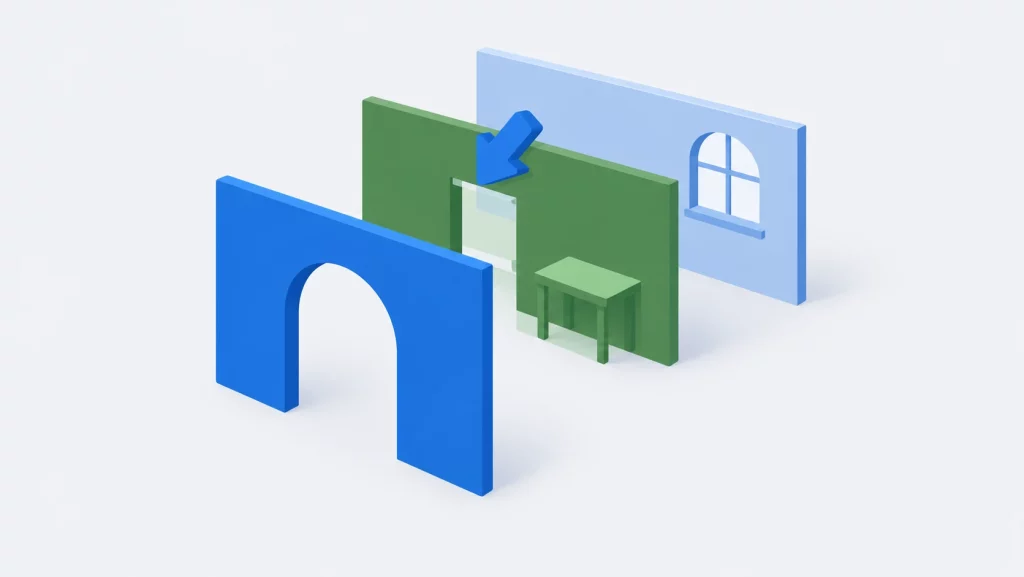
- 2.5D scene depth. Games are built from layered 2D planes with parallax, and 3D elements became possible after the 2013 feature update.
- Small-team economics. Rayman Origins began with five developers. The entire framework exists to keep teams small and iteration fast.
UbiArt vs. Unity for 2D Games
Unity is the natural comparison — it’s the engine Ubisoft itself reached for on experimental projects like Grow Home (2015), which is sometimes mistakenly listed as a UbiArt title.
| UbiArt Framework | Unity | |
|---|---|---|
| Type | Proprietary, internal to Ubisoft | Commercial, publicly available |
| Primary focus | Hand-drawn 2D/2.5D games | General purpose (2D and 3D) |
| Core language | C++ | C++ core, C# scripting |
| Availability | Never released or licensed | Free tier + paid subscriptions |
| Workflow | Artist-first: draw, rig, play | Component-based, programmer-centric |
| Notable 2D games | Rayman Legends, Child of Light | Hollow Knight, Cuphead, Ori and the Blind Forest |
| Status (2026) | Dormant, no new titles since 2019 | Actively developed |
The comparison explains UbiArt’s fate as much as its brilliance: Unity does 90% of what most 2D teams need and anyone can download it, while UbiArt’s last 10% — that inimitable hand-painted fluidity — required tooling Ubisoft ultimately decided was too costly to maintain across studios.
Is the UbiArt Framework Still Used in 2026?
The honest answer: UbiArt is dormant. No new UbiArt game has shipped since Rayman Mini in 2019, and the most telling signal came in June 2026, when Ubisoft announced Rayman Legends Retold — a full remake of UbiArt’s flagship game, launching October 1, 2026 — built not on UbiArt but on Snowdrop, the Ubisoft engine behind The Division and Star Wars Outlaws. When even Rayman’s own revival (co-developed by Ubisoft Montpellier, UbiArt’s birthplace) moves to a different engine, the era is effectively over. Notably, the developers have said the remake preserves 2D gameplay logic beneath its new 3D visuals — the UbiArt design philosophy survives even where the code does not.
The 2023 sequel Valiant Hearts: Coming Home tells a similar story. It faithfully reproduces the first game’s UbiArt look, but it was built primarily by external studio Old Skull Games, and PC technical documentation identifies it as a Unity title — a stylistic successor rather than a UbiArt game.
Can You Download the UbiArt Framework?
No. Despite Michel Ancel’s early hopes of making it freely available, the UbiArt Framework was never released publicly, open-sourced, or offered for licensing. It remains internal Ubisoft technology, and with the engine now dormant, a public release is more unlikely than ever.
If you’re drawn to what UbiArt did and want to build similar hand-crafted 2D games, several excellent engines are freely available today:
- Unity — the closest practical substitute, with mature 2D tooling (sprite rigging, skeletal animation via its 2D Animation package) and the engine behind most acclaimed indie 2D games.
- Godot — free and open source, with a dedicated 2D renderer and a workflow small teams love; arguably the closest spiritual heir to UbiArt’s small-team philosophy.
- Unreal Engine — its Paper2D toolset handles sprite-based games, and the engine is free to download with royalties only after $1M in revenue.
Browse more of our game development coverage for deep dives into each of these engines.
FAQ
Conclusion
UbiArt’s story is less about an engine than about a philosophy: that game technology should serve artists rather than the other way around. For roughly a decade, that philosophy produced some of the most visually distinctive games of its generation on teams a fraction of the usual size — and its scaling failure is equally instructive. A tool optimized for one team’s brilliance proved too specialized to survive the economics of a company with twenty studios.
Yet the ideas won even as the code lost. Rayman Legends Retold rebuilds the UbiArt masterpiece on Snowdrop while deliberately preserving its 2D design bones, and today’s thriving hand-crafted 2D scene — from Hollow Knight to Cuphead — pursues exactly the artist-first workflow Ancel’s team pioneered. UbiArt may never ship another game, but every engine that treats a hand-drawn sketch as a first-class game asset is walking a path it cleared.