

CryEngine is Crytek’s proprietary C++ game engine — the technology behind Far Cry, the Crysis trilogy, Hunt: Showdown, and (in heavily modified form) Kingdom Come: Deliverance II. For two decades it has been the industry’s benchmark for photorealistic rendering, even as its business fortunes rose and fell. This guide covers every version from CryEngine 1 to CRYENGINE V, the games each one powered, current licensing terms, and where the engine honestly stands in 2026.
What Is CryEngine?
CryEngine (stylized CRYENGINE since 2013) is a 3D game engine developed by German studio Crytek, written primarily in C++ with Lua scripting and, since 2016, C# support. It made its name doing one thing better than anyone: rendering vast, dense, photorealistic outdoor environments in real time. “But can it run Crysis?” became a hardware-benchmarking meme precisely because the engine consistently ran years ahead of consumer GPUs.
Beyond raw rendering, CryEngine pioneered the Sandbox editor and its “What You See Is What You Play” (WYSIWYP) philosophy — designers could jump from editing a level into playing it instantly, a workflow that was genuinely novel in 2004 and is now standard across the industry.
CryEngine’s DNA also spread far beyond Crytek. Ubisoft’s Dunia Engine (Far Cry 2 onward) began as a CryEngine fork, and Amazon’s Lumberyard — now the open-source O3DE — was a licensed CryEngine derivative. For how it fits into the wider landscape, see our complete list of top 100 game engines written in C/C++.
Origins and History
Crytek was founded in 1999 by brothers Cevat, Avni, and Faruk Yerli. The engine began life not as a game but as X-Isle: Dinosaur Island, a technology demo built to show off Nvidia graphics cards — a lush tropical island with draw distances no contemporary engine could match. The demo impressed enough that it grew into a full game: Far Cry, published by Ubisoft in March 2004, which sold millions and instantly established Crytek as a technology leader.
The Ubisoft relationship then took a turn that still shapes the industry: in March 2006, Ubisoft acquired the entire Far Cry IP along with a perpetual license to CryEngine 1, which its Montreal teams forked into the Dunia Engine used by every Far Cry sequel. Crytek, meanwhile, signed with EA and bet everything on a new IP — Crysis — and a new engine to run it.
From there the pattern repeated roughly every three to four years: a new engine generation, a showcase Crysis game, and licensing deals to third parties. The business model kept shifting — traditional licensing, a $9.90/month Steam subscription (2014), “pay what you want” (2016), and finally today’s royalty model (2018) — but the engineering reputation never wavered, even when the company’s finances did.
CryEngine Version History
| Version | Released | Debut game | Key additions |
|---|---|---|---|
| CryEngine 1 | 2004 | Far Cry | Massive outdoor terrain, long draw distances; v1.2 added Shader Model 3.0, v1.3 added HDR lighting |
| CryEngine 2 | 2007 | Crysis | Real-time day/night lighting, breakable buildings and vegetation, parallax occlusion mapping, advanced ocean rendering |
| CryEngine 3 | 2009 | Crysis 2 (2011) | Multiplatform (PS3/Xbox 360), real-time global illumination, free SDK (2011) |
| CRYENGINE (“4th generation”) | 2013 | Ryse: Son of Rome | Version numbers dropped (from 3.6), physically based shading, Linux support, PS4/Xbox One/Wii U |
| CRYENGINE V | 2016 | The Climb | C# support, VR, SVOGI global illumination, source code on GitHub; current public release 5.7 LTS (2022) |
Was There a CryEngine 4?
No — Crytek never released a numbered “CryEngine 4.” In August 2013, starting with version 3.6, Crytek rebranded the engine as simply “CRYENGINE” with no version number, arguing the technology had changed so much that numbering no longer made sense. This unnumbered release is informally called the fourth generation. When numbering returned in March 2016, Crytek skipped straight to CRYENGINE V.
So if you’ve seen “CryEngine 4” mentioned anywhere, it refers to that 2013–2016 unnumbered CRYENGINE era (internal versions 3.6 through 3.8) — the generation that powered Ryse: Son of Rome and added Linux, PlayStation 4, and Xbox One support.
Games Made With CryEngine, by Version
CryEngine 1 games (2004–2008)
Far Cry (2004) was the debut and remains the most famous — an open-ended tropical shooter whose scale embarrassed corridor-bound contemporaries. NCsoft licensed the engine for its MMORPG Aion: The Tower of Eternity (2008), an early sign that CryEngine could serve genres far from first-person shooters.
CryEngine 2 games (2007–2009)
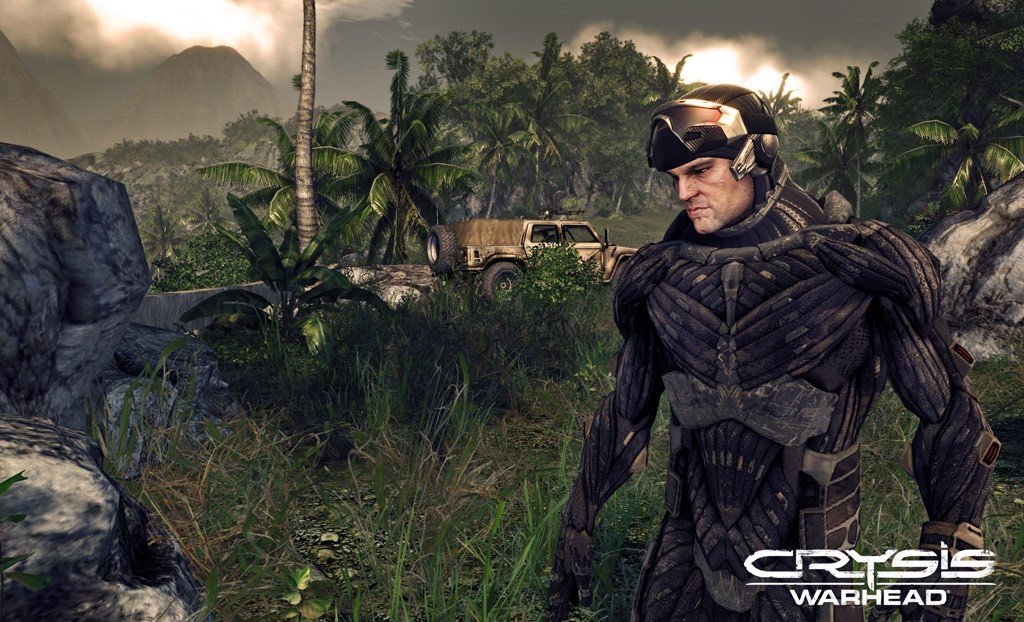
Crysis (November 2007) is the engine’s legend: real-time time-of-day lighting, destructible palm trees and buildings, and system requirements that crushed the era’s best PCs. Crysis Warhead (2008) refined the same technology. CryEngine 2 also traveled to unexpected places — MindArk’s Entropia Universe MMO, the virtual world Blue Mars, French architecture firm IMAGTP (client visualizations), and Ringling College, the first university to license it for education.
CryEngine 3 games (2011–2015)
Built for the console generation, CryEngine 3 powered Crysis 2 (2011) and Crysis 3 (2013) while becoming Crytek’s most widely licensed engine ever, helped by the free CryEngine 3 SDK released in August 2011. Third-party titles include Sniper: Ghost Warrior 2 (2013), the free-to-play shooter Warface (2012), MechWarrior Online (2013), State of Decay (2013), the MMORPG ArcheAge (2013), and Turtle Rock’s asymmetric shooter Evolve (2015). Even the Australian Navy used it — for a virtual ship-training simulator.
CRYENGINE “4th generation” games (2013–2017)
The unnumbered era opened with Ryse: Son of Rome (2013), an Xbox One launch showcase. It also produced two of the most acclaimed third-party CryEngine games: The Chinese Room’s walking simulator Everybody’s Gone to the Rapture (2015) and Warhorse Studios’ medieval RPG Kingdom Come: Deliverance (2018), built on a deeply modified CRYENGINE. Homefront: The Revolution (2016) and Sniper: Ghost Warrior 3 (2017) round out the era, alongside Arkane’s Prey (2017), built on a customized modern CRYENGINE.
CRYENGINE V games (2016–present)
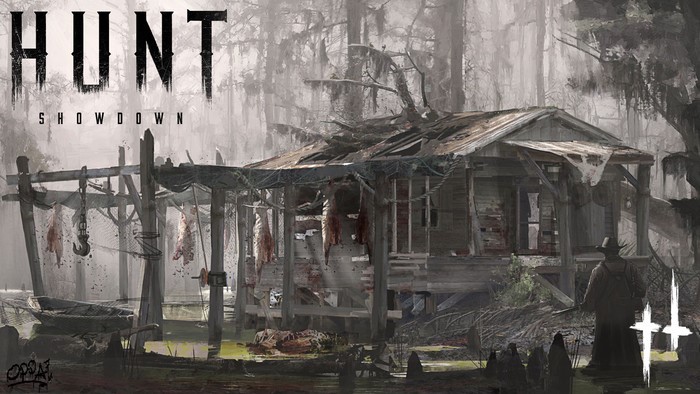
Crytek’s own output went VR-first (The Climb, Robinson: The Journey, both 2016) before finding its modern flagship in Hunt: Showdown (2019), the PvPvE extraction shooter that now sustains the company — relaunched as Hunt: Showdown 1896 in August 2024 on the internal CryEngine 5.11 with DirectX 12 and modern upscaling. Other CRYENGINE V titles include Deceit (2017), Sniper: Ghost Warrior Contracts (2019) and Contracts 2 (2021), Wolcen: Lords of Mayhem (2020), and the Crysis Remastered trilogy (2020–2021). The biggest recent win is Warhorse’s Kingdom Come: Deliverance II (February 2025) — a critical and commercial hit running on the studio’s heavily customized CryEngine, proof the technology can still carry a modern AAA open world.
Distinctive Features of CryEngine
- Benchmark-grade rendering. From Crysis’s real-time day/night cycle to SVOGI (Sparse Voxel Octree Global Illumination) — real-time GI that needs no baked lightmaps — CryEngine has repeatedly shipped lighting technology years before competitors. Its 2019 Neon Noir demo ran ray-traced reflections without requiring dedicated RT hardware.
- Vegetation and terrain systems. The engine’s defining heritage: dense, wind-blown, physically reactive foliage (touch bending) across huge outdoor terrains. It’s the technology Far Cry was born from — and the part Ubisoft’s Dunia fork kept closest.
- Sandbox editor and WYSIWYP. Edit and play in the same view, instantly. The Flow Graph visual-scripting system and later Schematyc let designers build logic without C++.
- Physics and destruction. CryPhysics handled breakable buildings, rope physics, and vehicle deformation as early as 2007 — destruction that many engines still approximate today.
- Physical audio. A data-driven audio pipeline (with Wwise support) and CRYSPATIAL binaural 3D audio, showcased by Hunt: Showdown’s famously readable soundscape, where players track enemies by footsteps, crows, and gunshot echoes.
- Languages and source access. A C++ core with Lua scripting, C# support since CRYENGINE V, and full engine source code readable on GitHub — source-available, though not open source.
CryEngine vs Unreal Engine vs Unity
| Feature | CryEngine | Unreal Engine 5 | Unity |
|---|---|---|---|
| Developer | Crytek | Epic Games | Unity Technologies |
| Cost | Free; 5% royalty after $5K/year per project | Free; 5% royalty after $1M lifetime revenue | Free Personal tier; paid subscriptions above revenue thresholds, no royalties |
| Source access | Full source on GitHub (source-available) | Full source on GitHub (source-available) | Closed (paid source access) |
| Languages | C++, C#, Lua | C++, Blueprints (visual) | C# |
| Signature strength | Photorealistic outdoor rendering, audio | Nanite/Lumen, ecosystem, marketplace | Accessibility, mobile, 2D |
| Learning curve | Steep; thin documentation | Moderate; vast learning resources | Gentlest of the three |
| Community size | Small | Very large | Very large |
| Notable games | Crysis, Hunt: Showdown, Kingdom Come II | Fortnite, Clair Obscur: Expedition 33 | Hollow Knight, Cuphead, Genshin Impact |
| Update cadence (2026) | Public releases stalled at 5.7 LTS | Rapid (5.6+) | Rapid (Unity 6) |
The honest developer guidance: CryEngine’s royalty terms are the most generous of the three on paper, and its rendering still impresses — but Unreal Engine and Unity offer vastly larger communities, marketplaces, hiring pools, and learning resources. Ecosystem gravity, not rendering quality, is why most new teams look elsewhere; Crysis settled the technology argument back in 2007 and it still didn’t decide the market.
Can You Download CryEngine? Licensing Explained
Yes — CRYENGINE is free to download from cryengine.com, with the full engine source readable on GitHub. The business terms, per Crytek’s licensing page:
- Free to use for development, with no upfront fees or subscriptions.
- 5% royalty on a shipped game’s gross receipts, calculated at source (before publisher or platform cuts).
- The first $5,000 of revenue per game per year is royalty-exempt — small projects effectively pay nothing.
- No royalties on work-for-hire compensation, CRYENGINE Marketplace sales, merchandise, awards, or development-stream/video revenue.
- Game registration with Crytek is mandatory before commercial release; enterprise licensing with royalty buyouts is available for larger studios.
- Students and academics can build freely but need Crytek’s written approval to commercialize.
Non-game commercial applications (simulation, architecture, film) fall outside the public license and require a custom agreement.
CryEngine’s Forks and Descendants
Few engines have spawned a family tree like CryEngine’s, and the descendants arguably reach more players today than the original:
- Dunia Engine — Ubisoft’s fork of CryEngine 1, acquired with the Far Cry IP in 2006 and rebuilt so thoroughly that only a small fraction of original code remains. It powered every Far Cry from 2 (2008) through 6 (2021).
- Amazon Lumberyard → O3DE — Amazon licensed CryEngine in 2015 (reportedly for $50–70 million) and rebranded it Lumberyard; in 2021 it was donated to the Linux Foundation as the fully open-source Open 3D Engine (O3DE) under an Apache license.
- StarEngine — Cloud Imperium Games began Star Citizen on CryEngine 3, migrated to Lumberyard in 2016, and has since diverged into its own heavily modified branch — so the most ambitious space sim in development still carries CryEngine DNA.
Browse more of our game development coverage for deep dives into every major engine.
Is CryEngine Still Used in 2026?
The two-track answer matters for anyone considering the engine today.
Inside Crytek, yes — actively. Hunt: Showdown 1896 received a full engine upgrade to CryEngine 5.11 in August 2024, adding DirectX 12, HDR, and modern upscaling, and the game remains Crytek’s commercial backbone. Warhorse shipped Kingdom Come: Deliverance II on its customized CryEngine in February 2025 to major success.
As a public platform, development has stalled. The last public release is CRYENGINE 5.7 LTS (April 2022, with a final 5.7.1 patch that May) — the 5.11 technology powering Hunt has not been published for third-party developers. In February 2025, Crytek announced layoffs of roughly 15% of staff and paused development of Crysis 4 (announced in 2022) to concentrate on Hunt: Showdown. Crytek says engine development continues, but its priorities are visibly internal. For an outside perspective on the engine’s trajectory, GameFromScratch’s 2025 retrospective reaches the same conclusion.
For a new third-party project in 2026, that makes CryEngine a considered bet: technically excellent, financially generous, but with a small community and an uncertain public roadmap. For studying engine architecture, though, its readable C++ source remains one of the best AAA codebases you can legally browse.
Frequently Asked Questions
Conclusion
CryEngine’s history is a twenty-year case study in the difference between winning technically and winning commercially. It repeatedly shipped the industry’s most advanced rendering — real-time day/night cycles in 2007, hardware-agnostic ray tracing in 2019 — yet watched Unreal and Unity convert accessibility and ecosystem into dominance. Its most lasting victories may be the ones that left home: Dunia, O3DE, StarEngine, and a WYSIWYP editing philosophy the whole industry quietly adopted.
And yet the engine refuses to become a museum piece. Hunt: Showdown thrives on it, Kingdom Come: Deliverance II just proved it can carry a modern AAA blockbuster, and its source code remains open for any developer to study. Whether Crytek ever returns CRYENGINE to an ambitious public roadmap — or whether Crysis 4 revives the old benchmark tradition — the engine that asked “but can it run Crysis?” has already outlived most of the hardware that couldn’t.