

Cafu is a free, open-source 3D game engine written in C++ and scripted in Lua, built almost single-handedly by German developer Carsten Fuchs. It began in 2003 as the Ca3D-Engine, was renamed and open-sourced in 2009, and in 2016 moved to the permissive MIT licence. It ships with a full set of editing tools, including a map editor, a GUI editor and a model editor, plus a playable DeathMatch example game.
This profile covers what Cafu is, what it includes, how its licence changed, what’s been built with it, whether it’s still developed in 2026, and which engines to consider instead. Facts were checked against the project’s own website and news archive in October 2026.
What Is the Cafu Engine?
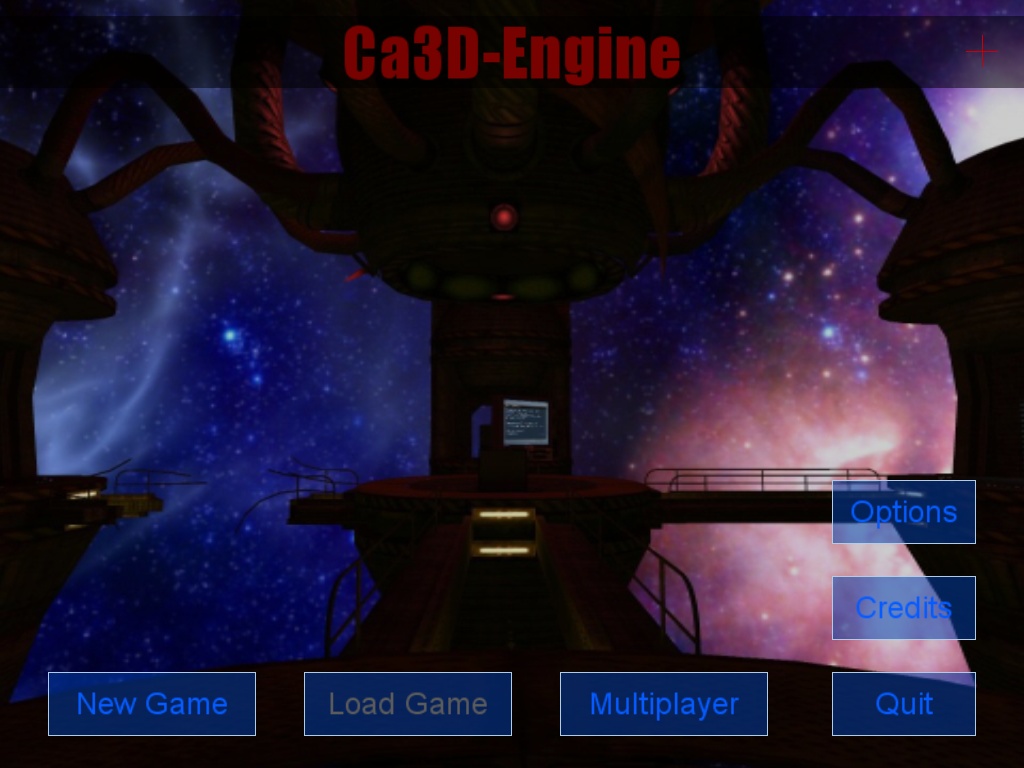
Cafu is an open-source 3D game engine and toolset for Windows and Linux, written in C++ with Lua scripting. Developed by Carsten Fuchs since 2003 (as Ca3D-Engine until 2009), it includes the CaWE world editor, Bullet-based physics and client/server networking. It’s free under the MIT licence, but development has been dormant since about 2017.
Cafu engine at a glance
| Developer | Carsten Fuchs (Carsten Fuchs Software), Germany |
|---|---|
| First public releases | 2003, as Ca3D-Engine; renamed Cafu in December 2009 |
| Written in | C++ |
| Scripting | Lua (game logic, entities and GUIs) |
| Licence | MIT since June 2016 (GPLv3 plus commercial dual licensing, 2009–2016) |
| Tools | CaWE: map editor, GUI editor, font wizard, material browser, model editor |
| Physics | Bullet, plus Cafu’s own character movement |
| Networking | Client/server with client prediction |
| Runs on | Windows and Linux |
| Example game | DeathMatch (bundled) |
| Status | Dormant: last project news in March 2017 |
From Ca3D-Engine to Cafu
Cafu’s public history starts in early 2003, when Carsten Fuchs was releasing demos and a modding kit for the Ca3D-Engine. By the end of that year it had a Linux port and a new renderer with dynamic lighting and shadows. Its world editor, CaWE, grew out of the Tread 3D level editor and in 2005 work began moving it from Microsoft’s MFC to the cross-platform wxWidgets toolkit, so the tools could run on Linux too.
Through 2008 the engine had numbered releases (8.03, 8.08 and 8.09), and source-code licences were sold commercially. In December 2009 two things happened within a week: the engine was renamed Cafu, because “Ca3D-Engine” was hard to spell, say and remember, and its source code was released under the GPL v3, with commercial licences still available for closed-source projects. Development continued in the open, with native 64-bit Windows builds arriving in 2010. The project’s news archive records each step.
What’s in the Cafu Engine
Cafu is more than a renderer. It’s a complete kit for building first-person 3D games, and most of its pieces come from the same developer:
- C++ engine core with a renderer abstraction, so the same game code can target different graphics back ends. It supports radiosity-based lightmaps for static lighting and dynamic stencil shadows for moving lights.
- Lua scripting for game logic, entities and the in-game GUIs (Lua is the same embeddable language used by many commercial engines).
- Physics through the open-source Bullet physics library, combined with Cafu’s own character-movement code.
- Client/server networking with client prediction, so movement feels responsive over the internet.
- Sound through OpenAL or FMOD.
- CaWE, the Cafu World Editor, which bundles a map editor, a GUI editor, a font wizard, a material browser and a model editor.
Pre-built packages for Windows and Linux include CaWE, the Lua scripts and the DeathMatch example game, and the full source is available too. The project also published a user manual and C++ and Lua API references at docs.cafu.de.
The Licence: GPL or MIT?
Many directories still describe Cafu as “GPL with a commercial option”. That was true from 2009 to 2016, but it isn’t true now. In June 2016 Cafu switched to the MIT licence, one of the most permissive open-source licences there is. You can use, modify and ship Cafu in commercial, closed-source games without paying a fee or publishing your changes. The only requirement is keeping the copyright and licence notice. The current terms are on the project’s Dive In page, which also has the downloads.
Games and Projects Built with Cafu
Cafu never had a commercial hit, and no widely released commercial game is known to run on it. Its best-known uses are:
| Project | What it is |
|---|---|
| DeathMatch | The example multiplayer game bundled with the engine, and the usual starting point for new projects |
| Research simulations | Cafu has been used in academic and government research, reportedly including a US Air Force Research Laboratory study of pilots’ visual working memory and German studies of urban night lighting (2007–2009) |
| Engine demos | Technology demos, including Cafu running on a Raspberry Pi in 2016 |
That pattern is common for small engines: the source code and tools are more useful as a learning resource and a research platform than as a base for shipped games.
Is the Cafu Engine Still Developed in 2026?
Not actively. The project’s news feed shows steady work through 2014–2016: map-editor layers, plans for an entity-component system, a website redesign, the MIT switch and moving the game assets into Git submodules. The last news entry, from March 2017, announced the site’s move to HTTPS. There hasn’t been a release or announcement since.
The website, documentation and downloads are still online, and the source code remains on Bitbucket. But you should treat Cafu as a finished, unmaintained engine. Its toolchain targets the compilers and graphics APIs of the mid-2010s, there’s no macOS, mobile or console support, and you won’t find an active community to help with problems. For learning how a complete C++ engine is put together, with networking, physics, scripting and editors, it’s still worth reading. For a new game, choose an engine that’s still developed.
Cafu Alternatives
If you want an open-source engine with Cafu’s strengths (C++ core, scripting, built-in editor, permissive licence), these are actively maintained options:
- Godot: MIT-licensed like Cafu, with a full editor, its own GDScript language plus C#, and C++ extensions. It’s the most widely used open-source engine today. See our Godot engine profile.
- Open 3D Engine (O3DE): a C++ engine under the Linux Foundation, dual-licensed under Apache 2.0 and MIT, with Lua scripting and a large editor, aimed at high-end 3D projects (O3DE’s website).
- Panda3D: an open-source C++ engine driven from Python, and a good fit for simulations and research projects like the ones Cafu was used for. See our Panda3D profile.
- Cube 2: Sauerbraten and Tesseract: small open-source first-person engines with in-game map editing, if you want something in Cafu’s spirit. See our Cube engine profile.
For more open-source engines, see our directory of open-source C++ game engines.
Key Takeaways
- Cafu is an open-source 3D engine written in C++ with Lua scripting, built by Carsten Fuchs and known as Ca3D-Engine until 2009.
- It comes with a complete toolset: the CaWE editor (maps, GUIs, fonts, materials, models), Bullet physics, client/server networking and a DeathMatch example game.
- It’s MIT-licensed since June 2016, so you can use it in commercial, closed-source games for free. The “GPL plus commercial” licensing is out of date.
- It runs on Windows and Linux, with no macOS, mobile or console support.
- Development has been dormant since 2017, so Cafu is best used as a learning resource rather than a base for new games.
- For a new project, consider Godot, O3DE or Panda3D.
Conclusion
Cafu is a rare example of a complete 3D engine, tools and all, built mostly by one person and then given away under one of the most generous licences available. It never became a commercial platform, and it’s no longer developed, but its source code is still a clear, readable model of how a networked, scriptable C++ engine fits together.
For more engines across every genre, browse our game development hub.