
For a few years around 2012, the Marmalade SDK was one of the most important tools in mobile games. It let studios write a game once in C++ and ship it to iOS, Android, BlackBerry, Windows Phone and more, at a time when every one of those platforms wanted something different. Peter Molyneux’s 22cans chose it for Godus, and Marmalade’s own marketing listed some of the biggest mobile hits of the era among its users.
Then it disappeared. This guide explains what Marmalade was, how it worked, which games really used it, and exactly how it was shut down between 2016 and 2018. It also answers the question most searchers now have: can you still use it? (No, and existing projects need a migration plan.) Dates and claims were checked against contemporary industry reports in October 2026.
What Was the Marmalade SDK?
The Marmalade SDK was a proprietary, cross-platform C++ engine and toolkit for mobile games, made by Marmalade Technologies (formerly Ideaworks3D) in the UK. Launched as the Airplay SDK in 2009 and renamed Marmalade in 2011, it let developers deploy one C++ codebase to iOS, Android and other platforms. It was discontinued: development ended in 2016, and its final owner stopped investing in 2018.
Marmalade SDK at a glance
| Status | Discontinued (development ended 2016; final owner stopped investing in 2018) |
|---|---|
| Developer | Marmalade Technologies (formerly Ideaworks3D, UK); GMO Cloud from January 2017 |
| Original name | Airplay SDK (on sale from 2009; renamed Marmalade in June 2011) |
| Last recorded release | Version 8.6, September 15, 2016 (a final 8.8 release was scheduled for March 2017) |
| Written in | C++, with a low-level C layer; Objective-C supported |
| Graphics | OpenGL ES 1.x and 2.x |
| Licence | Proprietary, priced by target platform; a source-code edition was sold briefly in 2016 |
| Targeted | iOS, Android, Windows Phone 8, BlackBerry 10, Tizen, Windows, Mac OS X, Roku, LG Smart TV |
| Used for | Godus, The Lords of Midnight, Grave Defense HD; Marmalade also cited Cut the Rope and Plants vs. Zombies |
| Not to be confused with | Marmalade Game Studio, the company’s games studio today |
From Ideaworks3D and Airplay to Marmalade
Marmalade’s story starts with Ideaworks3D, a UK company founded in 1998 that specialised in cross-platform technology and mobile games. In mid-2009 it split into a games business, Ideaworks Game Studio, and a technology business. The cross-platform technology it had built for its own games went on sale as the Airplay SDK. Ideaworks Game Studio had used that experience on mobile versions of big licences, including the Call of Duty: World at War: Zombies games for iPhone with Activision and Need for Speed titles with EA.
In June 2011 the Airplay SDK was rebranded as Marmalade, and the company itself later traded as Marmalade Technologies (Wikipedia’s Marmalade article). Over the next few years the SDK added 2D and 3D authoring tools (October 2015) and support for more platforms, from BlackBerry 10 and Tizen to Roku and LG smart TVs.
How Marmalade Worked
Marmalade was built in two layers:
- A low-level C API that wrapped each device’s hardware and operating-system services. That’s where the platform differences were absorbed.
- A higher-level C++ layer for 2D and 3D rendering, resource management and HTTP networking, plus exporter plug-ins for 3ds Max and Maya.
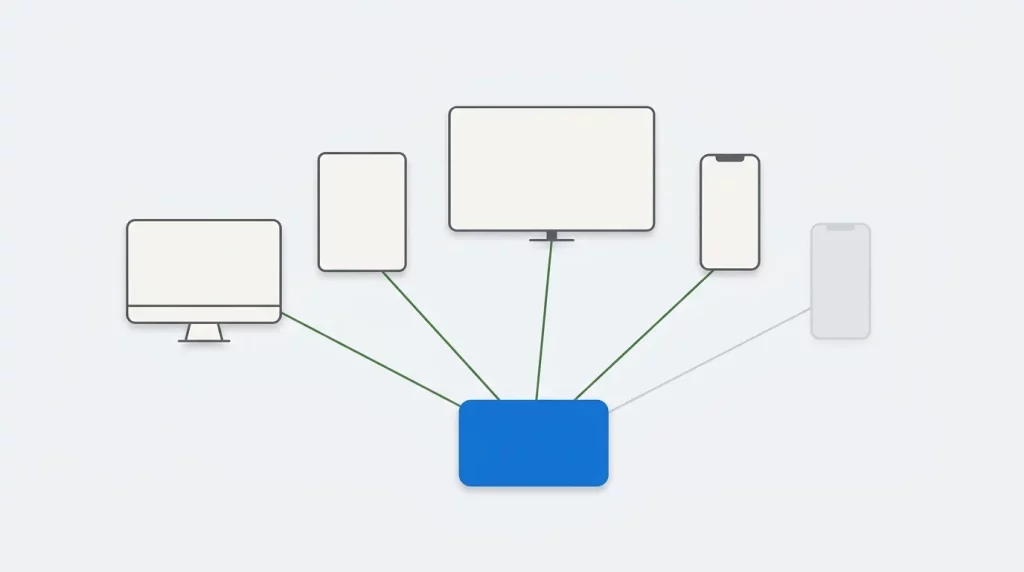
Developers wrote their game against these APIs in C++ (Objective-C was also supported), built it once, and deployed the same binary logic to each target. Rendering used OpenGL ES 1.x and 2.x, the common denominator of the mobile GPUs of the time, with a legacy software renderer for older devices. Licences were priced by platform, so a studio paid for the targets it actually shipped on.
That approach appealed to studios with existing C or C++ code, and to developers who wanted native performance without maintaining separate Objective-C and Java versions of the same game.
Games Built with Marmalade
Plenty of lists of “Marmalade games” circulate online, and many repeat titles with no source. Here’s what the record actually supports:
- Godus (22cans, 2013): Peter Molyneux said that developing cross-platform with Marmalade was “an important part of our vision” for the game, which was planned for iOS, Android, Windows and Mac (MCV, August 2013).
- The Lords of Midnight and Doomdark’s Revenge (Chris Wild): mobile remakes of the classic Mike Singleton games, built with Marmalade.
- Grave Defense HD (Artofbytes): showcased as a Marmalade-developed game at BlackBerry DevCon Europe in 2012.
- Cut the Rope, Plants vs. Zombies, Draw Something, Call of Duty, Need for Speed and Pro Evolution Soccer: named by Marmalade itself in 2012 as games that “rely on Marmalade”. This is the company’s own claim, and it doesn’t say which versions or ports used the SDK. Read it as “some versions of these games”, not “these games were made in Marmalade”.
What Happened to Marmalade?
The shutdown happened in three steps.
1. September 2016: development ends. On September 13, 2016, Marmalade announced it was restructuring its platform business and would stop developing the SDK to concentrate on its own games, through Marmalade Game Studio (GameFromScratch’s report). A final release, version 8.8, was scheduled for March 2017, after which support would end and the licence server would be switched off. For a short window, until October 2016, studios could buy Marmalade SE, a source-code edition with a perpetual licence. The company also said it planned to release the code as open source and warned of significant job losses (MCV’s report on the final update).
2. January 2017: GMO Cloud takes over. Japanese hosting company GMO Cloud, which had resold Marmalade in Japan since 2015, obtained exclusive rights to develop and sell the SDK worldwide (MCV, January 2017).
3. 2018: discontinued for good. By 2018 GMO Cloud had also stopped investing. The team explained that Unity had fixed the performance gap Marmalade once exploited, Unreal had improved its mobile support, and constant iOS changes kept threatening to make the SDK obsolete. Their conclusion was that they had been unable to turn it into a sustainable business.
The last version recorded on Wikipedia is 8.6 (September 15, 2016). We couldn’t confirm whether the planned 8.8 release or the promised open-source code ever shipped publicly, so treat both as uncertain.
Can You Still Use Marmalade in 2026?
No, not for anything new, and existing projects are on borrowed time:
- There’s no licence server and no support. Both ended in 2017–2018.
- App stores have moved on. Apple and Google now require newer SDKs, 64-bit builds and modern graphics APIs. Marmalade targets OpenGL ES 2.0, which Apple deprecated years ago, and none of its toolchains are maintained.
- Fixing an old Marmalade game is painful. Chris Wild, who maintained The Lords of Midnight, wrote in 2017 that Apple pulled the game from the App Store because he hadn’t kept up with SDK updates such as 64-bit support. With the vendor gone, he had to solve it on his own (his account on the Icemark blog).
If you maintain a Marmalade game, the practical route is a port. Because Marmalade games are C++, the game logic usually survives. The platform layer (rendering, input, audio, file access) has to be replaced with a modern engine or a maintained cross-platform library.
Is Marmalade Game Studio the Same as the Marmalade SDK?
No, and this is the most common mix-up about Marmalade. Marmalade Game Studio is the games business the company focused on after 2016. Today it makes digital editions of board games such as Monopoly, Clue (Cluedo), The Game of Life 2 and Ticket to Ride for mobile, PC and consoles (marmaladegamestudio.com), and its website makes no mention of the old SDK.
So its games are not “games made with the Marmalade SDK”. The studio’s board-game titles came after the SDK was wound down, and their engine isn’t publicly documented. Lists that put The Game of Life or Clue under Marmalade SDK games are confusing the studio with the engine.
Marmalade Alternatives Today
Every job Marmalade did is now covered by maintained engines:
- Unity: the engine that took most of Marmalade’s market, with C# scripting and broad mobile support. See our Unity engine guide.
- Unreal Engine: the choice if you want to stay in C++ and need high-end 3D. Its mobile support is what Marmalade’s team cited as a reason for closing. See our Unreal Engine guide.
- Godot: free, MIT-licensed and lightweight, with C++ extensions available for porting existing code. See our Godot game engine profile.
For the full field, see our directory of 100+ C++ game engines.
Key Takeaways
- Marmalade was a proprietary cross-platform C++ engine for mobile games, launched as the Airplay SDK in 2009 by Ideaworks3D and renamed Marmalade in June 2011.
- It’s discontinued. Development ended in September 2016, GMO Cloud took over in January 2017, and GMO stopped investing in 2018.
- You can’t use it in 2026. There’s no licence server, no support, and no path to current app-store requirements. Existing games need porting.
- Verified users include Godus and The Lords of Midnight. The bigger hits often credited to it rest on Marmalade’s own marketing claims.
- Marmalade Game Studio is not the SDK. Its Monopoly, Clue and Game of Life apps aren’t “Marmalade SDK games”.
- Unity, Unreal and Godot now cover everything Marmalade did.
Conclusion
Marmalade solved a real problem at the right moment: shipping one native C++ game across a dozen fragmented mobile platforms. It lost when Unity and Unreal solved the same problem better and for less. Its story is now mostly a lesson in the risk of building on a single vendor’s closed toolchain, and in why a studio should always have an exit plan.
If you’re choosing an engine today, start with our game development hub.