
GoldSrc is the engine that turned Valve from a new studio into the company behind Half-Life, Counter-Strike and, eventually, Steam. It ran one of the most influential shooters ever made, and a generation of modders learned level design inside its editor. It also hosted the mods that became Team Fortress Classic, Day of Defeat and Counter-Strike, the last one still played on its original engine more than 25 years later.
The engine’s public record is surprisingly muddled. Engine databases list a Dreamcast version that never went on sale, forum posts describe it as a Quake II engine, and “bunnyhopping” turns up in feature lists as if Valve designed it. This page sets out what GoldSrc actually is, where its name came from, which games really ran on it, and whether anyone can still build with it in 2026.
What Is GoldSrc?
GoldSrc (pronounced “Gold Source”) is Valve’s first game engine, built in C and C++ from a heavily modified licence of id Software’s Quake engine and launched with Half-Life in November 1998. It powered Counter-Strike, Team Fortress Classic and Half-Life’s expansions until Source replaced it in 2004, and Valve still maintains it on Steam today.
Where the Name GoldSrc Comes From
At launch the engine had no public name; players and press simply called it the Half-Life engine. The name came later, from Valve’s own source control. To keep working on new technology without risking the shipping Half-Life code, Valve split the codebase in two. The gold master branch, the code that shipped, became known internally as “GoldSrc”. The other branch, called “Src”, kept evolving and became the Source engine behind Half-Life 2. Valve’s internal name for games on the original branch was “Goldsource”, which is why both spellings still circulate (Wikipedia’s GoldSrc article summarises the history).
That origin explains the relationship between the two engines better than any version number. Source isn’t a sequel written from scratch; it’s the same codebase taken much further. Our guide to Valve’s Source and Source 2 engines picks up the story from there.
Is GoldSrc Based on the Quake Engine?
Yes. GoldSrc started as id Software’s Quake engine, which Valve licensed for Half-Life. It isn’t a Quake II engine, despite how often forum posts describe it that way. Valve did pull in some code from QuakeWorld (Quake’s online version) and from Quake II, but the foundation is the original Quake.
How much of Quake survived is harder to pin down, and nobody has published a reliable percentage. Gabe Newell has said that most of the shipped code was Valve’s own, and that the AI systems were “essentially made from scratch.” The map format, the BSP-based renderer and the player movement code are clearly descended from Quake. The character animation, monster AI, scripting and much of the networking are Valve’s.
If you want the Quake side of the family tree, our history of id Tech 2, the Quake and Quake II engines covers the engine Valve started from.
What GoldSrc Added: The Features That Defined Half-Life
Half-Life felt different from the Quake-engine shooters around it, and most of that difference came from systems Valve wrote itself.
- Skeletal animation. Quake animated its models by morphing whole meshes between key poses. GoldSrc gave characters a skeleton, so a scientist’s head, arms and torso could move independently. That allowed far more lifelike bodies and basic facial movement, which mattered for a game told almost entirely through characters you could walk up to.
- Task-and-schedule AI. Enemies pick from schedules (take cover, flank, retreat, call for help) built from smaller tasks. Half-Life’s marines, who retreat, regroup and toss grenades to flush you out, were the showcase.
- Scripted sequences in the world. Half-Life never cut away to a movie. The tram ride, the resonance cascade and the scientists’ conversations all play out in-engine while you keep control, driven by entities placed in the map.
- Valve Hammer Editor. Valve bought Worldcraft, a Quake level editor, in 1997 and hired its creator, Ben Morris, to keep developing it and to build more tools for Half-Life mod makers (GameSpot reported the acquisition). Worldcraft became Valve Hammer Editor, the tool generations of mappers learned on and an ancestor of the Hammer editor Valve still ships for Source 2.
- Client-side prediction. Added after launch, it made online play feel responsive on dial-up connections, the groundwork Counter-Strike’s competitive scene was built on.
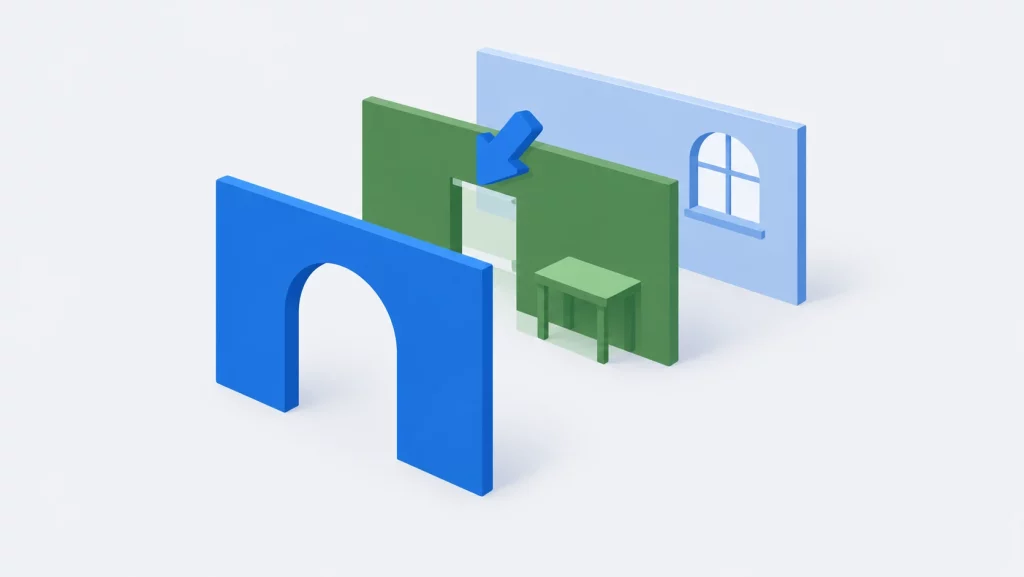
- A mod-friendly split. Game logic lives in separate DLLs that modders could replace with the Half-Life SDK, while the closed engine handled rendering, sound and networking. That split is why so many mods became full games.
One thing that regularly appears in GoldSrc feature lists doesn’t belong there: bunnyhopping. The jump-strafing trick that lets skilled players build speed comes from movement physics GoldSrc inherited from Quake. It was a quirk players discovered, not a feature Valve designed. Valve later reined it in: the player-movement code in the Half-Life SDK includes a function called PM_PreventMegaBunnyJumping, which trims a jumping player’s speed once it passes 1.7 times their normal maximum.
Platforms: What Shipped and What Didn’t
GoldSrc’s platform history is where the most errors circulate, because two announced ports were cancelled after they were nearly finished.
- Windows (November 19, 1998). Half-Life launched on Windows, published by Sierra.
- Mac OS (cancelled 1999). Logicware announced a Mac port in April 1999, and Valve cancelled it that October. Valve said the port wasn’t up to standard. Logicware’s co-founder disputed that, saying it was finished and three weeks from release.
- Dreamcast (cancelled June 2001). Sierra announced a Dreamcast version in February 2000, developed by Captivation Digital Laboratories with Valve and Gearbox, bundled with the new Blue Shift campaign. Sierra cancelled it on June 16, 2001, citing changing market conditions, when it was reportedly weeks from release. A late build leaked online in 2013 (see the record of unreleased Half-Life games). GoldSrc never officially shipped on Dreamcast, whatever the engine databases say.
- PlayStation 2 (November 2001). Gearbox ported Half-Life to the PS2, adding the co-operative expansion Half-Life: Decay. This is the only console release GoldSrc ever had.
- OS X and Linux (2013). Valve finally brought its GoldSrc games to Mac and Linux in 2013 and updated the Half-Life SDK for Linux the same year. Before that, Linux ran only GoldSrc dedicated servers.
Games Built on GoldSrc
Every title below is confirmed as a GoldSrc game in Valve’s or the developer’s own records, or in the games’ credits.
| Year | Game | Developer | Notes |
|---|---|---|---|
| 1998 | Half-Life | Valve | The launch title |
| 1999 | Team Fortress Classic | Valve | Valve’s remake of the Quake mod Team Fortress |
| 1999 | Half-Life: Opposing Force | Gearbox Software | First expansion, played as marine Adrian Shephard |
| 1999 | Sven Co-op | Sven Co-op team | Co-op mod; standalone on Steam since 2016 |
| 2000 | Counter-Strike | Minh Le, Jess Cliffe; Valve | Mod beta June 1999, retail November 2000 |
| 2000 | Gunman Chronicles | Rewolf Software | Commercial game on a licensed engine |
| 2000 | Ricochet | Valve | Small multiplayer game |
| 2001 | Deathmatch Classic | Valve | Quake deathmatch remade in GoldSrc |
| 2001 | Half-Life: Blue Shift | Gearbox Software | Played as security guard Barney Calhoun |
| 2001 | Half-Life: Decay | Gearbox Software | PS2-only two-player co-op expansion |
| 2002 | James Bond 007: Nightfire | Gearbox Software | PC version only, on a heavily modified GoldSrc |
| 2003 | Day of Defeat | Valve | Mod turned retail game |
| 2003 | Counter-Strike Neo | Namco | Japanese arcade game |
| 2004 | Counter-Strike: Condition Zero | Valve and others | Last major Valve release on GoldSrc |
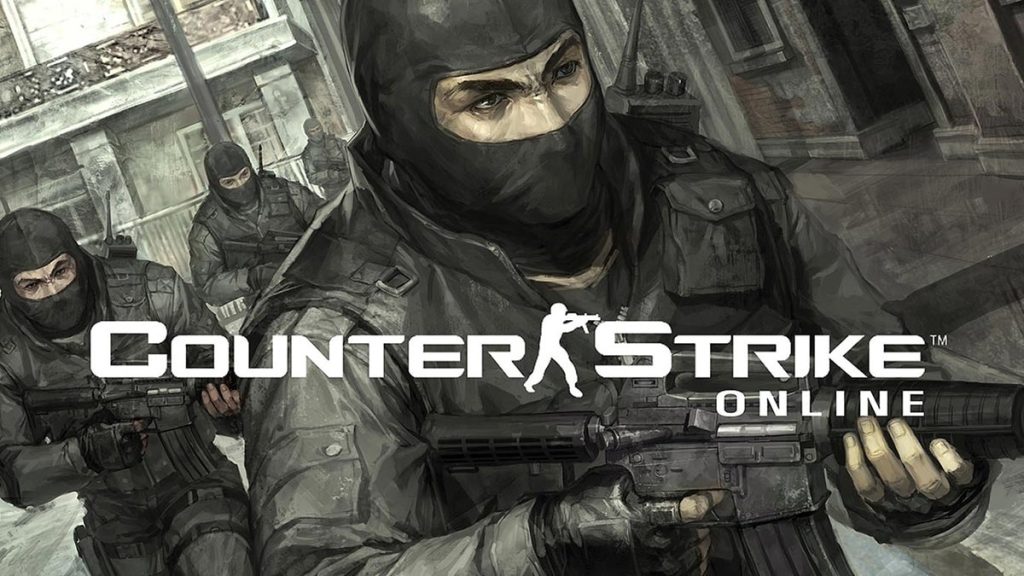
| 2008 | Counter-Strike Online | Nexon, with Valve | Free-to-play, built for Asian markets |
| 2014 | Counter-Strike Nexon | Nexon, with Valve | Launched as CS Nexon: Zombies; renamed Studio in 2019, CS Nexon in 2024 |
Two attributions need care. Nightfire’s console versions (PS2, Xbox, GameCube) were built by Eurocom, separately from Gearbox’s PC game, so “Nightfire runs on GoldSrc” is only true on PC. And Half-Life 2 never ran on GoldSrc: it was the flagship launch of Source in November 2004, a month after Counter-Strike: Source became the first Source game on October 7, 2004.

GoldSrc vs Source
Because Source grew from the same code, the two engines share DNA (map concepts, entity design, the Hammer editor) but differ in almost everything a player notices. Source added a full physics engine (Havok), normal-mapped and shader-based rendering, much more expressive faces, and a far larger world scale. GoldSrc games are compact, BSP-built levels lit with baked lightmaps and textures stored in WAD files.
The practical difference today is support. Valve kept actively developing Source for two decades and released Source 2 in 2015. GoldSrc gets maintenance updates for its existing games and nothing new. Our Source vs Source 2 comparison traces how that branch kept changing after the split.
Is GoldSrc Still Used in 2026?
Yes, though not for new commercial games. No studio has shipped a new commercial title on GoldSrc in years, and Valve has never offered it as a product to license the way it once offered Source. Where GoldSrc is still alive:
- Valve still updates it. On November 17, 2023, the Half-Life 25th anniversary update rewrote much of the input system, added widescreen and UI scaling, made the native Linux build Steam Deck Verified, and raised long-standing engine limits for mod makers. Entity slots went from 900 to 1,200, and dynamic sound channels from 8 to 32 (GamingOnLinux has the full change list).
- Counter-Strike 1.6 is still played on it. Because CS 1.6 shares the engine, it picked up the 2023 update too. Valve kept the old build available through a
steam_legacybeta branch for servers and plugins that depend on the classic behaviour. - Sven Co-op runs on a licensed derivative. The co-op mod went standalone on Steam in January 2016 on Svengine, a customised GoldSrc licensed from Valve (Sven Co-op on Wikipedia).
- Mods keep coming. Hobbyist mappers and modders still release Half-Life mods built with the SDK, and community sites such as ModDB list new projects every year.
The public record on GoldSrc after 2013 is thin, so treat any claim of a “new GoldSrc game” carefully. In 2026 it usually means a mod, a Sven Co-op map pack, or a game running on the open-source Xash3D engine described below.
Can You Make a Game With GoldSrc?
You can make a free one. Selling one is a different matter.
The Half-Life SDK is free to use for mods. Valve publishes it on GitHub (ValveSoftware/halflife) under the Half-Life 1 SDK licence. You can use it to build a modification of a Valve game and distribute it, as long as you distribute it for free. The SDK covers the game-side code (the DLLs that define weapons, monsters and rules), not the engine itself, which remains closed. Players need a copy of Half-Life to run your mod.
Commercial use needs Valve’s permission. The licence tells developers who want to sell a product to contact Valve directly. That’s the route Gunman Chronicles, Nightfire’s PC version and Sven Co-op’s Svengine took, but Valve has not run a public GoldSrc licensing programme in the Steam era.
Xash3D FWGS is the open-source alternative. Xash3D FWGS is a community engine built to stay compatible with GoldSrc while extending it. It runs Half-Life content and many mods on Windows, Linux, BSD and Android, on both x86 and ARM, with community ports to other systems. It still needs the game files from a copy of Half-Life, but it’s the practical way to put GoldSrc-era games on hardware Valve never targeted.
If you want to learn engine-level game programming today, GoldSrc mods are a good, small sandbox for C++ gameplay code. For a shipping commercial project, a modern engine (or Source 2’s tools, for Valve-style games) is the realistic choice.
Key Takeaways
- GoldSrc is Valve’s Half-Life engine, a heavily modified Quake engine with some QuakeWorld and Quake II code, launched in November 1998.
- Its name comes from source control: the shipped “gold master” branch became GoldSrc, and the “Src” branch became Source.
- GoldSrc never shipped on Dreamcast or classic Mac OS. Both ports were cancelled; the only console release was PlayStation 2 in 2001.
- Bunnyhopping is a Quake movement quirk, not a GoldSrc feature. Valve’s real additions were skeletal animation, schedule-based AI, in-world scripting and the Hammer editor.
- GoldSrc is still maintained in 2026: the November 2023 25th anniversary update modernised it, and Counter-Strike 1.6 and Sven Co-op still run on it.
- You can build free mods with the Half-Life SDK, but commercial GoldSrc games need Valve’s permission. Xash3D FWGS is the open-source alternative.
Conclusion
GoldSrc’s lasting influence isn’t its renderer, which was dated within a few years. It’s the model it set: a closed engine wrapped around open game code, shipped with real tools, so players could build the next hit themselves. Counter-Strike, Team Fortress and Day of Defeat all came out of that model, and Valve’s later bet on Source and Steam grew from it.
The engine is still alive on Steam, and Valve showed in 2023 that it’s willing to modernise it for an anniversary. We’ll update this page if Valve opens GoldSrc further or ships another major engine update. For the rest of the family tree, from Quake to Unreal, browse our directory of more than 100 C++ game engines.