
Between 1988 and 1993, Strategic Simulations, Inc. (SSI) built a dozen role-playing games on one engine. Ten of them were built under SSI’s official Advanced Dungeons & Dragons licence, and most shipped in distinctive gold-coloured boxes, which gave the engine its name: the Gold Box engine. Pool of Radiance, Curse of the Azure Bonds and Champions of Krynn defined computer RPGs for a generation, and one Gold Box spin-off, Neverwinter Nights on AOL, is often called the first graphical MMORPG.
This profile covers what the Gold Box engine was, how it worked, every game built on it, which famous SSI games weren’t Gold Box, and how you can still play and even build Gold Box adventures in 2026. Facts were checked against contemporary reports, store listings and project pages in October 2026.
What Is the Gold Box Engine?
The Gold Box engine is the game engine behind Strategic Simulations’ official AD&D role-playing games, released from 1988 to 1993. Named after the games’ gold-coloured boxes, it combined first-person exploration with turn-based, top-down tactical combat and closely followed the tabletop rules. It powered 12 games plus the Unlimited Adventures construction kit, and today the games are sold on GOG and Steam.
Gold Box engine at a glance
| Developer | Strategic Simulations, Inc. (SSI), with Beyond Software, MicroMagic and Cybertech on some titles |
|---|---|
| Years | 1988 (Pool of Radiance) to 1993 (Unlimited Adventures) |
| Licence | Advanced Dungeons & Dragons, licensed from TSR in 1987; Buck Rogers for two sci-fi games |
| Engine and original games | Chuck Kroegel and George MacDonald; later versions by Victor Penman and Ken Humphries |
| Written in | 6502 assembly (Commodore 64, Apple II), Pascal (most later ports), C/C++ (Spelljammer, Unlimited Adventures) |
| Platforms | MS-DOS, Commodore 64, Amiga, Apple II, Macintosh, Atari ST, PC-98, NES, Sega Genesis |
| Games | 12 games plus the Unlimited Adventures construction kit |
| Best seller | Pool of Radiance: 264,536 computer copies in North America |
| Status | No longer developed; the D&D titles are sold on GOG (2015) and Steam (2022) running in DOSBox |
| Community | Unlimited Adventures modules and Dungeon Craft, an open-source (GPL) remake of the editor |
How SSI Won the D&D Licence
In the mid-1980s TSR, the owner of Dungeons & Dragons, put the computer-game rights up for bid. In 1987 SSI won them, despite being smaller than several of its rivals (Wikipedia’s Gold Box article covers the history). Under SSI president Joel Billings, Chuck Kroegel and George MacDonald designed the engine and the first games, and Victor Penman and Ken Humphries developed later versions.
The first game, Pool of Radiance, shipped in June 1988 and became SSI’s best seller, with 264,536 computer copies sold in North America alone. By 1992 SSI had sold more than 1.5 million AD&D products.
How the Gold Box Engine Worked
Every Gold Box game uses the same basic structure, which is what makes them a single engine family rather than a loose series:
- Exploration happens in a small first-person window. The party moves square by square through towns, wilderness and dungeons laid out on grids.
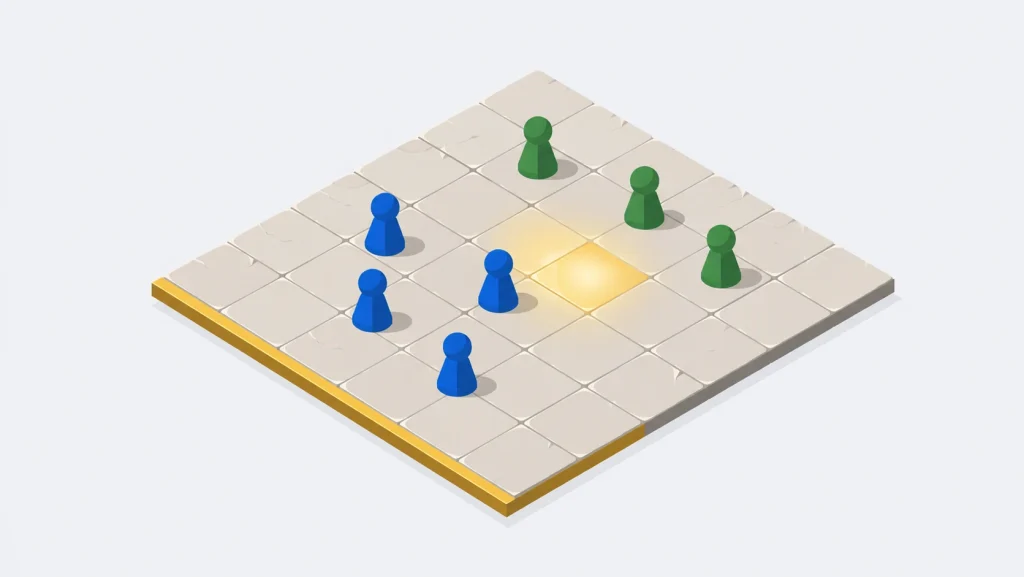
- Combat switches to a separate top-down tactical map, where each character and monster takes turns, much like miniatures on a tabletop. It’s the feature the series is best known for.
- The rules follow AD&D closely: classes, levels, saving throws, THAC0, memorised spells, and a party you create and develop.
- Parties carry over. Players could import their characters from one game into its sequel, so a party could start in Pool of Radiance and finish in Pools of Darkness.
The engine was originally built for the Commodore 64, and its code changed with the platforms:
- 6502 assembly for the Commodore 64 and Apple II versions.
- Pascal for most later ports.
- C/C++ for Spelljammer: Pirates of Realmspace and Unlimited Adventures.
Different studios handled different versions. Westwood Associates did several Amiga ports, adding mouse support and improved graphics, and MicroMagic handled Atari ST and later titles.
Every Gold Box Game
Gold Box games were grouped by campaign setting:
| Year | Game | Setting | Developer |
|---|---|---|---|
| 1988 | Pool of Radiance | Forgotten Realms | SSI |
| 1989 | Curse of the Azure Bonds | Forgotten Realms | SSI |
| 1990 | Secret of the Silver Blades | Forgotten Realms | SSI |
| 1990 | Champions of Krynn | Dragonlance (Krynn) | SSI |
| 1990 | Buck Rogers: Countdown to Doomsday | Buck Rogers (sci-fi) | SSI |
| 1991 | Pools of Darkness | Forgotten Realms | SSI |
| 1991 | Gateway to the Savage Frontier | Forgotten Realms (Savage Frontier) | Beyond Software |
| 1991 | Death Knights of Krynn | Dragonlance (Krynn) | SSI |
| 1992 | Treasures of the Savage Frontier | Forgotten Realms (Savage Frontier) | Beyond Software |
| 1992 | The Dark Queen of Krynn | Dragonlance (Krynn) | SSI / MicroMagic |
| 1992 | Buck Rogers: Matrix Cubed | Buck Rogers (sci-fi) | SSI |
| 1992 | Spelljammer: Pirates of Realmspace | Spelljammer | Cybertech |
| 1993 | Forgotten Realms: Unlimited Adventures | Construction kit | MicroMagic |
Ports reached the Amiga, Atari ST, Apple II, Macintosh and Commodore 64, plus Japan’s PC-98. Some reached consoles too, including Marionette’s NES version of Pool of Radiance and a Sega Genesis port of Buck Rogers: Countdown to Doomsday.
Neverwinter Nights (1991–1997) deserves a mention of its own. Built by Beyond Software (later Stormfront Studios) on Gold Box technology, it ran on America Online as a multiplayer game and is widely credited as the first graphical MMORPG, paving the way for Ultima Online and EverQuest.
Which SSI D&D Games Are Not Gold Box?
Several famous SSI Dungeons & Dragons games are often filed under “Gold Box”, partly because modern store collections bundle them together. They used different engines:
- Eye of the Beholder (1991) was developed by Westwood Associates as a first-person, pseudo-3D dungeon crawler for SSI’s separate “Legend Series”.
- Dark Sun: Shattered Lands (1993) uses a newer engine with an Ultima-style top-down view and combat on the same screen. It doesn’t use the Gold Box engine.
- Hillsfar (1989) used a different engine, though players could import their Gold Box characters into it.
- Pool of Radiance: Ruins of Myth Drannor (2001) borrowed only the name and setting. It’s a later, unrelated game.
The 2022 Steam collections also include Eye of the Beholder, Dark Sun, Ravenloft and other SSI titles alongside the real Gold Box games. Buying “the Forgotten Realms Archives” doesn’t mean everything inside is Gold Box.
Unlimited Adventures: Building Your Own Gold Box Games
Forgotten Realms: Unlimited Adventures (FRUA), released on March 17, 1993 and developed by MicroMagic, turned the engine into a construction kit. Players could build their own dungeon modules, edit monsters and characters, and import custom pictures and sprites. Computer Gaming World called it the best adventure-construction kit available at the time (Wikipedia’s Unlimited Adventures article).
FRUA outlived the Gold Box era by decades. Fans wrote “worldhacks” that pushed it into science fiction, superhero, Western and Roman settings, using a manager called UASHELL. The community was still active in the 2020s.
Is the Gold Box Engine Still Used in 2026?
Not for new commercial games. SSI’s AD&D licence ended in 1994, when TSR didn’t renew it, and SSI was sold to Mindscape the same year. But the engine is far from forgotten:
- The games are still sold. GOG released the Pool of Radiance and Savage Frontier games in August 2015 and the Krynn trilogy in October 2015. In March 2022, publisher SNEG brought them to Steam in the Forgotten Realms: The Archives and Krynn collections, with enhanced DOSBox support and a launcher that moves parties between games (PC Gamer’s report).
- The Gold Box Companion is a fan-made tool that runs next to DOSBox. It adds an automap, a heads-up display, a combat overlay, character and save editors, and fixes for known game bugs. Version 2.60 was announced by its author in August 2020 (release post on the GOG forums).
- Dungeon Craft (formerly UA Forever) is an open-source, GPL-licensed project that recreates the Unlimited Adventures editor and engine with higher colour depths, more levels and editable items, monsters and spells (Dungeon Craft’s project page). It’s the closest thing to a modern Gold Box engine.
The two Buck Rogers games (a separate, non-D&D licence) and Spelljammer: Pirates of Realmspace aren’t included in the 2022 Steam collections.
Gold Box Alternatives
Gold Box games aren’t made any more, but there are a few routes for building a turn-based party RPG in that style today:
- Dungeon Craft is the most direct option: Gold Box-style rules and presentation, an editor, and open-source code you can extend.
- Unlimited Adventures itself is still available inside Forgotten Realms: The Archives – Collection Two on Steam. It runs in DOSBox, with decades of community tools behind it.
- A modern general-purpose engine such as Godot or Unity, if you want Gold Box-style grid combat with modern presentation. You’ll build the rules and tactical combat yourself.
For more engines from the same era, see the retro and classic engines in our directory of 100+ C++ game engines.
Key Takeaways
- The Gold Box engine powered SSI’s official AD&D RPGs from 1988 to 1993, named after their gold-coloured boxes.
- It combined first-person exploration with turn-based, top-down tactical combat, and let parties carry over between sequels.
- Its code changed with the platforms: 6502 assembly on the C64 and Apple II, Pascal for most later ports, and C/C++ for Spelljammer and Unlimited Adventures.
- Not every SSI D&D game is Gold Box. Eye of the Beholder, Dark Sun and Hillsfar used different engines.
- The games are still sold in 2026, on GOG since 2015 and Steam since 2022, running in DOSBox, and fan tools like the Gold Box Companion improve them.
- You can still build Gold Box adventures with Unlimited Adventures (1993) or the open-source Dungeon Craft.
Conclusion
The Gold Box engine made Dungeons & Dragons work on a computer screen, and its turn-based tactical combat still shapes party RPGs today. Its games outlived their platforms, their licence and their publisher. Thanks to digital re-releases and a dedicated fan community, they’re as easy to play in 2026 as they’ve been in thirty years.
For more engines from every era of game development, browse our game development hub.