
The Bork3D Game Engine occupies a small but genuinely instructive corner of game engine history: a one-studio commercial iPhone engine from the earliest days of the App Store gold rush that ended its life, unusually gracefully, as a complete open-source release — engine, shipped game, and source art together. Most engines of its generation simply vanished when their studios moved on. Bork3D didn’t, and that makes it one of the few places you can still read an entire early-iOS commercial game, top to bottom, in C++.
This rewrite also corrects the record this page previously got wrong. The engine was built by Bork 3D LLC (not “3D LLC”), it powered a handful of iOS titles rather than “many,” and — the fix readers deserve most — the two game images on the old page were swapped, with a photograph of the physical Quoridor board game standing in for a video game screenshot. This page answers what the engine actually was, which games verifiably used it, and whether the code is still worth your time in 2026.
What Is the Bork3D Game Engine?
The Bork3D Game Engine is a C++ game engine built by Bork 3D LLC, sold commercially around 2009–2010 (a $49 indie license) for iPhone and iPad development, with macOS and Windows targets. In 2015 the studio open-sourced the full engine, its golf game, and the game’s art under a BSD 2-Clause license on GitHub, where it now sits dormant as a study codebase.
History: From $49 Indie License to Open Source
Bork 3D LLC was the two-person outfit of Robert Rose and Jake Helms, and the engine was Rose’s cross-platform foundation for the studio’s own iOS games. It was a commercial product first: by early 2010 it was being sold with a $49 indie license, a price Rose himself quoted on his blog in April 2010 while announcing the studio’s flagship title. In the same window, the engine earned a spot in Develop’s February 2010 guide to iPhone engines — the trade-press moment that put it alongside better-remembered contemporaries like SIO2 and Unity’s early mobile push.
The engine’s design reflects its era precisely. Rendering runs on OpenGL ES on device and desktop OpenGL elsewhere; audio goes through OpenAL; the asset pipeline ingests Collada, 3ds Max and Maya exports; and the UI system is data-driven. One genuinely unusual touch for a 2010 mobile engine: an integrated web server, used for tooling and debugging. An experimental branch even rendered the studio’s golf game in stereoscopic 3D on Nvidia 3D Vision hardware on Windows — a period-perfect detail, given how briefly that technology mattered.
The second act came in 2015, when Bork 3D released everything to the public: the engine, the complete source of Anytime Golf: Magic Touch, and the game’s source art, under a permissive BSD 2-Clause license. The repository (moof2k/golf) preserves 694 commits of a real shipped product. The build instructions are frozen in 2015 amber — Xcode 7 for the macOS target, Visual Studio 2013 for Windows, with FreeImage.dll fetched separately because its license is less permissive than the engine’s — and no meaningful development has happened since.
Bork3D Game Engine Features
Verified against the studio’s own repository documentation and the engine’s historical record:
- C++ codebase targeting iOS (primary), Mac OS X and Windows
- OpenGL and OpenGL ES rendering; OpenAL audio
- Data-driven UI system
- Tool pipeline supporting Collada, 3ds Max and Maya
- Integrated web server
- Experimental stereoscopic 3D on Nvidia 3D Vision systems (Windows, separate branch)
- BSD 2-Clause open-source license (since 2015; commercial license before that)
Games Built on the Bork3D Engine
The engine’s user base was modest, and the honest version of the list is short. The verified in-house title is Anytime Golf: Magic Touch, Bork 3D’s own golf simulation for iPhone and iPad, which launched on iPad in April 2010 and whose complete source now anchors the GitHub release.
Beyond that, the historical record — chiefly the engine’s now-removed Wikipedia article — credits third-party studios Bioroid Studios and Simiula as adopters, and lists Monstercraft (arcade/slot machine), Pixelshift (puzzle), Quoridor (an iPhone adaptation of the board game of the same name) and Toy Stunt Bike (Wobbly Tooth’s motorbike trials game). These attributions trace to period sources, but the games have long since left the App Store and none can be independently re-verified today; treat them as reported rather than confirmed. Toy Stunt Bike is the one with an afterlife: Wobbly Tooth carried the series to 3DS in 2014 and to PS4 as Toy Stunt Bike: Tiptop’s Trials in 2018, though whether any Bork3D code survived into those versions is not something the public record answers.
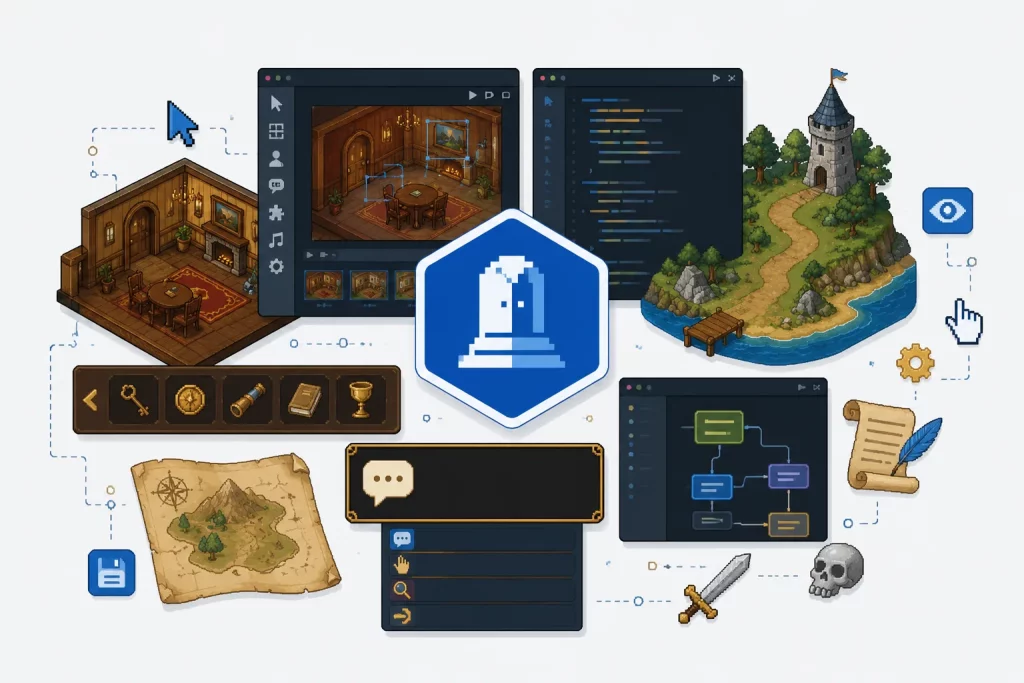
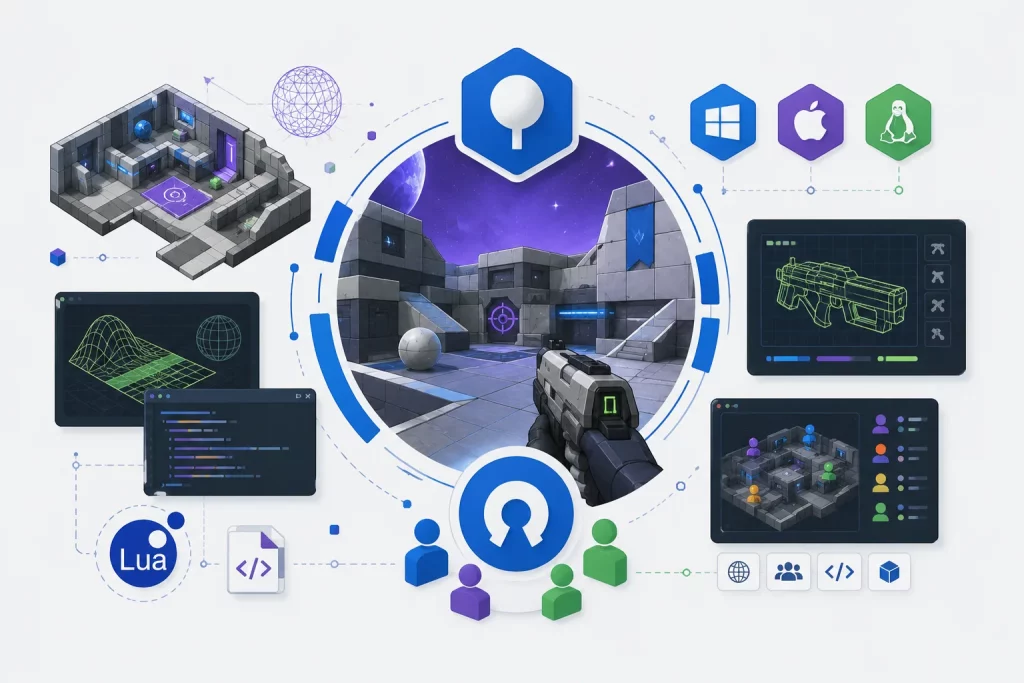
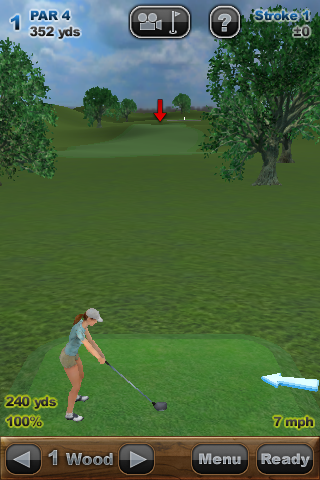
A correction to this page’s own history: earlier versions of this article displayed a photograph of the physical Quoridor board game captioned as a Bork3D title, and captioned the Anytime Golf screenshot as “Quoridor” — the images were both swapped and, in the board-game photo’s case, depicted the wrong product entirely. The screenshot below is the genuine article, taken from the BSD-licensed marketing art in the official repository.
Can You Still Use Bork3D in 2026?
You can read it; you probably shouldn’t ship with it. No game has been publicly attributed to the engine since the mid-2010s, the repository has been dormant since the 2015 release era, and its toolchain assumptions (Xcode 7, Visual Studio 2013, 32-bit-era iOS targets) predate modern platform requirements — Apple has long since dropped support for binaries of that vintage, so the iOS project will not build for a current device without substantial porting work.
Its real 2026 value is educational, and it is unusually good at that job. Complete, shipped, commercial mobile games with open source and open art are rare; this one is small enough to read in a weekend. If you want to see how a lean two-person C++ engine handled rendering, audio, UI and asset pipelines in the first years of the App Store — without wading through a million-line modern engine — Bork3D is one of the cleanest specimens available.
Licensing
Since 2015 the engine and game code, plus the source artwork, are under the BSD 2-Clause license — genuinely permissive, suitable for commercial reuse with attribution. Two carve-outs matter if you fork it: the game’s music (by Mick Rippon) remains all-rights-reserved and is not covered by the open license, and the Windows build’s FreeImage dependency ships under its own, less permissive terms and must be obtained separately. Before 2015 the engine was a paid product; the $49 figure applied to the indie tier circa 2010.
What Happened to Bork3D?
Nothing dramatic — which is itself the story. Bork 3D LLC stopped shipping games, Rose moved on to other work, and rather than letting the engine rot on a dead company website, the studio put the whole thing on GitHub and walked away. The engine’s original home, bork3d.com, is no longer a live engine site; the GitHub repository is now the canonical source. Even Wikipedia has quietly closed the chapter: the standalone “Bork3D Game Engine” article no longer exists and today redirects to Wikipedia’s general list of game engines — a link housekeeping detail this page has now caught up with. As of this writing the repository shows no signs of revival: 15 stars, 8 forks, one open issue, and a commit history that ends where the open-source release began.
Key Takeaways
- Bork3D was built by Bork 3D LLC (Robert Rose and Jake Helms) — earlier versions of this page misnamed the studio “3D LLC.”
- It was a commercial C++ engine for iPhone/iPad (with macOS and Windows targets), sold around 2009–2010 with a $49 indie license, before going fully open source.
- In 2015 the studio released the engine, the complete Anytime Golf: Magic Touch source, and the game’s art under a BSD 2-Clause license — one of the few complete commercial iOS games you can study end to end.
- Its verified flagship is Anytime Golf: Magic Touch; other attributed titles (Monstercraft, Pixelshift, Quoridor, Toy Stunt Bike) come from period sources and can’t be independently re-verified today.
- This page previously swapped its two game images and used a photo of the physical Quoridor board game — both corrected.
- The engine is dormant: no development or attributed releases since the mid-2010s, and its build toolchain is frozen in 2015. Use it to learn, not to ship.
Frequently Asked Questions
Conclusion
Bork3D will never headline a “best engines” list, and that’s exactly why it’s worth a page: it’s a complete, honest fossil of the 2010 iOS engine market, preserved with a generosity most defunct engines never showed. For working developers its lesson is about scope — how much game two people could ship on a lean C++ core — and for students it remains one of the most readable full-game codebases in the public record of that era.
If Bork3D is too small for your project, the best C++ game engines directory maps a hundred-plus alternatives, living and dead, with the games each one shipped.