
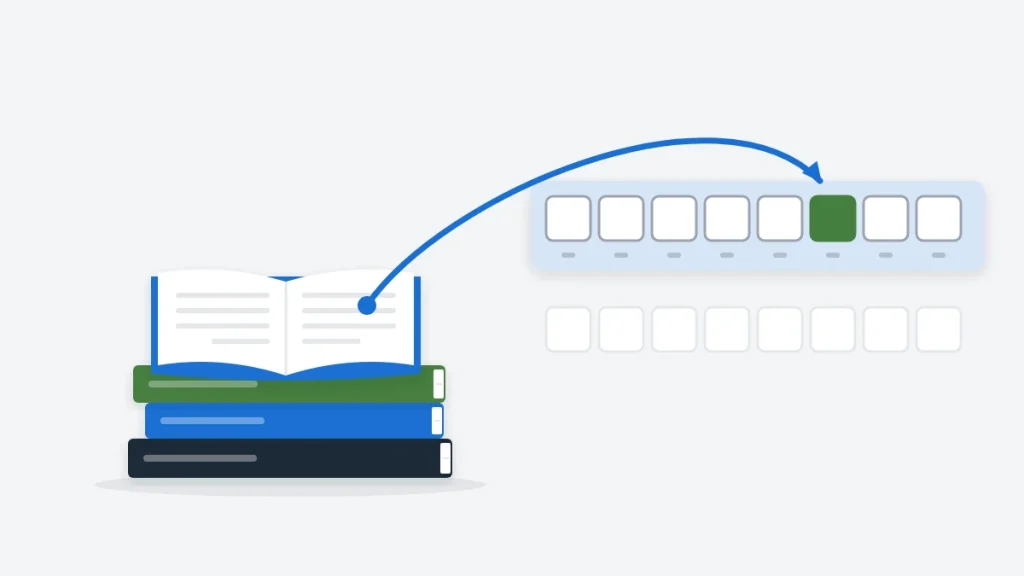
Most of the C books in print today were written for C89 or C99. The language has since gained _Static_assert, <stdatomic.h>, nullptr, typeof, constexpr objects and #embed, all in C11 and C23. A good reading list needs to know which books cover the modern language and which ones are still worth reading even though they don’t.
This list covers both. Each pick names the edition, the C standard it targets, the reader it suits and when to skip it. You can start from zero, or from “I write C for a living”, and find a next book.
The Short List
| Book | Author | Edition / Standard | Level | Best for |
|---|---|---|---|---|
| C Programming: A Modern Approach | K. N. King | 2nd ed. (C99) | Beginner | A first, complete course in C |
| The C Programming Language | Kernighan & Ritchie | 2nd ed. (C89) | Beginner–Intermediate | The concise classic |
| Modern C | Jens Gustedt | 3rd ed. (C23) | Intermediate | Writing C the modern way |
| Effective C | Robert C. Seacord | 2nd ed. (C23) | Intermediate | Professional, secure C |
| Tiny C Projects | Dan Gookin | 1st ed. | Beginner–Intermediate | Learning by building |
| Expert C Programming: Deep C Secrets | Peter van der Linden | 1st ed. | Advanced | How C really behaves |
| C Interfaces and Implementations | David R. Hanson | 1st ed. | Advanced | Designing reusable C libraries |
| Advanced Programming in the UNIX Environment | Stevens & Rago | 3rd ed. | Advanced | Systems programming on POSIX |
| Memory as a Programming Concept in C and C++ | Frantisek Franek | 1st ed. | Intermediate | Understanding memory and pointers |
How We Chose These Books
Every book here passed three tests. It teaches C, not C-flavoured C++. Its code still compiles on a current GCC or Clang with warnings enabled, or the book is explicit about which standard it targets. And it does something the others on the list don’t. We checked editions and standards against publisher listings in November 2026. No publisher paid for a place on this list.
Best C Books for Beginners
C Programming: A Modern Approach (2nd Edition), K. N. King
Best for: your first serious C book, self-study or university course.
King’s book is the most complete beginner text in print. It’s careful about undefined behaviour from chapter one, its exercises are graded, and it explains why the language works the way it does instead of just listing syntax. It covers C89 and C99 side by side, so it also helps when you read older code.
Skip it if: you already program in another language and want something shorter. K&R is a quarter of the length.
The C Programming Language (2nd Edition), Brian Kernighan and Dennis Ritchie
Best for: programmers who want a compact, authoritative tour.
K&R is still the best-written programming book many developers have read. It’s dense, precise and full of small idiomatic programs. It’s also dated in places. It targets ANSI C89, some of its string handling would fail a code review today, and it says nothing about threads, atomics or bounds-checked interfaces. Read it for the clarity of thought, then pair it with Modern C or Effective C for current practice.
Skip it if: C is your first language. The pace assumes you already know what a loop and a function are.
Tiny C Projects, Dan Gookin
Best for: learners who stall on theory and want to build things.
Each chapter is a small, useful command-line program: text filters, a calendar, encoding tools, simple games. Gookin explains the standard-library calls each one needs. It’s a good second book after King, and a good antidote to tutorials that stop at “Hello, World”. For that first program, see our guide to the basics of C++ programming if you are deciding between the two languages.
Skip it if: you want language-lawyer depth. This book is about practice, not the standard.
Best Books for Modern C (C11 to C23)
Modern C (3rd Edition), Jens Gustedt
Best for: developers who know basic C and want to write it the way the current standard intends.
Gustedt sits on the ISO C committee, and the third edition is updated for C23. It’s organised in levels, from “encounter” to “ambition”, and it has firm opinions: prefer size_t for sizes, initialise everything, avoid needless pointer arithmetic. It’s the clearest single book on what changed in C since the 1990s.
Skip it if: you’re a complete beginner. The level-0 chapters move fast.
Effective C (2nd Edition), Robert C. Seacord
Best for: working programmers who need correct, secure C.
Seacord led secure-coding work at CERT, and it shows. The book explains integer conversions, object lifetimes, dynamic memory and error handling from the point of view of what goes wrong in production. The second edition covers C23. If your C ships to customers, read this one.
Skip it if: you want a broad tutorial. It’s deliberately focused and short.
Best Advanced C Books
Expert C Programming: Deep C Secrets, Peter van der Linden
Best for: intermediate programmers ready to understand declarations, arrays vs pointers, and linking.
It’s old, written before C99, and its industry anecdotes are from the Sun era. Its explanations still hold up, though. Its chapter on why arrays and pointers are not the same thing is still the best treatment in print, and the declaration-decoding chapter will make char *(*(*x)())[10] readable. It’s also the most entertaining book on this list.
Skip it if: you need current-standard guidance. Treat it as a companion, not a reference.
C Interfaces and Implementations, David R. Hanson
Best for: anyone designing a C library or a large C codebase.
Hanson builds a set of reusable modules (lists, tables, sets, memory allocators, exceptions) and shows how to separate interface from implementation in a language with no classes or namespaces. The techniques show up in serious C projects everywhere. If you’ve explored our C algorithms and data-structure examples, this book shows how to package that kind of code properly.
Skip it if: you’re still learning the language itself.
Advanced Programming in the UNIX Environment (3rd Edition), W. Richard Stevens and Stephen A. Rago
Best for: systems programmers working on Linux, macOS or BSD.
APUE is the reference for POSIX: files, processes, signals, threads, terminals and interprocess communication, all in C. It’s large and it’s a reference rather than a tutorial, but nothing else covers the operating-system interface as thoroughly.
Skip it if: you write embedded or Windows-only C. Much of the book won’t apply.
Memory as a Programming Concept in C and C++, Frantisek Franek
Best for: programmers who want a mental model of stack, heap and static storage.
It’s a slim, focused book about what actually happens in memory when a C or C++ program runs: allocation, alignment, dangling pointers and leaks. It’s especially useful before you move on to C++ ownership models such as smart pointers in modern C++.
Skip it if: you’re already comfortable reading AddressSanitizer reports and allocator source code.
Which C Book Should You Read First?
| If you are… | Read first | Then |
|---|---|---|
| New to programming | C Programming: A Modern Approach | Tiny C Projects |
| Coming from Python, Java or JavaScript | The C Programming Language | Modern C |
| A working C developer | Effective C | Expert C Programming |
| Building libraries or systems code | C Interfaces and Implementations | Advanced Programming in the UNIX Environment |
Key Takeaways
- K. N. King’s A Modern Approach is the best first C book; K&R is the best second one.
- For C11 through C23, read Modern C or Effective C. They are the books updated for the current standard.
- Older classics are still worth reading for concepts (K&R, Expert C Programming), but pair them with a modern title for current practice.
- Systems and library work needs specialised books. APUE and Hanson cover ground no tutorial does.
- Match the book to your next step, not to a “best ever” ranking.
Frequently Asked Questions
Conclusion
C rewards slow, careful reading more than almost any other language. The rules are few, and the consequences of misreading them are large. That’s why one well-chosen book, read with a compiler open and warnings on, does more than ten skimmed ones.
Pick the row in the table above that matches where you are, read one book properly, then move one row down. When you are ready for the algorithms side of C, our data structures and algorithms book list is the natural next stop.