
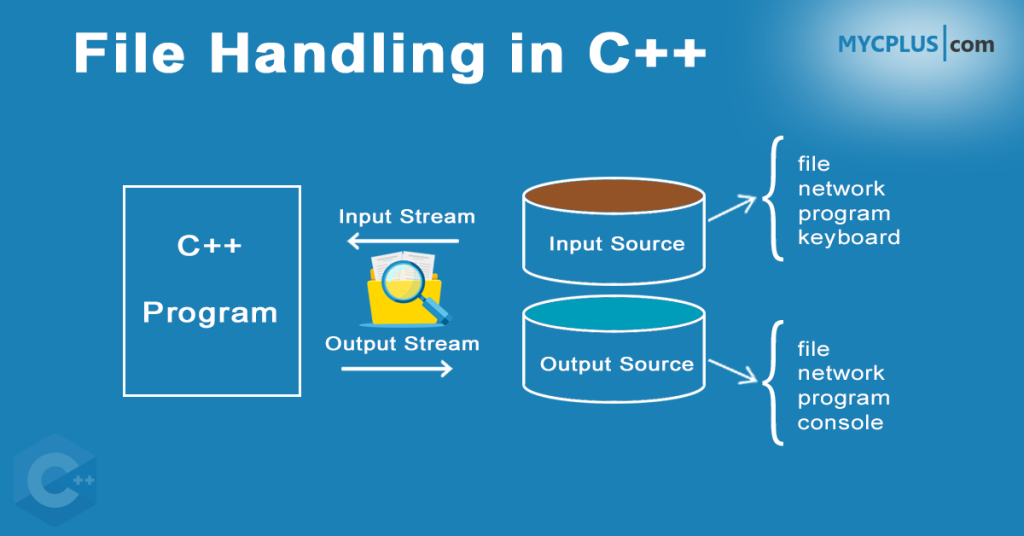
File Handling in C++
C++ treats files as data streams flowing into and out of a program. Each stream type has its own class, complete with functions that handle reading, writing, and managing file I/O efficiently.
C++ treats files as data streams flowing into and out of a program. Each stream type has its own class, complete with functions that handle reading, writing, and managing file I/O efficiently.

Hello, world! Programs are usually written to make the text “Hello, world!” appear on a computer screen. This is also a basic sanity check for an installation of a new programming language. The first Hello World program appeared in chapter 1.1 of the first edition of Kernighan & Ritchie’s original book about C, ‘The C Programming Language’, in 1978. This is considered to be the first ever “Hello World!” program.
C++ has come a long way and is now adopted in several contexts. Its key strengths are its software infrastructure and resource-constrained applications, including desktop applications, servers, and performance-critical applications, not to forget its importance in game programming. Despite its strengths in these areas, beginners usually tend to shy away from learning the language because of its steep learning curve.
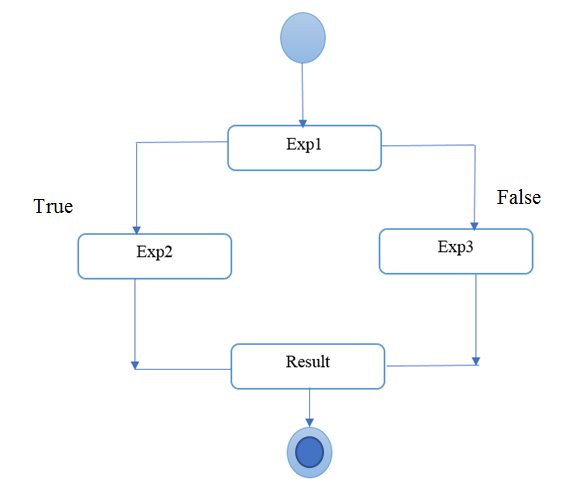
In C++, ternary operator allows executing different code depending on the value of a condition, and the result of the expression is the result of the executed code. The ternary operator uses 3 operands. It evaluates a condition and after that chooses one of its two branches to execute, depending upon the result of condition. The symbol for ternary operator is “? :”. The syntax for the ternary operator is: ? : ;