

Amazon One makes your shopping experience unique
Amazon Go will let people use its latest biometric technology known as “Amazon One” to enter into two Amazon Go locations in Seattle.

Lumberyard – Free Game Engine
Lumberyard is a free, cross-platform 3D game engine developed by Amazon Game Tech. It is based upon Crytek’s Cryengine. This AAA game engine is written in C++ and Lua. Lumberyard develops games for the PC, Mobiles and consoles i.e., Microsoft Windows, iOS, Android, PlayStation 4 and Xbox One. The most prominent feature of the engine is its integration with AWS (Amazon Web Services) and Twitch. Lumberyard is designed for performance, modularity, and productivity.

Limon Engine – A 3D Game Engine that’s just enough
Limon Engine is an open source, multi-platform and multi-threaded, 3D game engine. The engine is written in C++ and specially designed for First Person Shooter Games. It develops games for the platforms of Microsoft Windows, Linux and Mac-OS. It is a self-contained, simple learning project, has clean code and fair amount of functionalities. It is a great platform for learning game development. The engine is licensed under free LG-PL (Lesser General Public License).
![Difference between char[] and char* in C? Character Array and Pointer](https://cdn.mycplus.com/mycplus/wp-content/uploads/2020/09/char-array-and-char-pointer-in-C-1080x640.png)
Difference between char[] and char* in C? Character Array and Pointer
Generally, the following two statements about char[] and char * in C are considered confusing and understanding the difference between them is important. The first statement puts the literal string “mycplus” in read-only memory and copies the string to newly allocated memory on the stack. The second statement is known as static string allocation and definition.

What are #ifndef and #define Directives?
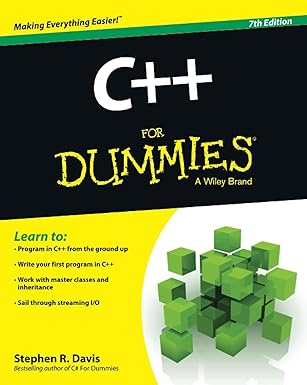
Unlock the world of programming with C++ for Dummies – the perfect beginner’s guide to mastering C++ with ease and confidence!
View on Amazon
In the C Programming Language, the #ifndef directive checks if the given token has been #defined earlier in the C code. If the token has not been defined earlier then it includes the code between #ifndef and #else. If no #else is present then code between ##ifndef and #endif is included.