
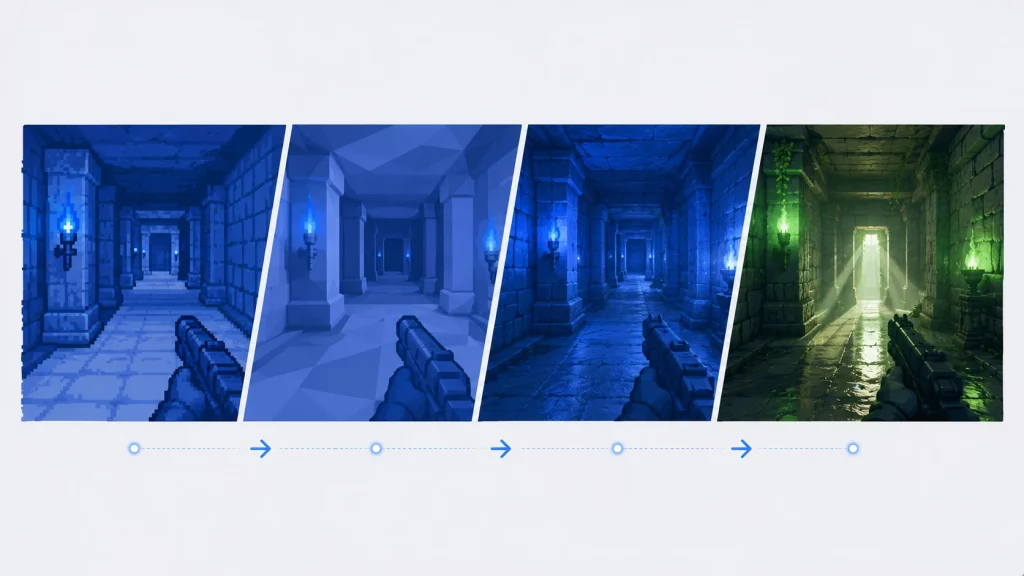
id Tech is the most influential engine dynasty in gaming history. Built by id Software — and above all by John Carmack — its successive generations invented the first-person shooter (Doom), true real-time 3D (Quake), and the engine-licensing business itself, before evolving into today’s ray-traced id Tech 8 behind Doom: The Dark Ages. This guide covers every generation from id Tech 1 through id Tech 8: the games, the innovations, the open-source releases, and how a garage-built Doom engine became Microsoft-owned technology 30 years later.
Table of Contents
- What Is id Tech?
- id Software, John Carmack, and the Engine Dynasty
- id Tech Version History
- id Tech 1 – Doom Engine
- id Tech 2 – Quake and Quake II Engines
- id Tech 3 – Quake III Engine
- id Tech 4 – Doom 3 Engine
- id Tech 5 – Rage Engine
- id Tech 6 – Doom (2016) Engine
- id Tech 7 – Doom Eternal Engine
- id Tech 8 – Doom: The Dark Ages Engine
- id Tech vs Unreal Engine: The Long Rivalry
- Open Source Releases and the Modding Legacy
- Can You Download id Tech?
- Frequently Asked Questions
- Conclusion
What Is id Tech?
id Tech is the family name for the game engines developed by id Software, the Texas studio founded in 1991 by John Carmack, John Romero, Tom Hall, and Adrian Carmack. The name was applied retroactively: the “Doom engine” became id Tech 1, the Quake engines id Tech 2, and so on. Written in C in the early generations and C++ from id Tech 4 onward, the series is defined by a simple pattern — roughly every four to five years, a new generation arrives with a new Doom or Quake to prove it.
Two things make the family historically unique. First, openness: id Tech 1 through 4 have all been released as free software under the GNU GPL, seeding decades of source ports and community engines. Second, descendants: Valve’s GoldSrc (Half-Life) grew from the Quake engine, the original Call of Duty shipped on id Tech 3 — the ancestor of today’s IW engine — and even Doom 3’s tech lives on in the free Dark Mod. Much of modern FPS technology is, genealogically, id Tech. For a richly illustrated outside chronicle of all eight generations, PC Gamer’s graphical history of id Tech is the best single companion piece to this guide.
For how the family compares across the wider field, see our complete list of top 100 game engines written in C/C++.
id Software, John Carmack, and the Engine Dynasty
In 1992, three programmers — John Carmack (graphics and runtime), John Romero (tools), and Jason Blochowiak (subsystems) — built the raycasting Wolfenstein 3D engine, retroactively nicknamed “id Tech 0.” It rendered a convincing 3D world on hardware that had no business doing so, and it set the Carmack template: find the algorithmic shortcut nobody else saw, then ship a genre-defining game on it. (For the full origin story, the book Masters of Doom remains the definitive account of Carmack and Romero’s partnership.)
Carmack personally architected id Tech 1 through 5, leaving a trail of famous engineering along the way — from Doom’s BSP-based rendering to Quake III’s legendary fast inverse square root routine. After ZeniMax Media acquired id Software in 2009, Carmack departed in 2013 for Oculus; leadership of the renderer passed to Tiago Sousa, hired from Crytek where he had led CryEngine‘s graphics R&D. In 2021, Microsoft’s acquisition of ZeniMax made id Tech an Xbox Game Studios technology — the engines are no longer licensed externally, powering only ZeniMax studios like id itself and MachineGames. Through every ownership change, id Software has kept publishing its engine lineage and source releases on its official site and GitHub — a continuity few 30-year-old studios can claim.
id Tech Version History
| Version | Debut year | Debut game | Defining advance | Open source? |
|---|---|---|---|---|
| “id Tech 0” (Wolfenstein 3D engine) | 1992 | Wolfenstein 3D | Raycasting pseudo-3D; the FPS blueprint | Yes (1995) |
| id Tech 1 (Doom engine) | 1993 | Doom | BSP rendering, sector maps, network deathmatch | Yes (1997/1999, GPL) |
| id Tech 2 (Quake / Quake II engines) | 1996 / 1997 | Quake, Quake II | True real-time 3D, hardware acceleration, internet play | Yes (1999 / 2001, GPL) |
| id Tech 3 | 1999 | Quake III Arena | Shaders, curved surfaces; the licensing era peak | Yes (2005, GPL) |
| id Tech 4 | 2004 | Doom 3 | Unified per-pixel lighting and shadows; move to C++ | Yes (2011, GPL) |
| id Tech 5 | 2011 | Rage | MegaTexture virtual texturing; ZeniMax-only licensing | No |
| id Tech 6 | 2016 | Doom (2016) | Vulkan support, PBR; post-Carmack rebirth | No |
| id Tech 7 | 2020 | Doom Eternal | 10× geometry, no main thread, Vulkan-only | No |
| id Tech 8 | 2025 | Doom: The Dark Ages | Mandatory hardware ray tracing, destructible environments | No |
id Tech 1 – Doom Engine
id Tech 1 powered Doom (1993), the game that made the first-person shooter a genre and multiplayer deathmatch a word. Written in C (with assembly hot paths) by John Carmack, it wasn’t true 3D: levels were 2D sector maps rendered into convincing 3D views via binary space partitioning — which is why classic Doom has no rooms above rooms. The trade-off bought astonishing speed on 1993 hardware, plus dynamic sector lighting, texture mapping, and four-player networked play.
Key innovations: BSP-tree rendering for real-time speed; sector-based 2.5D level design; network deathmatch; a data format (WADs) that accidentally invented the modding scene.
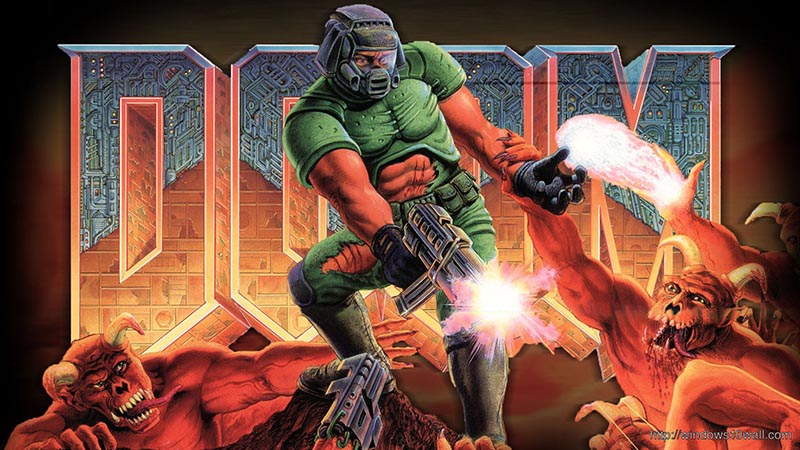
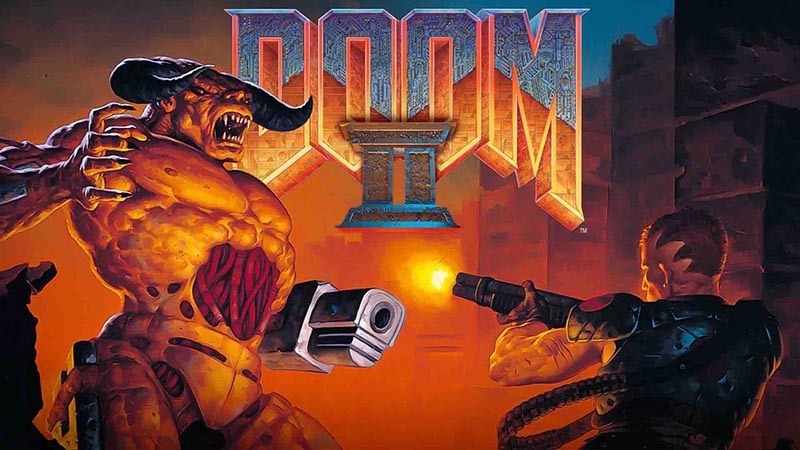
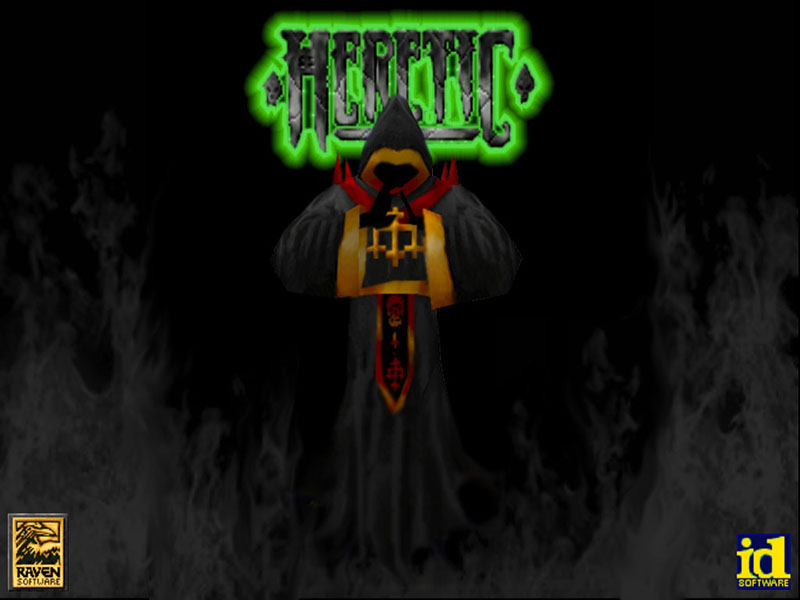
Games: Doom, Doom II (1994), Heretic (1994), Hexen (1995), Strife (1996), and the cereal-box curiosity Chex Quest (1996). The 1997 source release (relicensed to GPL in 1999) spawned an ecosystem of source ports — from the historically faithful Chocolate Doom to feature-rich modern ports — that keeps Doom running on everything from smart fridges to oscilloscopes, the origin of the “it runs Doom” meme.

id Tech 2 – Quake and Quake II Engines
id Tech 2 actually covers two related engines. The Quake engine (1996) delivered what Doom faked: true real-time 3D worlds with polygonal enemies, six-degree movement, and — via the QuakeWorld add-on — internet multiplayer that worked over real-world latency. Its VQuake and GLQuake offshoots made Quake one of the first games to exploit consumer 3D accelerators, effectively creating demand for the GPU market. Eighteen months later the Quake II engine (1997) refactored the technology with colored lighting and out-of-the-box hardware acceleration; id retroactively applies the “id Tech 2” label primarily to it.
Key innovations: true 3D BSP worlds with lightmaps; hardware-accelerated rendering; client-server internet play; game logic in separable modules, opening the door to total conversions.
Games: Quake, Quake II, Hexen II, and licensed titles including SiN, Kingpin: Life of Crime, Soldier of Fortune, Heretic II, Anachronox, and Daikatana. The engine’s most consequential offspring wasn’t a game but another engine: Valve licensed the Quake codebase and evolved it into GoldSrc for Half-Life (1998), whose successor Source still carries traces of Quake DNA. Both Quake engines were GPL’d (1999 and 2001), enabling community projects like DarkPlaces and vkQuake.
id Tech 3 – Quake III Engine
Built for Quake III Arena (1999), id Tech 3 was Carmack’s answer to the first real rivalry of his career: Epic’s Unreal. It brought a shader system, curved Bézier surfaces, per-pixel effects, volumetric fog, and a portable virtual machine for game code — and it contains the famous fast inverse square root, a few lines of bit-twiddling C so elegantly strange they became programming folklore.
Key innovations: scripted shader pipeline; curved surfaces; QVM virtual machine for secure, portable mods; netcode that defined competitive FPS play.
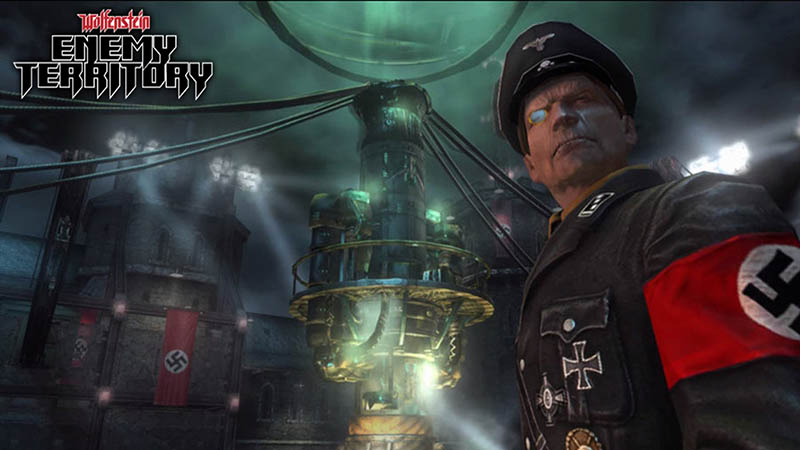
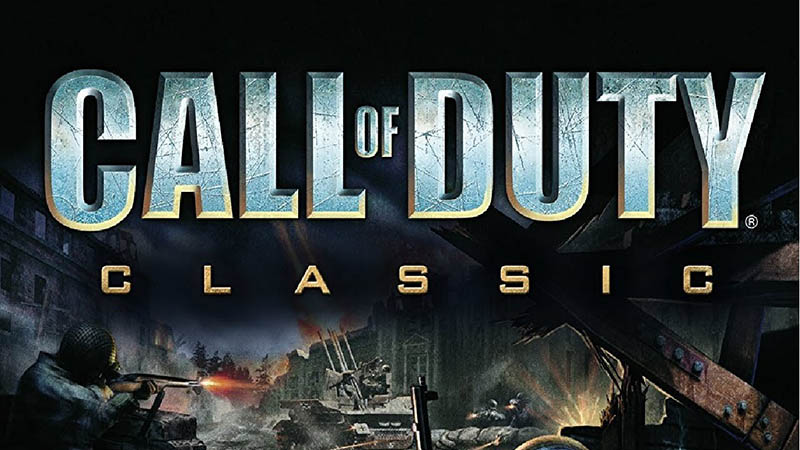
Games: this is the most-licensed engine id ever made, and the list reads like the era’s greatest hits — Return to Castle Wolfenstein, Wolfenstein: Enemy Territory, Call of Duty (2003), Medal of Honor: Allied Assault, Star Wars Jedi Knight II and Jedi Academy, both Star Trek: Elite Force games, Soldier of Fortune II, and American McGee’s Alice. Infinity Ward’s Call of Duty work made id Tech 3 the direct ancestor of the modern IW engine that still powers the franchise. The 2005 GPL release produced ioquake3 — a community-maintained (not id-made) cleanup of the codebase that remains the standard base for open-source shooters like OpenArena.

id Tech 4 – Doom 3 Engine
id Tech 4 (2004) began as an id Tech 3 evolution and ended as a rewrite — the family’s transition from C to C++. Its headline was unified lighting and shadowing: every light was dynamic and every surface shadowed per pixel in real time, no pre-baked lightmaps, giving Doom 3 its oppressive, flashlight-horror look. Carmack later reflected on the transition with characteristic candor, saying “good C++” is better than “good C” from a readability standpoint, while admitting a lingering fondness for the leaner Quake III code.
Key innovations: fully dynamic unified lighting with stencil shadow volumes; normal/specular per-pixel surfaces; skeletal animation; C++-style scripting; the first MegaTexture appeared in a late branch (Quake Wars).
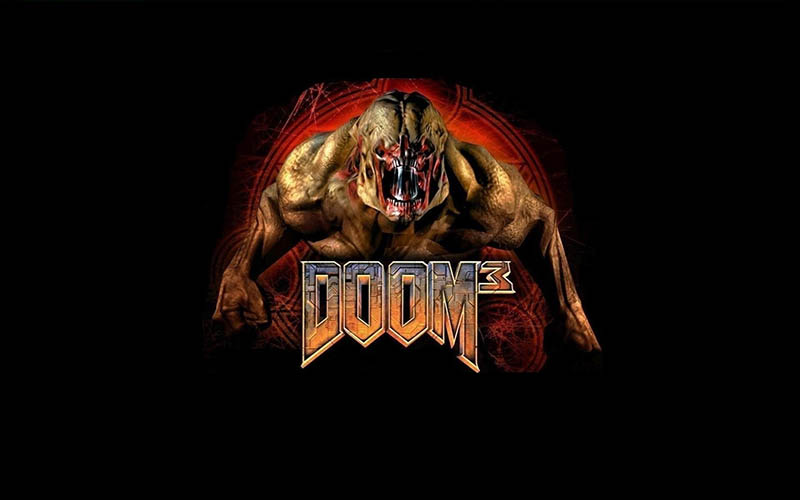
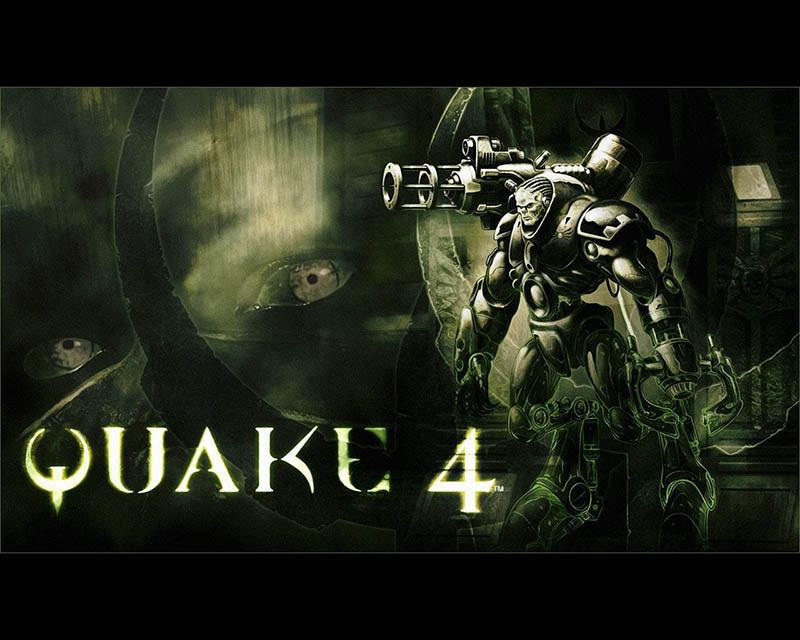
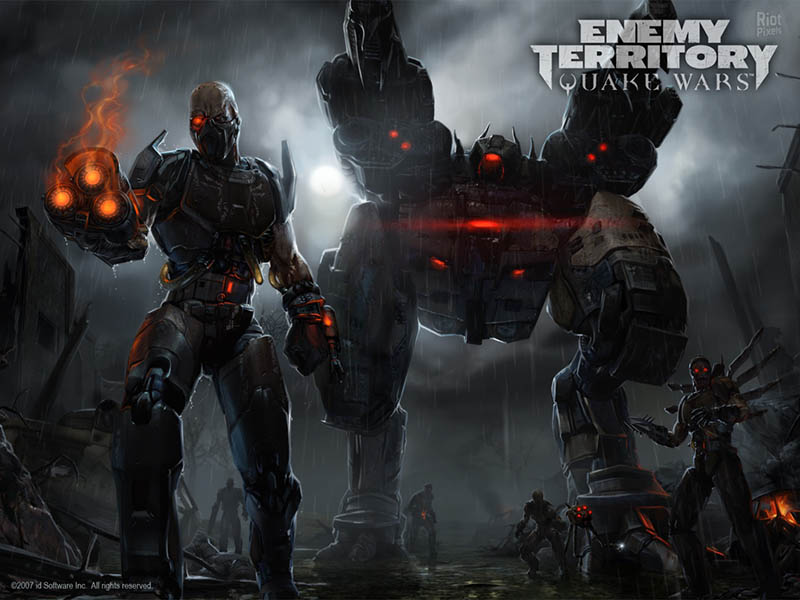
Games: Doom 3 (2004), Quake 4 (2005), Prey (2006), Enemy Territory: Quake Wars (2007), Wolfenstein (2009), and Splash Damage’s Brink (2011). GPL’d in November 2011, id Tech 4’s code now underpins community engines — including The Dark Mod, the free standalone stealth game carrying the Dark Engine‘s Thief tradition on id technology.

id Tech 5 – Rage Engine
id Tech 5 (2011) bet everything on MegaTexture virtual texturing: entire worlds painted as one gigantic texture (up to 128,000×128,000 pixels), streamed into memory on demand, so artists could paint unique detail everywhere without tiling. Debuting in Rage, it was Carmack’s last engine as architect — and the moment id’s business changed. In 2010, id announced the engine would no longer be licensed externally; id Tech has been exclusive to ZeniMax (now Microsoft) studios ever since, and despite earlier stated intentions, id Tech 5 and everything after remain closed source.
Key innovations: virtual texturing at unprecedented scale; 60fps targets on console hardware; soft shadows, cloth, and HDR-centric rendering; asset pipelines built for cross-platform parity.
Games: Rage (2011), Wolfenstein: The New Order (2014) and The Old Blood (2015) from MachineGames, and Tango Gameworks’ The Evil Within (2014). Two notable derivatives deserve their own credit lines: Arkane’s Void Engine (Dishonored 2, Death of the Outsider) and Tango’s STEM engine (The Evil Within 2) are heavily modified id Tech 5 forks — descendants, not id Tech 5 games proper.


id Tech 6 – Doom (2016) Engine
id Tech 6 marks the post-Carmack rebirth. After his 2013 departure, Tiago Sousa (ex-Crytek) took over rendering leadership, and the troubled Doom 4 project was rebooted into Doom (2016) — a critical triumph whose engine paired refined virtual texturing with physically based rendering and, in a landmark July 2016 update, became the industry’s flagship Vulkan API showcase, hitting frame rates that made the new API’s case overnight.
Key innovations: Vulkan support alongside OpenGL; physically based rendering with image-based lighting; unified volumetric fog and lighting; state-of-the-art anti-aliasing (TSSAA/SMAA); destructible enemies groundwork.
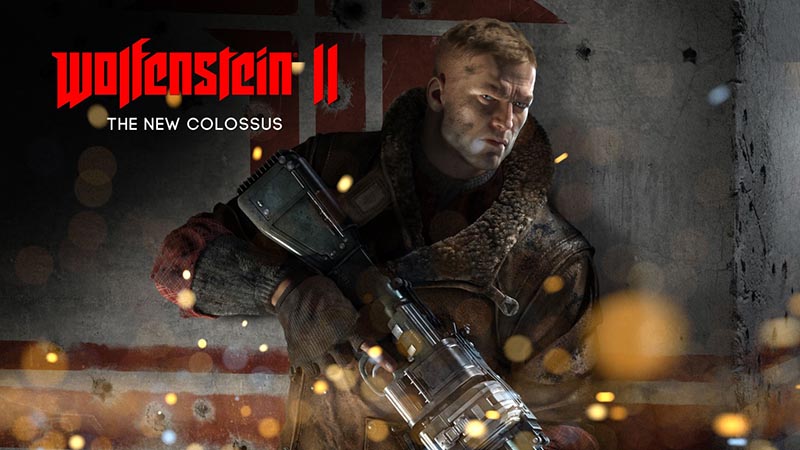
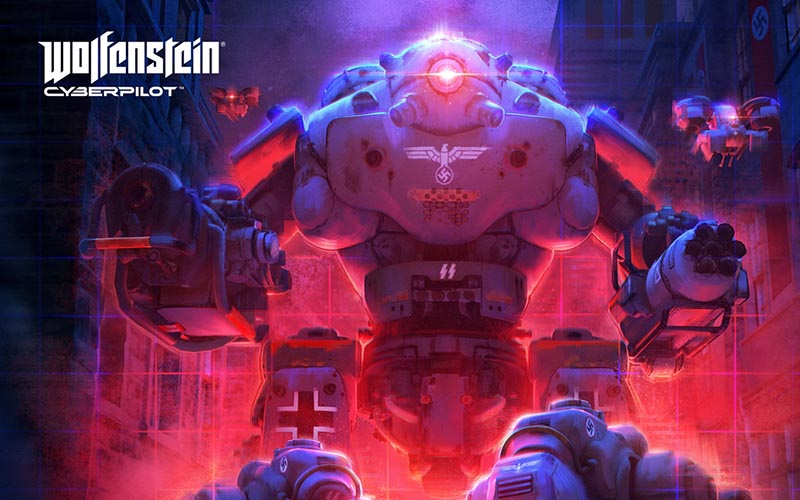
Games: Doom (2016), Doom VFR (2017), Wolfenstein II: The New Colossus (2017), Wolfenstein: Youngblood and Cyberpilot (2019) — Youngblood adding the family’s first ray-traced reflections via a partnership with Nvidia.


id Tech 7 – Doom Eternal Engine
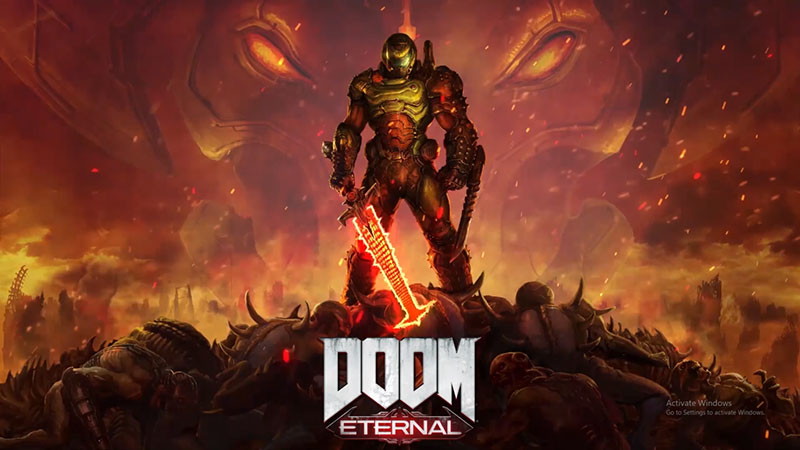
id Tech 7 (2020) powered Doom Eternal with an engineering flex that impressed even rival developers: the engine has no main thread and no render thread — all work is distributed across a job system, which is how it sustains hundreds of demons, destructible bodies, and 10× id Tech 6’s geometric detail at extreme frame rates. On PC it went Vulkan-only, by lead engine programmer Billy Khan’s design, and a 2021 update added ray-traced reflections and DLSS.
Its second act came from MachineGames: Indiana Jones and the Great Circle (December 2024) runs on “Motor,” a fork of id Tech 7 developed with id, which made hardware ray-traced global illumination a requirement — the first mainstream game to do so — and later added full path tracing. Motor demonstrated that id’s shooter technology could carry a cinematic, exploration-driven adventure, and its ray-tracing-first architecture directly set the stage for id Tech 8.
Key innovations: threadless job-based architecture; Vulkan-only PC rendering; 10× geometry with no MegaTexture legacy; Destructible Demons system; the Motor fork’s mandatory ray-traced GI.
Games: Doom Eternal and its Ancient Gods expansions (2020–2021); Indiana Jones and the Great Circle (2024, via Motor).

id Tech 8 – Doom: The Dark Ages Engine
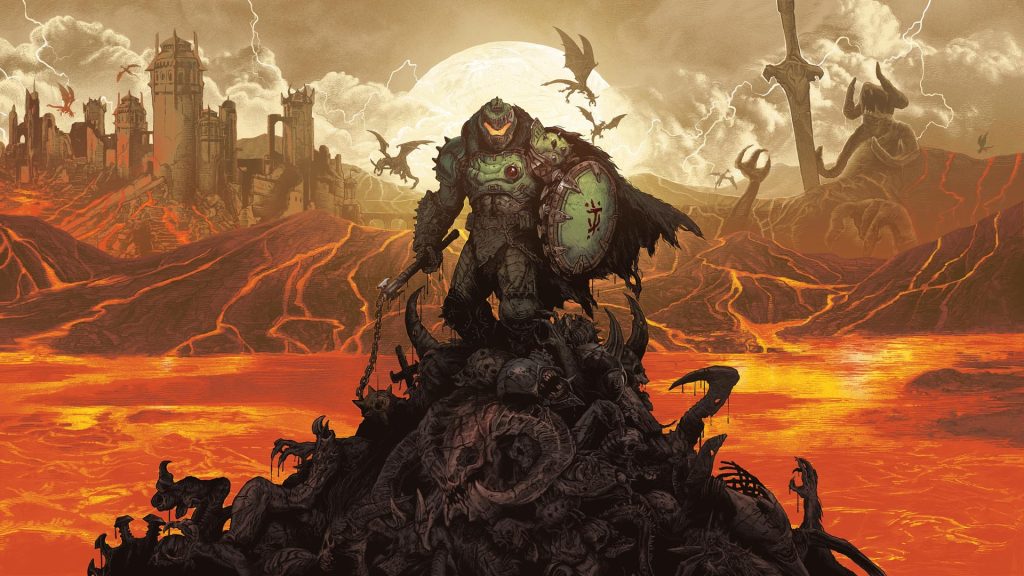
The current generation. id Tech 8 debuted with Doom: The Dark Ages (May 15, 2025) and makes the family’s boldest hardware bet since GLQuake: ray tracing is mandatory — there is no shader-based fallback for GPUs without RT hardware. In exchange, the engine delivers ray-traced lighting everywhere, id’s first genuinely destructible environments (splintering banisters, collapsing barricades that persist after battle), massively scalable texture streaming, and levels far larger and denser than Eternal’s, with a full path-tracing upgrade announced to follow launch.
Reviewers of the engine’s debut called it a technical marvel for how widely it scales — from 8GB GPUs to flagship hardware — given how much simulation it runs. On id’s four-to-five-year cadence, id Tech 8 will define the family well into the decade; an id Tech 9 shouldn’t be expected before the late 2020s.
Key innovations: mandatory hardware ray-traced lighting and shadows; persistent environmental destruction; extreme texture-streaming scalability; engine support for the series’ largest playable spaces.
Games: Doom: The Dark Ages (2025) — with more ZeniMax titles expected to adopt the generation.
id Tech vs Unreal Engine: The Long Rivalry
| Feature | id Tech | Unreal Engine |
|---|---|---|
| Developer | id Software (ZeniMax/Microsoft) | Epic Games |
| First release | 1993 (Doom engine) | 1998 (Unreal) |
| Licensing today | Internal to ZeniMax studios only | Free; 5% royalty after $1M |
| Open source | Versions 1–4 under GPL | Source-available, not open source |
| Signature strength | Raw rendering performance, FPS technology | Ecosystem, tools, universality |
| Current version | id Tech 8 (2025) | Unreal Engine 5.6+ |
The rivalry peaked around 1999–2004, when id Tech 3 and Unreal competed for licensees on roughly even terms. The paths then split: Epic bet on tooling and openness, id on vertical excellence for its own games. Both bets paid off — Unreal Engine conquered the industry’s breadth, while id Tech still routinely ships the fastest renderer in gaming.
Open Source Releases and the Modding Legacy
No commercial engine family has given more code away. Doom’s source arrived in 1997 (GPL from 1999), the Quake engines in 1999 and 2001, id Tech 3 in 2005 (announced by Carmack at QuakeCon), and id Tech 4 in November 2011. The results compound to this day: hundreds of Doom source ports; community engines like ioquake3 and dhewm3 keeping the codebases modern; whole free games (OpenArena, The Dark Mod) built on GPL’d id foundations; and generations of programmers who learned engine architecture by reading Carmack’s shipped code — still among the most-studied C and C++ in the industry.
That tradition ended with the licensing business: id Tech 5, 6, 7, and 8 remain proprietary, and Carmack’s old intention to eventually open them left the company when he did. The realistic expectation is that the GPL archive stops at id Tech 4.
Can You Download id Tech?
Versions 1 through 4: yes, legally and freely. The GPL source code is on id Software’s official GitHub — DOOM, Quake-2, Quake-III-Arena, and DOOM-3 — with community-maintained modern forks like ioquake3 and Chocolate Doom the practical starting points (note you still need the original games’ assets, which remain commercial).
Versions 5 through 8: no. They are internal ZeniMax/Microsoft technology, unavailable for licensing at any price. For a modern engine with id-style performance ambitions, Unreal, Unity, and Godot are the practical paths — though for learning how great engines are built, few resources beat reading id’s GPL’d code itself.
Browse more of our game development coverage for deep dives into every major engine.
Frequently Asked Questions
Conclusion
Read as one story, id Tech is the history of real-time rendering told through a single codebase’s descendants: raycasting to BSP, software 3D to GPU acceleration, lightmaps to unified shadows to mandatory ray tracing. Almost every leap the industry treats as inevitable was, at the time, one team — often one programmer — deciding the impossible was an optimization problem. That the same family now spans a 1993 DOS shooter and 2025’s path-traced Dark Ages is unmatched anywhere in software.
The dynasty’s two legacies point in opposite directions, and both are thriving. The proprietary line grows ever more exclusive — Microsoft-owned, unlicensable, tuned for a handful of studios. The GPL line grows ever more universal: thirty years of open Doom and Quake code running on everything with a processor, teaching each new generation how engines work. Few companies have ever guarded their crown jewels so tightly while giving their family silver away so freely — and gaming is richer for both.