Exception Handling in C++ Programming

Exception Handling in C++

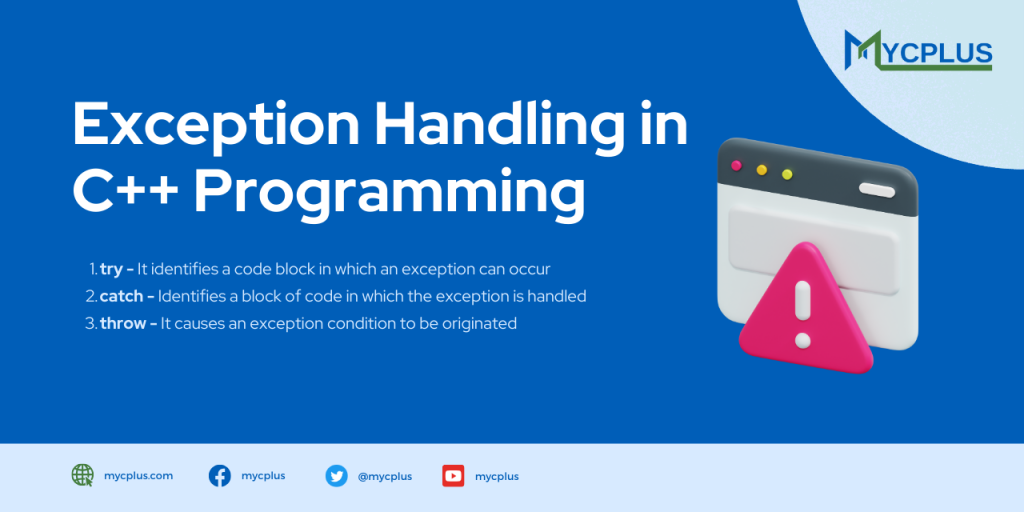
Exceptions are the way of flagging unexpected conditions or errors that have occurred in C++ program. C++ Language provides a good mechanism to tackle these conditions. The exception mechanism uses three keywords: try, catch and throw.
Operator Overloading in C++

Operator Overloading in C++

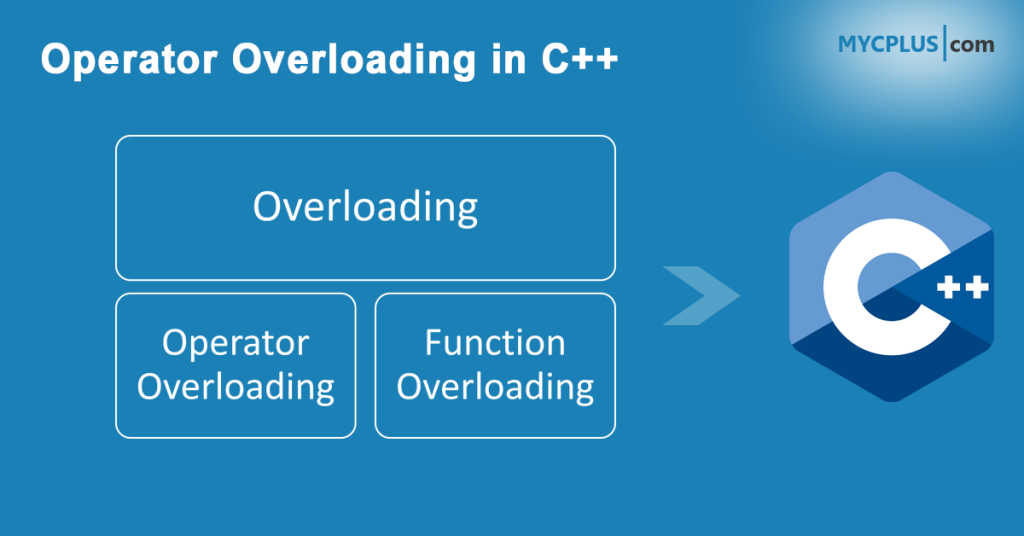
Operator Overloading enables us to make the standard operators, like +, -, * etc, to work with the objects of our own data types or classes. We can write a function which redefines a particular operator so that it performs a specific operation when it is used with the object of a class.

advanced exception handling in C++

A Guide to Advanced Exception Handling in C++ Programming

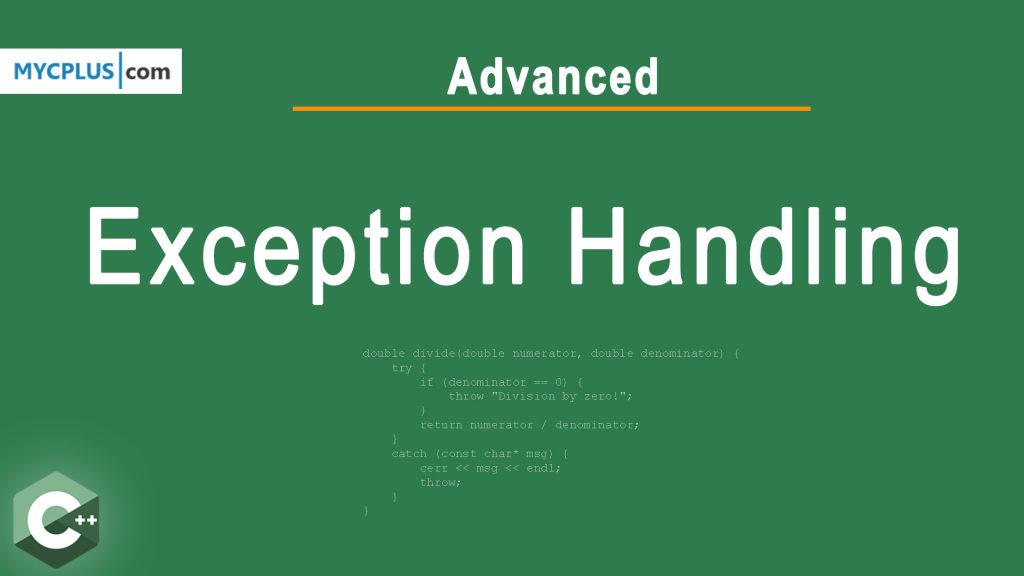
An exception usually signals an error. One of the major features in C++ is exception handling, which is a better way of thinking about and handling errors. Thought it doesn’t always indicate an error, it can also signal some particularly unusual even in your program that deserves special attention. This article also covers try, throw, and catch, the C++ keywords that support exception handling.

Understanding C++ Templates

Understanding C++ Templates: A Simplified Guide

Learn the basics of C++ templates and how they are used in programming. This article breaks down the concept of templates, their types, and common challenges. From function templates to member function templates, discover their practical applications and potential pitfalls. Whether you’re a beginner or looking to deepen your understanding, this guide provides a straightforward explanation of C++ templates.

Generic Algorithms

Generic Algorithms – Unlocking the Power of C++ STL Algorithms

Algorithms are are at the core of computing. One intriguing approach is Genetic Algorithms (GAs), which draw inspiration from natural selection and genetics. These algorithms excel at solving optimization and search problems by mimicking evolutionary processes. When it comes to putting these ideas into code, C++ stands out as a powerful and versatile language.

graphics.h Reference

Graphics in C Language

In a C program, first step is to initialize the graphics drivers on the computer. This is done using the initgraph() method provided in graphics.h  library. In the next few pages we will discuss graphics.h library in more details. Important functions in graphic.h  library will be discussed in details and samples programs will be provided to show the power of C programming language especially for graphic programming developing graphical user interfaces.

Working with Pointers

Working with Pointers in C

A pointer is a variable that represents the location of a data item, such as a variable or an array element. Pointers are used frequently in C, as they have a number of useful applications. For example, pointers can be used to pass information back and forth between a function and its reference point. Pointers provide a way to return multiple data items from a function via function arguments to
be specified as arguments to a given function.

Class in C++

Introduction to Classes in C++

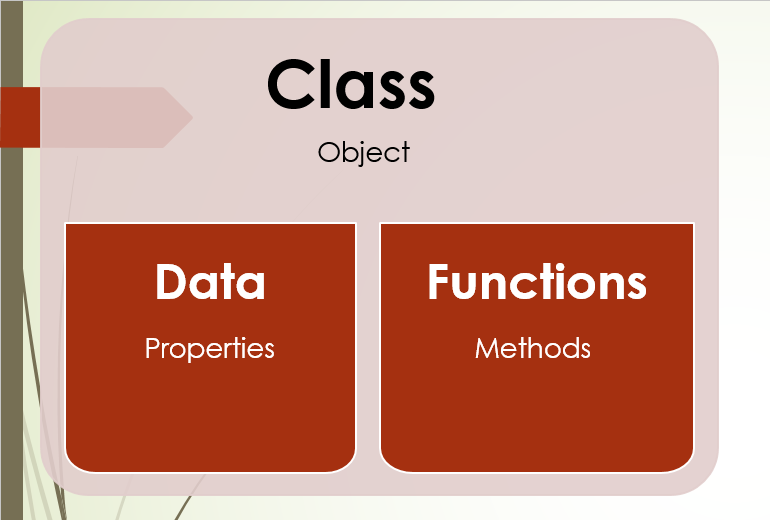
A class is an organisation of data and functions which operate on them. Data structures are called data members and the functions are called member functions, The combination of data members and member functions constitute a data object or simply an object.

mycplus

Constructors in C++

A constructor is a special method that is created when the object is created or defined. This particular method holds the same name as that of the object and it initializes the instance of the object whenever that object is created. The constructor also usually holds the initialization of the different declared member variables of its object.

Scroll to Top