
Virtual Functions in C++
Virtual functions enable redefinition of a base class function in derived classes using the “virtual” keyword. They allow dynamic selection of the appropriate function at runtime based on the object’s actual type.
Virtual functions enable redefinition of a base class function in derived classes using the “virtual” keyword. They allow dynamic selection of the appropriate function at runtime based on the object’s actual type.
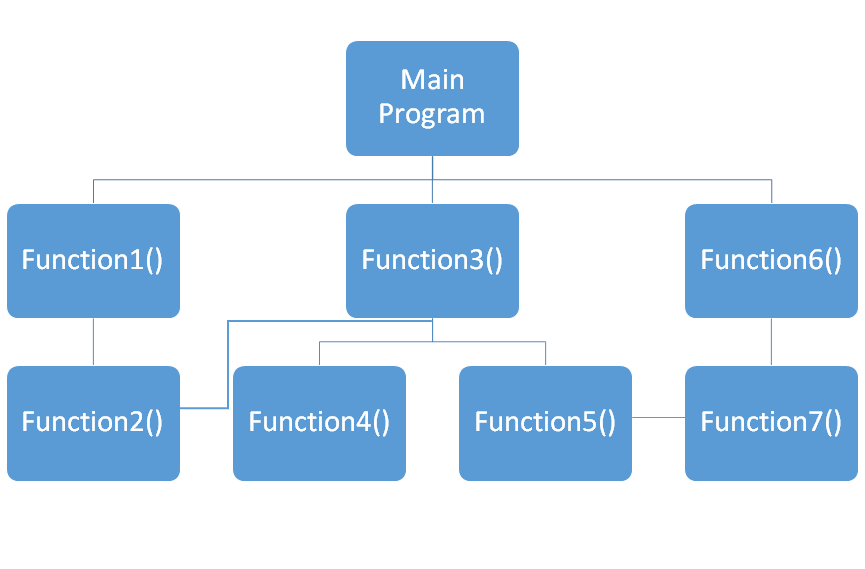
Any program which uses these five methodologies or any of it, we can call that program object oriented. They are Encapsulation, Data Hiding, Overloading, Polymorphism, Inheritance. Any programming language which supports all of these features and facilitate the programmer in developing the program in these methodologies is called Object Oriented Programming Language i.e. C++, Java, C#.
Understand the mechanics of malware and learn how to protect against cyber threats with The Art of Computer Virus Research and Defense. This comprehensive guide by Peter Szor is a must-read for anyone passionate about cybersecurity.
Container classes are fundamental object-oriented constructs that store and manage collections of objects, helping simplify program structure and promote code reuse
Welcome to the another C++ article where we will uncover the language’s flexibility and power through various data types. In this article, we’ll explore the compounded types such as Enumerated Types, Simple Structures, Very Simple Classes, the intriguing concept of the union and Type Conversions in C++. So, buckle up, aspiring programmers, as we embark on a journey to demystify these essential building blocks of C++.
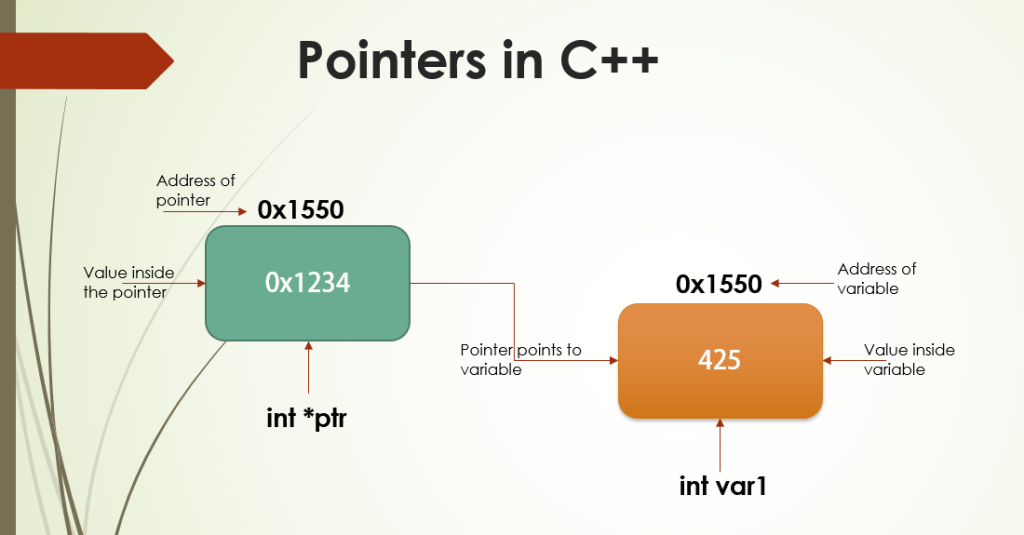
The pointer is a variable which holds the memory address of another variable. If one variable contains the address of another variable, the first variable is said to point to the second. There are two types of pointer operators; * and &. the & is a unary operator that returns the memory address of its operand.
While grasping the fundamentals of encapsulation is crucial, delving into advanced concepts and patterns elevates code design and maintainability further in C++. In this article, we will explore sophisticated aspects of encapsulation that go beyond the basics and provides you with a deeper understanding of its applications and impact on software development.
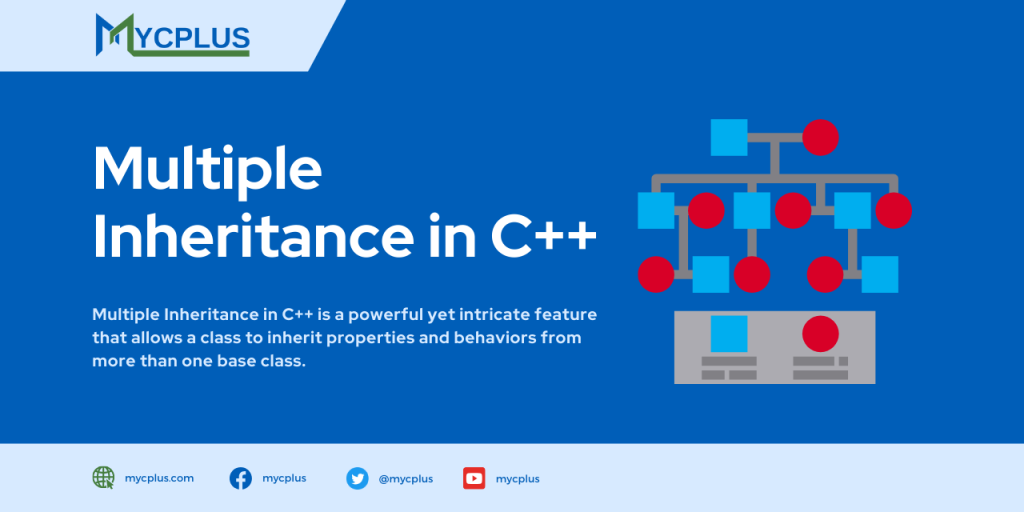
Multiple Inheritance in C++ is a powerful yet intricate feature that allows a class to inherit properties and behaviors from more than one base class. In traditional single inheritance, a class can have only one immediate parent, but with multiple inheritance, a derived class can inherit from multiple base classes.
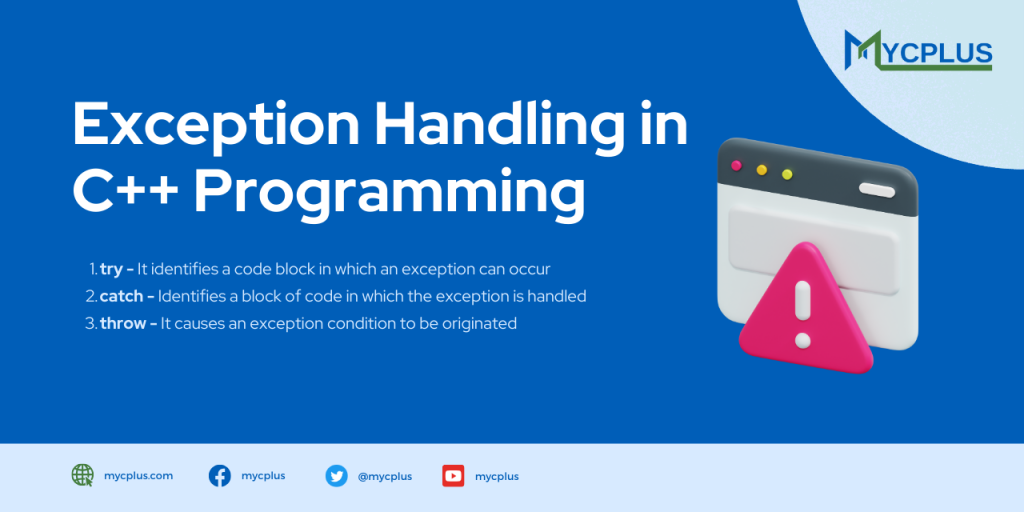
Exceptions are the way of flagging unexpected conditions or errors that have occurred in C++ program. C++ Language provides a good mechanism to tackle these conditions. The exception mechanism uses three keywords: try, catch and throw.
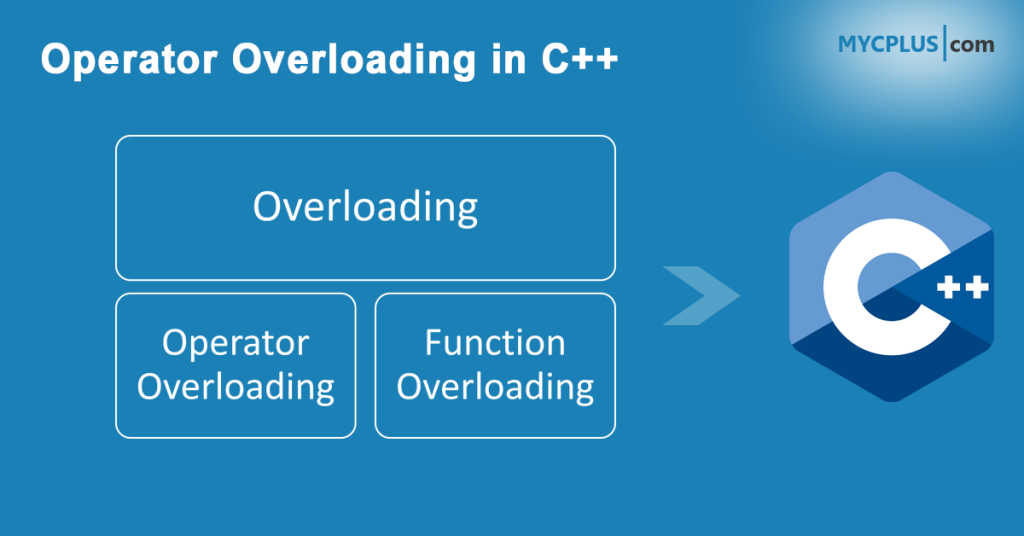
Operator Overloading enables us to make the standard operators, like +, -, * etc, to work with the objects of our own data types or classes. We can write a function which redefines a particular operator so that it performs a specific operation when it is used with the object of a class.
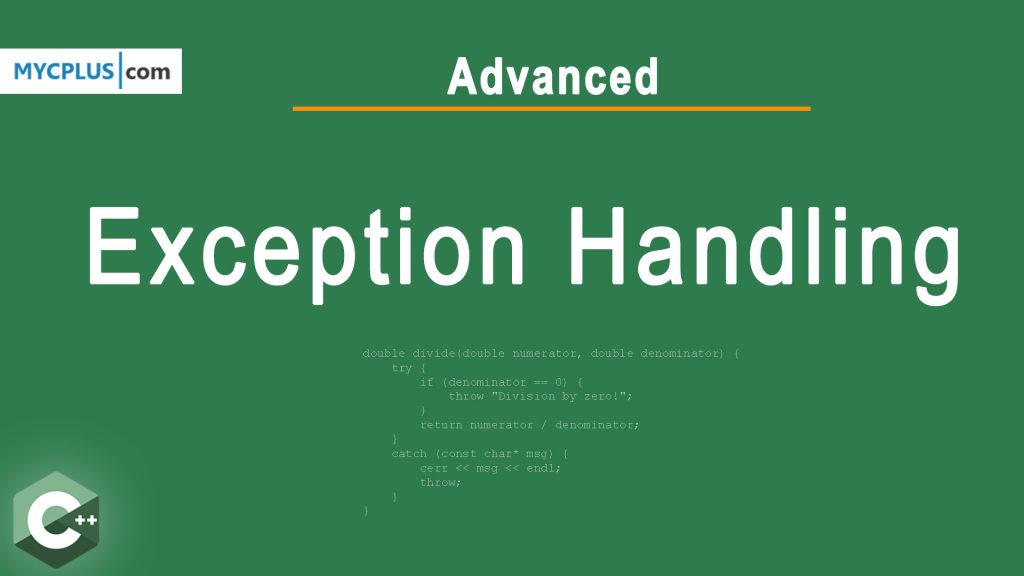
An exception usually signals an error. One of the major features in C++ is exception handling, which is a better way of thinking about and handling errors. Thought it doesn’t always indicate an error, it can also signal some particularly unusual even in your program that deserves special attention. This article also covers try, throw, and catch, the C++ keywords that support exception handling.
The 1998 C++ standard consists of two parts: the core language and the C++ standard library; the latter includes most